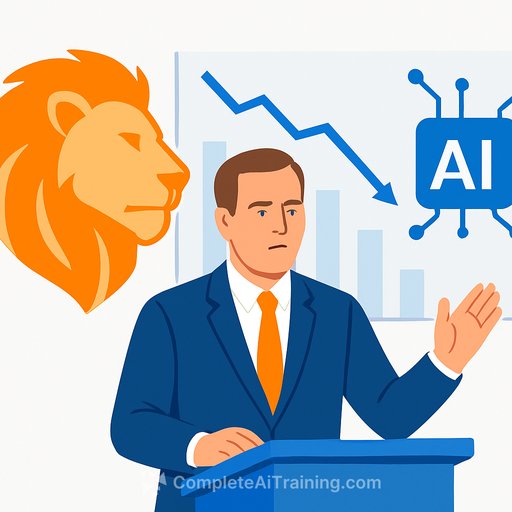
Lionsgate Narrows Losses As CEO Says AI Is Expanding the Creative Tool Kit
Lionsgate's latest quarter shows a mixed picture: revenue fell 21.3% to $475.1 million, yet losses tightened. Operating loss improved to $46 million (from $100.7 million), and net loss narrowed to $113.5 million (from $163.3 million). Investors weren't thrilled-shares dipped more than 7% after-hours.
The bigger story for creatives: the studio is leaning into AI. Leadership continues to frame it as a practical way to cut costs, speed up workflows, and expand options without cutting corners on rights.
The AI angle: productivity with consent
Lionsgate previously struck a deal with Runway to train a model on its library and use it to develop new material. As the CEO put it, the team keeps finding "new use cases" that improve productivity, create savings, and expand the creative tool kit-so long as guardrails are in place and copyrighted work isn't used without consent.
For working creatives, that's the signal: AI is moving from novelty to infrastructure. The winning approach is consent-first datasets, clear attribution, and opt-in collaboration with rights holders.
What the numbers say
- Studio revenue: $475.1 million, down from $604 million.
- Operating loss: $46 million, improved from $100.7 million.
- Net loss: $113.5 million, improved from $163.3 million.
Film and TV breakdown
- Motion pictures: $276.4 million revenue, down from $409.4 million. Segment profit rose to $30.5 million from $1.7 million, driven by cost control and mix-even with only two wide releases ("The Long Walk" and "The Strangers - Chapter 2") versus five last year.
- Television: $198.7 million revenue, down from $416.6 million. Segment profit was $12.5 million, down from $24.4 million, largely due to episode deliveries sliding into the back half of the fiscal year. One highlight: an adaptation of John Grisham's "The Rainmaker."
Coming up next
The slate is built to regain momentum. The studio is returning to Panem with "The Hunger Games: Sunrise on the Reaping" and rolling out "Michael," a biopic of Michael Jackson.
On the rights front, Lionsgate is acquiring all future film and TV rights to "The Expendables," plus worldwide distribution rights to the next "Rambo." That's a pipeline bet-bankable IP that can anchor schedules and smooth revenue swings.
Why this matters for creatives
- AI as pre-pro fuel: Use models for concept art, mood boards, previz, look development, alt dialogue passes, and quick sizzle reels. Time saved here buys you quality later.
- Consent-first assets: Track licenses, model releases, and training permissions. Keep a simple ledger so nothing gets murky when projects scale.
- Measure with pilots: Run small tests (storyboards, animatics, pitch trailers) and compare hours saved vs. output quality. If it works, standardize it.
- Calendar is cash: Fewer wide releases hit revenue; delayed TV deliveries hit profit. Plan your drops. Communicate timelines early with partners and platforms.
- IP as a safety net: Even indie teams can option niche IP to steady deal flow. It helps with packaging, financing, and marketing.
Quick take
Costs are getting tighter. The toolkit is getting smarter. If you're building a modern creative pipeline, the play is simple: integrate AI where it speeds things up, protect rights like it's day one, and schedule releases with intention.
Want a curated starting point for video-focused AI tools and workflows? Check out this resource: Top AI tools for generative video.
Your membership also unlocks: