What Lionsgate's CAIO Appointment Means for Filmmaking
Lionsgate just made a clear call: AI is moving from side project to core strategy. The studio has appointed Kathleen Grace as its first Chief AI Officer, reporting to CEO Jon Feltheimer and working closely with Vice Chairman Michael Burns.
Her remit is broad and specific at the same time - serve filmmakers' creative vision, improve the studio's pipeline end to end, and protect the intellectual property of both the studio and its talent partners. That's production, post, marketing, distribution, and back-office operations under one accountable leader.
Why this appointment matters
Grace blends tech fluency with creative leadership. She was Chief Strategy Officer at Vermillio, a Gen AI platform for creatives, and previously CEO of New Form, which developed 40+ pilots and sold nearly 25 series to Netflix, HBO Max, The CW, and Freeform. Announcing the move, she said she's staying at the intersection of AI and entertainment - this time from the studio side.
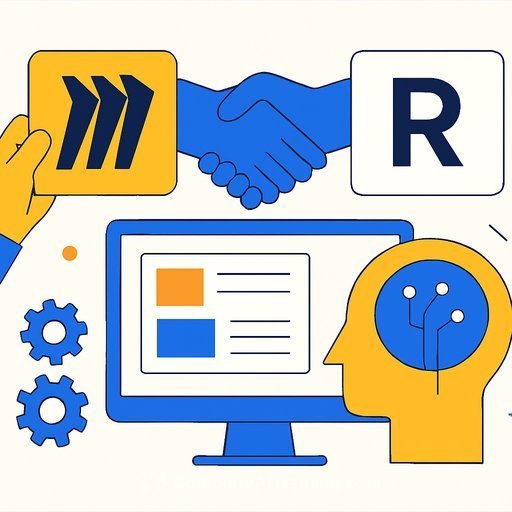
Lionsgate has been building toward this. In 2024, the studio partnered with Runway to test Gen AI as an assistive creative tool for cinematic video and cost reduction. That sparked backlash from writers, producers, and filmmakers, but the company continued running pilots and finding new use cases.
The tension you can't ignore
Hollywood is split. Some see AI as a force multiplier. Others see a trust issue and a jobs issue. As Jorge Lopes of Lopes Brothers Production put it: "This is where the real tension shows up. 'AI for efficiency' and 'AI for creative trust' don't naturally align."
Aaron Collins, Founder at APC Consulting, directed a message to Lionsgate's new CAIO: "AI is a two-sided sword; it can be used to kill creatives' careers or to protect and help them. You are now positioned to use it the right way."
We've already seen mixed reactions in public tests, from Channel 4's AI presenter for Dispatches to the first AI actress, Tilly Norwood, created by Xicoia. The debate is no longer theoretical.
Guardrails first, then scale
Feltheimer has been consistent with analysts: Lionsgate will only move forward if "appropriate guardrails are established," with clear "safeguards." Announcing Grace's appointment, he stressed growth alongside talent partners and a balanced view of creators and IP holders. For governance and applied research on these topics, see AI Research Courses.
Rob King, Director of Business Relationship Management at Sony Pictures, summed up the need for dedicated leadership: as adoption deepens, ownership and governance aren't optional anymore. A CAIO centralizes that mandate.
What will actually change inside the studio
Expect AI to show up where it removes bottlenecks and expands options - without replacing core creative decision-making.
- Development and pre-pro: Script breakdowns, budget and schedule scenarios, lookbooks and mood tests, rights checks, and research summaries.
- Production: Real-time previz for directors, continuity support, on-set asset tracking, safety flags, and faster coordination for pickups.
- Post and localization: Assistive edit tools, rotoscoping and cleanup, QC, alternate cuts, dubs and subs with talent-approved voices, and accessible versions.
- Marketing and distribution: Trailer variants, copy and artwork iteration, performance forecasting, audience segmentation, and territory-specific assets at speed.
- Back office: Legal and rights summarization, AP/AR automation, vendor compliance, security monitoring, and content provenance checks.
IP and talent protection: the non-negotiables
- Consent and control: Explicit opt-in for talent likeness and voice. Clear usage windows. Revocation rights that actually work.
- Attribution and pay: Crediting standards for human and AI-assisted contributions, with compensation models that reflect real value.
- Provenance and tracking: Watermarking and audit trails for generated assets. No orphaned files. No gray areas.
- Data boundaries: Contracts that prevent training on studio or talent IP without permission. No public model leakage.
What creatives should expect
- Assistive tools for ideation, previs, and cleanup - not a mandate to replace your process.
- Clear opt-in flows for likeness, voice, and behind-the-scenes data.
- Faster turnarounds on assets that used to stall production or marketing.
- New credits and pay structures where AI materially contributes.
Tool design and user experience will matter for adoption; teams can draw practical guidance from AI for UX/UI Designers when building assistive creative tools.
What executives should do next
- Set your principles: Put consent, credit, and compensation in writing. Publish them to teams and vendors.
- Stand up governance: An AI review board spanning creative, legal, security, and production. Weekly cadence, fast decisions.
- Choose the right stack: Approved models and vendors by use case. Central model registry. Version control for prompts and outputs.
- Pilot with purpose: Start with high-friction tasks (rotoscoping, trailer variants, schedule scenarios). Track cost, time, and quality.
- Close the loop: Human-in-the-loop review. Clear sign-off paths. Rollback plan if quality slips.
Metrics that actually matter
- Cycle time by stage (dev, production, post, marketing)
- Cost per delivered minute and per asset
- Variance to budget and schedule
- QC failure rate and rework hours
- IP incidents, consent violations, and time-to-remedy
- Creative satisfaction scores (director, showrunner, editor, VFX)
- Campaign lift and CAC changes for AI-assisted marketing
Risks to avoid
- Vendor sprawl: Ten tools doing the same thing. Consolidate.
- Shadow AI: Unapproved tools on sensitive material. Lock down access and educate teams.
- Overreach: Using AI where it adds noise, not clarity. Keep it scoped to clear wins.
- Trust erosion: Moving faster than your consent, credit, and pay frameworks. Fix the foundation first.
The bigger signal to the industry
Lionsgate isn't dabbling. By naming a CAIO and elevating the role to the senior team, the studio is baking AI into its creative workflows and operating model. That's a message to filmmakers, guilds, vendors, and investors: this will be structured, accountable, and measured.
If you lead a studio, streamer, agency, or production company, expect this to become standard. The org chart is catching up to how work actually gets done.
What to watch next
- How Lionsgate staffs the CAIO org and where it sits relative to production, post, and marketing
- Consent standards for talent likeness and voice, and how they're enforced in contracts
- The next wave of pilots that move from cost savings to creative upside
- Union positions and new templates for credit and compensation
Bottom line: AI will sit inside the filmmaking process, not above it. Grace's job is to make the work faster, safer, and more creative - while keeping trust intact. That balance is the point of the role.
Want to upskill your team responsibly?
Explore role-specific programs that focus on creative workflows, governance, and practical implementation: AI courses by job.
Your membership also unlocks: