AI Video LLM-D Intelligent Routing Solves the AI Inference Congestion Crisis
January 3, 2026 - 6:51 pm IST
Accuracy isn't the bottleneck anymore. Deployment is. Most LLM stacks still push short queries and long agent jobs through the same queue, which creates gridlock, missed SLAs, and rising bills.
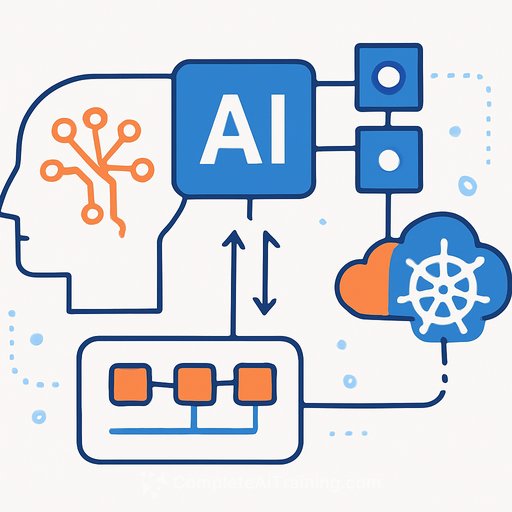
That's the problem LLM-D (Large Language Model - Distributed) targets: messy inference traffic. It combines intelligent routing, Retrieval-Augmented Generation (RAG), and Kubernetes to keep throughput high and latency low.
What LLM-D Is Doing Differently
LLM-D acts as an Inference Gateway. It inspects each request, predicts expected latency, checks current load, estimates cache hit chances, and then routes to the right replica using an Endpoint Picker (EPP).
The outcome is simple: small, quick requests don't get stuck behind long, compute-heavy tasks. As noted in the talk that introduced the approach, "if we were to try to do typical round-robin balancing… that's going to lead to congestion."
Why Round-Robin Fails for LLMs
LLM traffic isn't uniform. A two-sentence RAG lookup and a multi-step Coding agent behave very differently under load.
Treating them the same yields high Inter-Token Latency (ITL)-the painful delay between the first and next tokens. That kills interactive UX and inflates cost per request.
Disaggregated Inference: Pre-Fill vs. Decode
LLM-D splits inference into two phases:
- Pre-fill: Processes the input prompt. It's memory-heavy and benefits from high-memory GPUs.
- Decode: Generates tokens. It's sequential but can scale out across many smaller accelerators.
By scaling these phases independently and sharing a Key-Value (KV) cache for similar prompts, the system reduces redundant compute and memory use. This is where the throughput and cost wins show up.
Measured Gains That Matter
Reported results show "improved P90 latency… by three times" and a "57 times" faster first token. Those metrics map directly to tighter SLOs and better QoS for customer-facing apps.
Kubernetes Makes It Practical
LLM-D pairs well with Kubernetes for orchestration and autoscaling. You can scale the decode phase aggressively during spikes, keep GPU utilization high, and hold latency steady under pressure.
For reference: Kubernetes documentation. For background on RAG: IBM's overview.
Who Should Care
Founders, VCs, and engineering leaders evaluating infrastructure for real products. If you're running multi-model, multi-tenant AI with spiky traffic, this approach prevents the classic "fast demo, slow production" trap.
How to Apply This Now
- Profile your traffic: split short queries, long agent jobs, and streaming UX paths.
- Route by predicted latency, current load, and cache hit probability-not round-robin.
- Disaggregate pre-fill and decode; scale each independently.
- Implement KV cache reuse for similar prompts to cut compute and memory.
- Run on Kubernetes with autoscaling tuned to decode concurrency and ITL targets.
- Track first-token latency, P90/P95, and throughput per dollar as core KPIs.
Bottom Line
LLM-D treats inference like air traffic control: prioritize, separate, and route smartly. The payoff is faster first tokens, steadier tail latency, and lower cost-exactly what production teams need.
If you're skilling up your team on practical AI deployment, browse our latest programs: Complete AI Training - Latest AI Courses.
Your membership also unlocks: