AI video just crossed a line - here's what creatives need to do about it
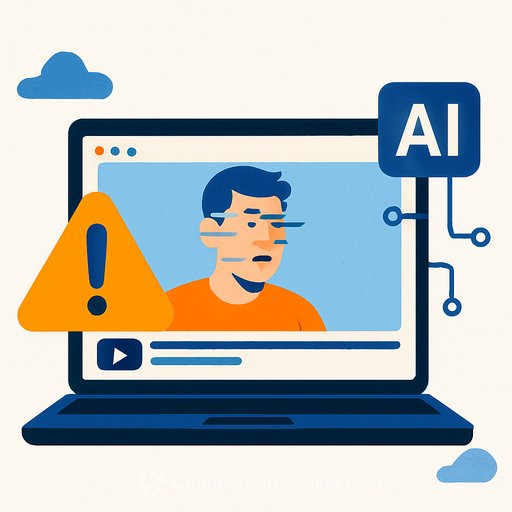
We all laughed at "Will Smith eating spaghetti." It was harmless, obviously fake, and kind of charming. That era is over. The new wave of AI video blends into shaky phone clips, grainy CCTV, and "caught on camera" moments - the exact format social feeds reward.
Case in point: a short clip of a tee shot apparently hitting a duck. It felt raw, accidental, and cruel. It was also fake. If a simple, low-res clip can fool thoughtful people, your clients and audiences are fair game.
The shift: from glossy demos to lo-fi "phone footage"
High-end AI sizzle reels get headlines, but the real threat is lo-fi content that looks like everyday internet video. The lighting is messy, the framing is imperfect, and the camera shakes. That's why it works - AI doesn't have to be flawless when the style itself hides the seams.
Animal clips, fake rescues, too-perfect coincidences, staged "security" footage - they spread fast because they trigger a gut reaction. Rage, awe, disgust. By the time someone debunks it, the dopamine loop already won.
Believability is rising - and it doesn't take Hollywood
A recent "movie clip" of Tom Cruise and Brad Pitt trading punches went viral because it felt possible that an AI model did it from a single prompt. Later reports suggested traditional production elements were involved. But the belief itself was the story.
Studies keep showing a similar pattern: most people struggle to separate real from synthetic, and accuracy hovers near chance for short videos. As tools improve, the hit rate will climb. Your audience will feel more confident while being less correct.
Why this matters for creatives
- Brand safety: One unverified repost can drag a client into a mess - outrage, platform strikes, legal threats.
- Portfolio trust: If people question what's real, you need new signals to prove your work is yours and authentic.
- Client decisions: Stakeholders may make calls based on fake "trends" or fabricated clips.
- Legal gray zones: Likeness rights, defamation, and platform policies are tightening around synthetic media.
What's real? Quick checks that actually help
- Source triangulation: Can you find the same clip from multiple unrelated accounts? Single-source "virals" with generic handles are red flags.
- Account history: New account, huge views, few followers, and no past content? Treat with caution.
- Narrative bait: "Perfect angle," tidy story arc, neat twist ending - that's engagement engineering.
- Audio tells: Voice tone too flat, breaths missing, room tone that doesn't change, or music-only with zero natural sound. Why would a phone capture video but ignore environment audio?
- Physics and contact: Impacts without debris, splashes without ripples, hair and hands that smear or clip through objects, fingers that morph on quick motion.
- Light and reflections: Shadows that miss, reflections that don't match, specular highlights that "stick" as the camera moves.
- Edges and text: Edge shimmer on fast motion, signage that warps frame-to-frame, license plates or logos that crawl or blur oddly.
- Compression patterns: Over-smooth skin next to crunchy backgrounds, or the reverse - uneven artifacts can be a tell.
- Frame grabs: Pause on micro-moments. AI often breaks on transitions, occlusions, and hands interacting with small objects.
- Reverse search: Pull a few frames and check with a video/image search tool. If nothing predates the viral post, be skeptical.
- Motive check: Who benefits from this clip being real? Rage-bait accounts farm engagement; don't feed them.
A lightweight verification workflow for your team
- Gate it: No reposting "found" video without at least two independent sources or a credible original poster.
- Two-person rule: One creator vets; another challenges. Quick, 5-minute review beats a 5-day apology.
- Label clearly: If you made it with AI, say so in the caption and on-screen. "AI-generated" or "synthetic media."
- Keep receipts: Save URLs, timestamps, and screenshots of original posts before you share.
- Rights check: Avoid real people's likenesses without consent. Watch for brand marks and locations that imply endorsement.
- Use watermarks/credentials: Add visible marks for public posts and keep originals with provenance for disputes.
- Crisis playbook: If something proves fake, remove fast, post a correction, and explain how you'll prevent repeats.
Creating AI video responsibly (so your audience trusts you)
- Say what's synthetic: Be upfront in the title, caption, and at the start of the video.
- Show the process: Behind-the-scenes, prompts, or a quick breakdown builds trust and sets the norm.
- Avoid harm bait: Don't simulate injury, cruelty, or "gotcha" footage for clicks. You win the metric and lose the relationship.
- Get permission: Don't clone voices or faces without written consent, even for "parody."
What to expect next
Expect more "everyday" fakes, not just glossy trailers. Blends of real footage, green screen, and AI enhancement are getting good enough that casual viewers won't question them. The belief threshold is dropping.
Treat viral clips like chain emails: entertaining, sometimes convincing, and often nonsense. Build your practice around proof, not vibes.
Practical resources for creatives
- Generative Video - learn how text-to-video systems actually construct shots, so you can spot telltale artifacts and produce responsibly.
- Video Editing - workflows for verifying, labeling, and safely integrating AI into post without eroding trust.
Bottom line: AI doesn't need Hollywood polish to fool people - it just needs to look like the internet. Tighten your verification, label your work, and protect your clients and audience now, not after the next viral fake.
Your membership also unlocks: