Lotus Health AI wants to make primary care feel instant, scalable, and safe
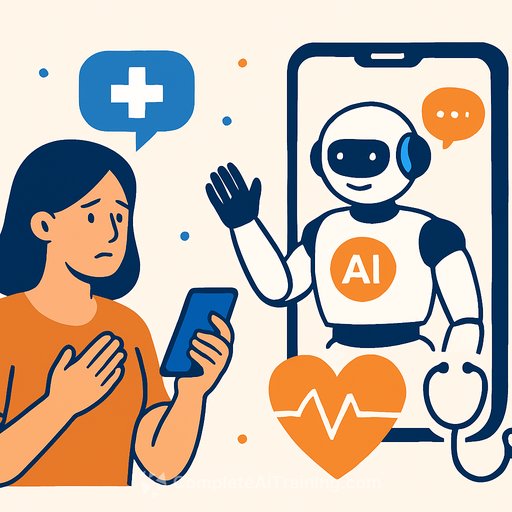
More patients are asking large language models for health advice-and often getting useful guidance. Lotus Health AI is pushing that behavior into real clinical care.
Founded by KJ Dhaliwal, who grew up translating medical visits for his parents, Lotus launched in May 2024 as a free, 24/7 primary care service in 50 languages. The company just raised $35 million in Series A funding co-led by CRV and Kleiner Perkins, bringing total funding to $41 million.
From chat to care: what's different
Lotus doesn't stop at answers. It handles diagnosis, prescriptions, lab orders, and referrals-operating as a licensed medical practice across all 50 states with malpractice coverage, HIPAA-compliant systems, and access to patient records.
Most of the intake and decision support is handled by AI trained to ask the questions a physician would. Board-certified doctors from top institutions review and sign off on diagnoses, labs, and medications before anything goes out the door. As Dhaliwal puts it, the AI drafts the plan; clinicians own the final call.
Their model synthesizes recent, evidence-based research with patient history to propose treatment options, similar in spirit to emerging evidence engines. Human oversight is the gate.
Safety rails and scope
Lotus routes urgent issues to the nearest urgent care or ER and refers to in-person physicians when a physical exam is required. This keeps virtual care within safe bounds while preserving speed for lower-acuity needs.
Regulatory constraints still apply-physicians can see patients only where they are licensed. Investors backing the company believe pandemic-era telehealth frameworks and modern AI infrastructure make this approach workable at scale without breaking rules.
Capacity, economics, and competition
With primary care in short supply, Lotus claims it can manage 10x the patient volume of a traditional practice even with 15-minute visits. The blend of AI-driven intake and physician review is the lever.
Competitors are emerging, including Lightspeed-backed Doctronic. Lotus is currently differentiating on price: it's offering the full care experience for free. Future revenue could come from sponsorships or subscriptions, but the near-term focus is product quality and patient growth.
How healthcare teams can use this shift
- Patient intake and triage: Use AI to structure histories, symptom timelines, and pre-visit questionnaires. Keep clinicians in the loop for edge cases.
- Safety governance: Require human sign-off on diagnoses, labs, and prescriptions. Maintain audit trails for every decision.
- Evidence pipeline: Pair AI summaries with links to guidelines and systematic reviews. Standardize periodic review cycles.
- Escalation rules: Define triggers for urgent care/ER and in-person exams. Make thresholds explicit and easy to audit.
- Licensing and coverage: Confirm state-by-state physician licensing and malpractice alignment for virtual services.
- Privacy and security: Enforce HIPAA-grade data handling and staff training. See HHS HIPAA.
- Telehealth compliance: Align workflows with current guidance on virtual care. Reference Telehealth.HHS.gov.
- Multilingual operations: Use AI to support 50+ languages, but verify clinical nuance with native-speaking clinicians when stakes are high.
- Quality metrics: Track time-to-care, diagnostic agreement rates, medication safety events, and patient-reported outcomes.
- Cost model: If free today, plan for what happens when pricing appears-impact on access, utilization, and payer alignment.
The headline isn't "AI replaces doctors." It's smarter throughput, stronger guardrails, and better allocation of physician time. If you're leading a clinic or health system, this is a practical moment to pilot AI-assisted intake and care plans with strict oversight and clear escalation paths.
Want to upskill your team on practical AI workflows for clinical operations? Explore curated programs by role at Complete AI Training: AI Learning Path for CIOs, AI Learning Path for Technology Managers, and AI Learning Path for Software Engineers.
Your membership also unlocks: