NYC's Proposed Next Generation Technology High School: What Educators Need to Know
New York City is proposing a selective high school in Lower Manhattan focused on cybersecurity, computer science, robotics, and advanced math. The Department of Education says students will be "builders as well as ethical users of AI," with a hearing set for April 14 ahead of a vote by the Panel for Educational Policy.
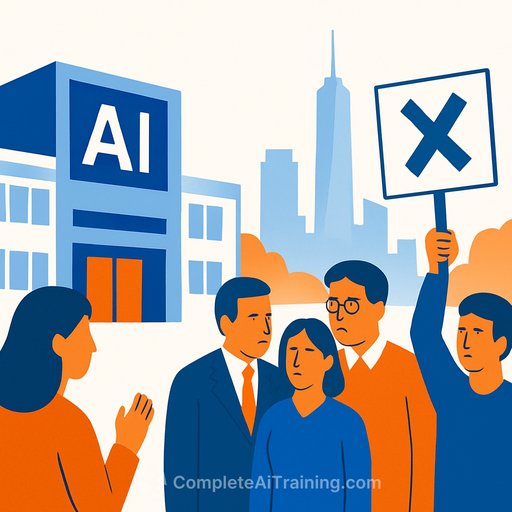
The plan has sparked a broader question: How should AI be handled in public schools? Supporters see needed preparation for a growing field. Critics point to plagiarism, data security, and the lack of clear district policy-guidance the DOE said would arrive in early February but hasn't yet materialized.
Key facts in the proposal
- Focus: rigorous coursework in math, CS, robotics, cybersecurity; explicit emphasis on ethical AI use.
- Admissions: selective, determined by grades.
- Timeline: open with a freshman class this fall; add one grade each year.
- Location: proposed site near Bowling Green in Lower Manhattan.
- Partnerships: DOE says Carnegie Mellon University would offer priority access to its tech research summer program; Google and OpenAI "have been at the table." The district superintendent noted completing a fellowship with Google.
- Facilities: would replace the Urban Assembly School of Business for Young Women (currently 91 students; 38% enrollment decline over five years). The new school would share a building with Richard R. Green High School and Lower Manhattan Community Middle School.
- Governance: hearing on April 14 before a vote by the Panel for Educational Policy.
Supporters' view
Some families and educators see the move as overdue. They argue the school would offer an advanced curriculum in math, computer science, and digital literacy-without turning into "AI all day."
"There's a misconception because it was initially referred to as the 'AI high school,' that somehow this is a school where kids are just going to be on AI all day long. And that is absolutely not the case," said Deborah Alexander of the Citywide Council on High Schools, which passed a resolution supporting the proposal. She likened this moment to the early internet: "We need to train students who can create the technology that we want to see."
Concerns from families and educators
Parents and teachers are pressing the DOE for clear rules on AI before launch-especially around academic integrity, data privacy, and vendor usage. Some asked how the city can open an AI-focused school without a districtwide policy in place.
"It's clear that they see AI as the new 'next big thing' and they don't want to be left behind," said Gavin Healy, a local council member. "The possible effects of AI on student learning and social-emotional development are even less well understood. Given that, DOE leaders need to take a less evangelical and more critical approach."
Space is another sticking point. Parents at Lower Manhattan Community Middle School say shared facilities are already stretched-limited access to the gym and other common areas-and were frustrated the city didn't consider expanding their school. "We don't really yet understand what impact AI is going to have on students, and I don't have evidence that DOE has really thought this through," said parent Anne Hager.
Equity and admissions
The school would be screened by grades, a model backed by parents seeking accelerated curricula. Integration advocates counter that screened schools are often disproportionately white, and warn that admissions design-plus outreach and supports-will shape who benefits.
What leaders should lock in before launch
- Academic integrity: clear guidelines on acceptable AI use, reworked assessments, and alternatives to unreliable "AI detectors."
- Data privacy and security: vendor vetting, data minimization, consent flows, model risk assessments, and incident response protocols.
- Partnership transparency: public MOUs, conflict-of-interest disclosures, and student data protections for university and company collaborations.
- Equity guardrails: admissions monitoring, targeted outreach, bridge programs, and tutoring for underrepresented students.
- Staff readiness: scheduled PD, coaching, and time for curriculum redesign; identify core tools and support paths.
- Curriculum map: AI literacy integrated across subjects; explicit ethics, safety, and bias units.
- Student well-being: guidelines for AI use tied to SEL, digital citizenship, and media literacy.
- Tech operations: device controls, content filters, model access tiers, and a clear list of approved tools.
- Facilities plan: shared-space scheduling that protects gym, labs, and common areas for all schools in the building.
- Evaluation: year-by-year goals, public reporting, and independent review of outcomes.
Questions to bring to the April 14 hearing
- When will the districtwide AI policy be published, and what's the implementation timeline?
- How will "ethical use of AI" be defined in coursework, grading, and behavior policies?
- What are the data-sharing terms for partnerships with Google, OpenAI, and Carnegie Mellon? Will MOUs be public?
- How will admissions ensure fair access and track demographic impacts over time?
- What is the plan for the 91 students at the Urban Assembly School of Business for Young Women as it closes?
- How will shared-space constraints be managed for the middle and high schools in the building?
- What PD, coaching, and budget are allocated for teacher training this summer and fall?
- Which AI tools will be approved, and how will data security, bias, and content safety be audited?
- How will success be measured in year one and year two? What triggers a course correction?
Context on partnerships
Carnegie Mellon is cited as providing priority access to a tech research summer program. For background on its offerings, see CMU Pre-College. Given the superintendent's past fellowship with Google and the mention of OpenAI "at the table," educators should request transparent agreements and data protections before student participation.
Resources for district and school leaders
- AI Learning Path for School Principals - governance, procurement, and policy frameworks for K-12 leaders.
- AI for Education - practical classroom use, curriculum planning, and stakeholder communications.
Bottom line: The proposal taps real demand for advanced STEM and AI literacy. To make it work, the policy groundwork-integrity, privacy, partnerships, equity, and facility planning-needs to be in place before the first student walks through the door.
Your membership also unlocks: