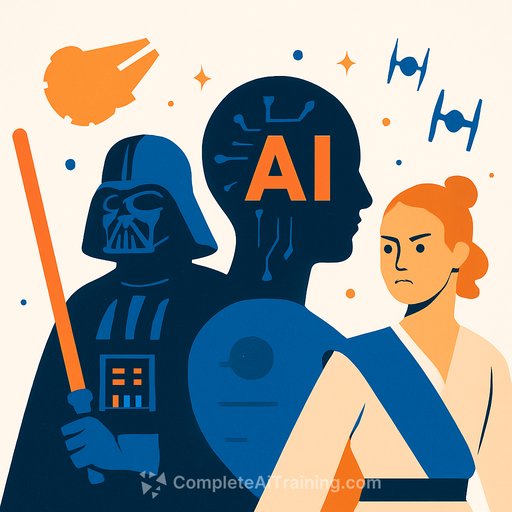
Lucasfilm's AI Experiment: A Disappointing Glimpse into Star Wars' Future
The legacy of Star Wars is deeply tied to groundbreaking visual effects. For decades, Lucasfilm and Industrial Light & Magic (ILM) have shaped Hollywood's film production through innovative camera work, miniature models, practical effects, and computer-generated imagery. This blend of art and technology has created a visual language that resonates powerfully with fans.
Recently, Lucasfilm's senior VP of creative innovation, Rob Bredow, presented a new vision for the future of technology and creativity. On a TED stage, he shared a two-minute AI-generated film called Star Wars: Field Guide. The project aimed to imagine what a probe droid might capture on a new Star Wars planet. Instead, it delivered a confusing collage of mostly normal animals with mismatched features—a blue lion, a chimpanzee with zebra stripes, and a snail with a peacock head, among others.
The Disconnect Between AI and Creativity
Bredow highlighted ILM's history of blending artistic sensibility with technical innovation, citing classics like Jurassic Park, Indiana Jones, and The Mandalorian. According to him, this synergy is key to creating beloved cinematic moments. However, the AI-generated short film feels like a step away from that ideal.
The creatures in Field Guide appear as simple fusions of existing animals with little imagination or emotional impact. There’s no compelling alien life, just bizarre animal mashups that fail to evoke curiosity or wonder. The visuals lack the creative spark that comes from artists leveraging technology—not just using it as a tool to splice images together.
Why This Matters to Creatives
- Technology is a tool, not a replacement: True innovation happens when artists push technology beyond its limits, not when tech does the creative work alone.
- AI-generated content needs direction: Without a clear artistic vision, AI outputs can feel hollow or uninspired.
- Creative leadership remains crucial: Artists must guide AI tools to produce meaningful and engaging work.
Despite Bredow’s optimistic closing about this being a stepping stone to future blockbuster moments, the current AI-generated film feels more like a placeholder than a breakthrough. For creatives, this serves as a reminder that embracing new technology requires critical judgment and an active role in shaping outcomes.
If you're interested in exploring how AI tools can genuinely enhance creative workflows, consider training resources that focus on integrating AI thoughtfully with artistic processes. For example, Complete AI Training offers courses tailored for creative professionals looking to expand their skill sets responsibly.
Lucasfilm’s experiment shows that while AI can generate visuals quickly, the essence of storytelling and emotional engagement still depends on human creativity. It’s a call for creatives to stay in control and use AI as a collaborative partner—not a crutch.
Your membership also unlocks: