A New Approach to Machine Learning for Scientific R&D
Machine learning (ML) has made impressive strides, yet it still faces critical challenges that limit its usefulness in real-world scientific research and development (R&D). A key issue arises when ML models are applied outside the specific data they were trained on, leading to failures that hinder AI's practical deployment.
Addressing this gap, a major research initiative funded by the European Research Council (ERC) is underway at ELLIS Institute Finland, led by professor Samuel Kaski of Aalto University. The project seeks to develop new machine learning methods that remain reliable even when confronted with data and situations that differ from their training sets.
The Out-of-Distribution Problem in Machine Learning
The core challenge lies in what experts call “out-of-distribution” deployment. Most ML models assume that the training data represents the environment in which they will operate. However, in dynamic real-world settings, unexpected variables—known as covariates or confounders—often emerge, pushing systems beyond their original training scope.
Scientific research exemplifies this issue. Creating new knowledge or products necessarily involves exploring unknowns beyond existing data. Traditional approaches like gathering vast new datasets can be costly, slow, or infeasible.
Integrating Domain Expertise into the Loop
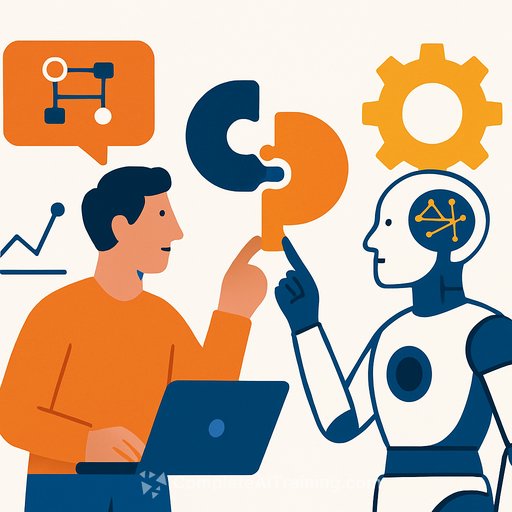
One promising strategy is to embed domain expertise directly into the machine learning process. By involving human experts while minimizing their effort, ML systems can better adapt to shifts in data and context. This “human-in-the-loop” approach helps overcome the limitations of purely data-driven models.
This concept extends to improving the fundamental design-build-test-learn cycle that underpins experimental science, product innovation, and complex decision-making. Enhancing this loop with collaborative AI and expert input could accelerate progress and increase success rates.
AI-Assisted Virtual Laboratories and Collaborative Science
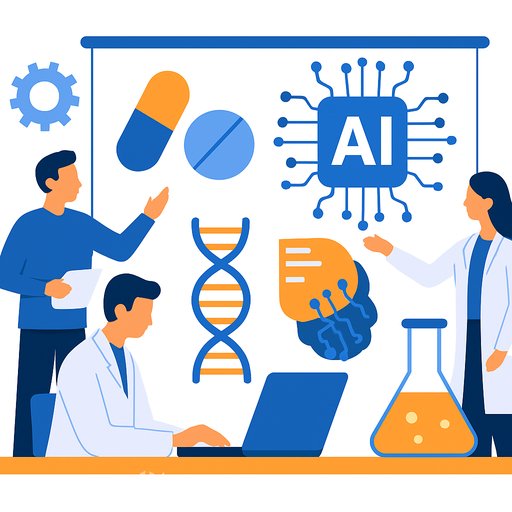
The vision includes creating virtual, simulation-based laboratories where AI assists scientists and automates parts of the research process. Far from replacing humans, this automation aims to keep researchers actively engaged, ensuring that outputs remain meaningful and useful.
Such AI systems would need to understand scientists’ often implicit goals and methods, a capability related to what psychologists call “theory of mind.” By recognizing how researchers think and work, AI can better support complex, interdisciplinary problem-solving.
Collaborative and Adaptive AI for Team Science
Successful scientific teamwork is cooperative, iterative, and flexible. AI designed to function as a team player must reason about multiple experts’ behaviors and adapt to changing goals and feedback. This project aspires to develop AI agents capable of optimizing collaboration across diverse human experts.
ELLIS Institute Finland: Advancing Applied Machine Learning
The ERC-funded research is central to ELLIS Institute Finland, a collaboration among 13 Finnish universities focused on advancing machine learning research with real-world relevance. The institute is actively recruiting new principal investigators to foster a cross-disciplinary environment where academics and industry can jointly push the boundaries of AI applications.
Researchers and practitioners interested in AI and machine learning for science and R&D are invited to engage with the institute’s efforts in Finland.
Further Learning
- Explore foundational concepts in machine learning and AI at Complete AI Training.
- Discover practical AI courses tailored to research and development professionals: AI Courses by Job.
Your membership also unlocks: