Travel Technology MCP Explained: The AI Standard Reshaping Travel Tech
In travel, being machine-readable is the new table stake. If AI agents can't see your systems, they won't send you customers. That's the core point of MCP - Model Context Protocol - and why hotels, airlines, and OTAs are moving fast.
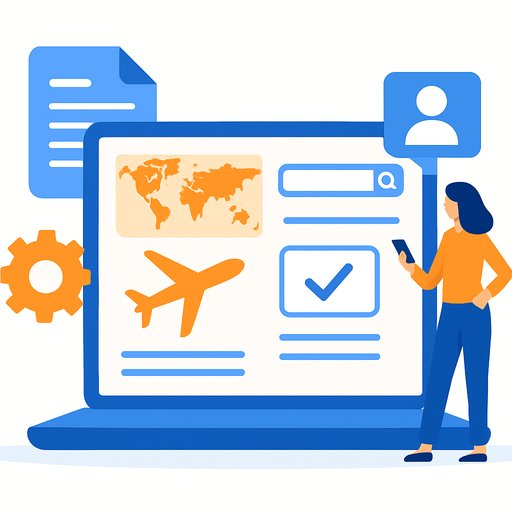
MCP makes travel systems legible to AI. A basic chatbot can suggest places. An AI agent, wired into MCP, can pull live fares, compare room types, hold inventory, and push a booking - all inside a conversation.
What Is Model Context Protocol?
MCP is an open standard that lets AI models connect to business back-ends. Before MCP, each bot-to-database connection was a one-off build. Ten bots across a hundred systems meant a thousand custom integrations.
With MCP, everyone speaks the same grammar. A company stands up an MCP server (onsite or via a vendor/cloud). That server structures data from PMS, CRS, GDS, and ERPs, enforces security, and exposes clear actions and resources to agents.
Anthropic introduced MCP in November 2024, and the protocol was donated to the Linux Foundation's new Agentic AI Foundation. Adoption has accelerated because no single vendor controls it. For an overview, see the MCP repo on GitHub: Model Context Protocol. Anthropic's introduction post adds useful context: Model Context Protocol overview.
Why It Matters for Travel
Travel runs on dynamic data - rates, availability, schedules, disruptions. MCP gives AI a reliable way to fetch and act on that data in real time. That means fewer stale answers and fewer dead ends for travelers.
There's a distribution angle too. If AI becomes the default interface, the systems that AI can query will get the traffic. Everyone else fades from view.
Who's Using MCP Right Now
- Suppliers: Airlines and hotels are piloting MCP servers to expose live booking, reservation management, and status updates. Turkish Airlines began testing MCP-based access for core operational data.
- Hotel tech: Platforms like Apaleo and Kismet are packaging MCP-based tools so properties can plug in faster, especially across Europe.
- Infrastructure: Amadeus, Sabre, and RateGain adopted the protocol so AI can query real-time pricing and availability and, eventually, complete transactions.
- OTAs and AI platforms: Booking.com and Expedia shipped ChatGPT apps using an MCP-aligned kit; third parties can now publish ChatGPT apps. Perplexity, Google's Gemini, and Anthropic's Claude are building travel workflows with OTAs, too.
The "Connected Trip" Vision
Booking Holdings' Glenn Fogel has described a system that doesn't forget: one assistant that handles discovery, planning, and post-booking logistics. Delay hits your flight? It automatically rebooks, updates your car, and shifts your dinner reservation.
For that to work, AI needs direct hooks into business systems. MCP is the bridge that makes those hooks consistent, secure, and scalable.
Control Risks: Are Gatekeepers Just Moving?
MCP is open, but interfaces matter. If most MCP connections flow through a handful of AI platforms and default assistants, they could steer choices - even if suppliers expose their data.
Suppliers should assume the interface layer will influence bookings. Mitigation starts with direct MCP access, differentiated content, and incentives that make the "book direct" path the obvious choice inside agent flows.
Can MCP Help Hotels Win Back Direct Bookings?
Short term, OTAs sit close to the AI layer. Long term, AI favors better data: richer amenities, nuanced policies, unique inventory, and direct-only rates. Those are assets hotels control.
Operators are moving, but we're early. Some properties are experimenting now; many are blocked by legacy stacks that weren't built for this level of interoperability. MCP servers can normalize messy systems, but mapping proprietary data to a clean, shared model still takes engineering effort.
How to Implement MCP: A Practical Playbook
- Pick high-impact use cases: live availability and pricing, modify/cancel, ancillaries, disruption rebooking, loyalty lookups, vouchers/credits.
- Audit your data sources: PMS/CRS, channel manager, RMS, CRM, payments. Define owners, SLAs, and access methods.
- Stand up an MCP server: self-hosted or managed. Start with read-only resources (rates, availability, inventory), then add actions (hold, book, cancel).
- Normalize and document: map fields to a shared schema; write clear descriptions for resources and actions so agents don't guess.
- Lock down access: scope tokens per capability, rotate keys, mask PII by default, and log every call for audit.
- Offer a sandbox: synthetic data, throttled limits, and failure cases (timeouts, overbooked, stale rate) so agents learn safe behaviors.
- Optimize content: structured amenities, fees, policies, images, and localized descriptions. AI ranks clarity and specificity.
- Design incentives: direct-only perks (late checkout, room upgrades), rate fences, and flexible terms that agents can present plainly.
- Choose where to integrate: direct to major AI platforms, via marketplaces, and with OTA partners - instrument all paths.
Security, Compliance, and Payments
MCP governs data access and actions. Payments can sit alongside via the Agentic Commerce Protocol (ACP) and Instant Checkout from OpenAI's Stripe partnership. ACP keeps the supplier as merchant of record while an agent handles authorization steps inside chat.
Plan for PCI-DSS, SCA/PSD2 in relevant markets, and GDPR/CCPA. Keep a clear audit trail for every action an agent takes on behalf of a user.
KPIs to Track
- Share of bookings initiated by AI agents vs. web/app
- Direct booking rate and cost of distribution
- Hold-to-book conversion and abandonment reasons
- Average handling time for disruptions and rebook success rate
- Ancillary attach rate and net revenue per trip
Timeline and Resourcing (Typical)
- Weeks 0-2: discovery, data audit, target use cases, success metrics
- Weeks 3-6: MCP server stood up, read-only endpoints, sandbox
- Weeks 7-10: booking and modify/cancel actions, auth scopes, logging
- Weeks 11-14: pilot with one AI platform and one OTA, iterate on errors and latency
- Weeks 15+: expand to disruptions, loyalty, ancillaries, and payments
Team: 1-2 backend engineers, 1 integrations engineer, 1 security lead (shared), 1 product owner. Add a data/ML partner if you plan agent tuning and ranking.
Common Pitfalls
- Legacy lock-in: brittle PMS/CRS mappings slow you down; start with a thin slice (availability + hold) to prove value.
- Poor content: vague amenities and fee policies tank agent answers; structure them and keep them fresh.
- Over-permissive access: use least privilege and short-lived tokens; monitor unusual action patterns.
- No sandbox: agents need safe failure modes; simulate disruptions and inventory conflicts.
- Interface myopia: don't rely on one AI platform; distribute your MCP connection widely.
What Happens Next
As chat becomes the place where discovery, planning, and checkout happen, MCP integrations will decide who gets seen and who gets bookings. Suppliers that expose clean data and useful actions will win attention from agents and travelers.
Payments are lining up, too. With ACP and instant checkout options, a traveler could research, plan, and pay without leaving the conversation.
Move Now
Start with one property, one route, or one market. Ship a read-only MCP slice, then add booking and changes. Instrument everything. Iterate on what improves conversion and guest satisfaction.
If your team needs structured upskilling on agentic AI and integrations, explore focused paths at Complete AI Training.
Your membership also unlocks: