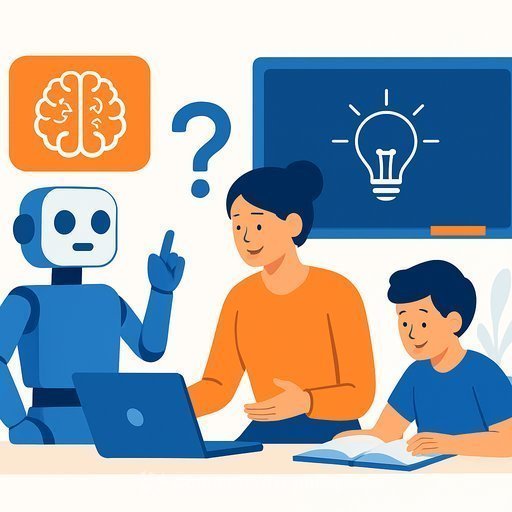
Make AI Education Mandatory: Pantami's Message to Nigerian Institutions
Nigeria cannot afford to sit on the sidelines while other countries embed Artificial Intelligence in their classrooms. Former Minister of Communications, Innovation and Digital Economy, Professor Isa Ali Ibrahim Pantami, urged schools at every level to integrate AI and emerging technologies without delay.
Speaking at the annual general meeting and public lecture of the Zaria Education Development Association (ZEDA), he warned that global competitiveness depends on how fast we align our curricula to the skills the world now values. The core idea is simple: AI literacy should be a baseline, not an elective.
Why this matters for educators
Pantami pointed to nations like China and South Korea that have already embedded emerging technologies into learning. His message: teach AI from primary schools to colleges of education, polytechnics, and universities if we want Nigerian graduates to compete on merit.
"This AI knowledge is no more just a necessity, but to me it is an obligation," he said. "You cannot in any way prevent your students from patronising AI. What matters is having clear policies and guidelines to prevent misuse."
The four priorities he outlined
- Curriculum integration: Introduce AI-related courses across all levels, from foundational digital literacy and data concepts to practical AI applications, prompt-writing, and ethics.
- Policy alignment: Prioritise AI and emerging technologies in the national education framework so accreditation, funding, and teacher training point in the same direction.
- Academic integrity: Deploy AI-powered verification systems (plagiarism and originality checks) and require transparent disclosure when students use AI tools.
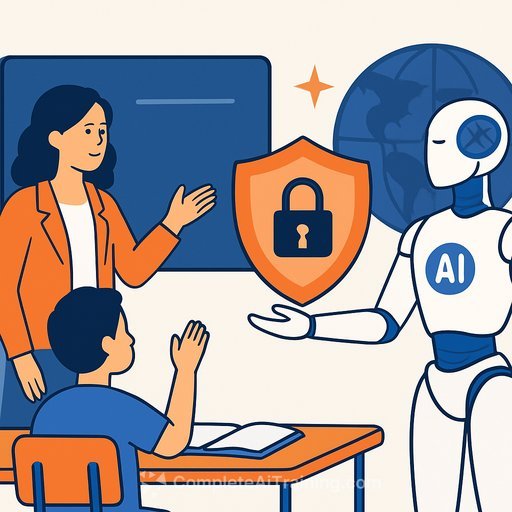
- Governance and safety: Establish an AI Task Force in every institution to set policies, guardrails, and review processes for safe, ethical use.
Practical next steps for schools, colleges, and universities
- Run a 90-day curriculum audit: Map where AI concepts naturally fit into existing courses across STEM, business, health, and humanities.
- Start with core modules: Digital literacy, data basics, generative AI use, ethics, and assessment integrity. Add domain-specific AI labs after term one.
- Upskill faculty fast: Create short workshops and micro-credentials for lecturers and teaching assistants. Pair tech teams with academic departments.
- Update assessment design: Mix practical projects, oral defenses, process logs, and in-class work to reduce low-effort AI misuse.
- Adopt clear AI-use policies: Define allowed tools, disclosure rules, and consequences. Train students on proper citation for AI-assisted work.
- Infrastructure and access: Provide device access, campus AI labs, and offline-friendly resources where connectivity is limited.
- Create an AI Task Force: Include academic leaders, IT, legal, student reps, and quality assurance. Review tools and policies each semester.
- Prioritise relevance: Phase down obsolete programmes; retain a limited number in first-generation universities for knowledge preservation while growing high-demand fields elsewhere.
- Measure outcomes: Track enrolment in AI modules, graduate placement, academic integrity incidents, and employer feedback.
- Plan budgets: Use phased procurement, open-source tools where possible, and partnerships to lower cost.
Guidance for policymakers and regulators
- Publish a national AI curriculum framework with learning outcomes by level: primary, secondary, tertiary, and TVET.
- Link funding to teacher-training targets, infrastructure upgrades, and institution-level AI policies.
- Update accreditation standards to include AI competencies, assessment integrity protocols, and data protection.
- Support local-language datasets and culturally relevant content to improve access and fairness.
- Offer incentives for industry-academia projects that bring real use cases into classrooms.
Resources to move faster
For policy and classroom practice, see UNESCO's guidance on AI in education: Guidance for generative AI in education and research. For high-level principles that can inform institutional policy, review the OECD AI Principles.
If you need structured learning paths for staff and students, explore curated options here: Complete AI Training - Courses by Job.
The bottom line
AI literacy is now a minimum requirement. Institutions that move first will graduate students who can build, evaluate, and responsibly use AI-skills employers already expect.
The work starts with curriculum, policy, integrity, and governance. Keep it practical, measure what matters, and improve each term.
Your membership also unlocks: