Why Agencies Must Build Around AI to Help Clients Succeed
AI now influences how information is found, how narratives travel, and how reputations form. Search behavior is changing in real time, and influence is splintered across platforms and communities. Large language models sit between your message and your audience. If your operating model hasn't changed, your results will.
AI Requires a Structural Reset
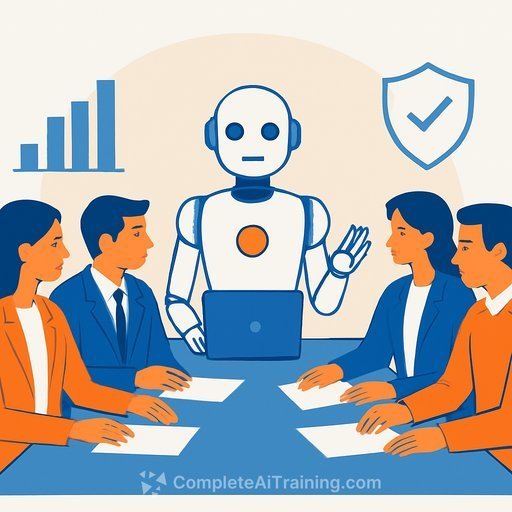
This isn't a tools conversation. It's a structure conversation. The work must be redesigned so AI is embedded from brief to reporting-not bolted on at the end. That means rethinking org design, workflows, and how teams learn and adapt.
A useful reference point: BCG's 10-20-70 framework shows that models and tech are a small slice of impact. Most value comes from people, process, and culture. Communications is no different.
- Operating model: Make AI a default step in discovery, strategy, creative, distribution, and measurement.
- Data + governance: Define data sources, quality standards, privacy rules, and approvals for model use.
- Reusable playbooks: Build prompt libraries, QA checklists, risk flags, and red-team routines for high-stakes work.
- Measurement: Track time-to-insight, content throughput, earned quality, and cost per output-not just volume.
- Responsible AI: Set rules for transparency, bias checks, human-in-the-loop, and client consent.
- Change cadence: Weekly experiments, monthly retros, and quarterly upgrades to keep pace without chaos.
Build vs. Buy: How to Decide
- Buy when tasks are commoditized (summaries, first-draft ideation, basic analytics) and speed matters.
- Build when nuance defines outcomes (sector language, risk thresholds, regulatory context, brand tone, stakeholder maps).
- Hybrid: Start with proven platforms, then layer custom data, prompts, and workflows that reflect your clients' realities.
The goal isn't to collect tools. It's to productize the way your agency works so performance improves every week.
A Working Example of Foundation-Built AI
One agency approach: a dedicated tech lab model that prototypes, tests, and ships tools into live accounts. Capabilities span GEO, influencer intelligence, and predictive analytics, built for comms use cases. In one case, custom AI solutions were integrated into 88% of core U.S. client accounts, with an AI accelerator aimed at pushing adoption to 95% in 2026. The lesson is simple: centralize invention, then push it into the field with clear playbooks.
Talent, Judgment, and the Human Advantage
AI improves speed and precision. It does not replace taste, context, or relationships. The best work pairs advanced systems with strong human oversight, sharp strategy, and cultural fluency.
- The new talent stack: Strategists fluent in prompt ops, creatives who co-create with models, editors for factual and tonal QA, analysts for data storytelling, and engineers for model ops.
- Training plan: Onboard everyone on policy and workflows, then add role-specific depth. Treat AI capability as table stakes across accounts, creative, and tech.
- Career paths: Add AI-focused trainee programs and leadership tracks so adoption isn't siloed to a "lab."
If you're building your team's skills, start with the AI Learning Path for Public Relations Specialists and keep an ongoing practice library your teams can reuse.
Independence, Flexibility, and Speed
Structure drives speed. Independent agencies can customize and deploy faster, but any org can rewire approvals, decision rights, and tool access. Clients expect sharper insights and quicker cycles from teams that understand how information is surfaced, interpreted, amplified, and measured in an AI-mediated environment.
- Run weekly AI sprints tied to live briefs and publish internal benchmarks.
- Set clear approval SLAs so humans review the right things at the right time.
- Embed AI steps in crisis, influencer, corporate, and healthcare playbooks with risk levels and guardrails.
Your 90-Day Plan to Embed AI
- Days 0-30: Audit 10 high-volume workflows; define metrics; pick top 3 to pilot; write your Responsible AI policy; shortlist tools and data sources.
- Days 31-60: Build prompts, QA checklists, and red-team tests; launch pilots on 3 client accounts; instrument tracking for time, cost, and quality.
- Days 61-90: Compare results to baselines; productize what worked into reusable playbooks; roll out team training; expand to 5-7 additional accounts.
Metrics and Guardrails That Matter
- Speed: Time-to-insight, time-to-draft, and revision cycles per asset.
- Quality: Placement relevance, message pull-through, factual accuracy, tone adherence.
- Cost: Cost per approved output and cost per meaningful placement.
- Risk: Hallucination rate, bias checks, privacy compliance, model provenance, and human sign-off rates.
Where to Focus Next
- Search and social listening that reflects LLM-influenced discovery (query rewrites, answer engines, community signals).
- Message testing with synthetic panels plus small, verified human samples.
- Creator and influencer mapping driven by fit and trust signals, not just reach.
- Predictive issues spotting with clear escalation rules and pre-approved responses.
AI will keep changing how we work. Agencies that rebuild structure, upskill talent, and productize their best practices will set the pace-and make their communications feel more precise and more human.
Want ongoing tactics and playbooks? Explore AI for PR & Communications for practical applications across media strategy, reputation, and PR workflows.
Your membership also unlocks: