AI Transforming Healthcare: Insights from Dr. Essam Hamza
Date: January 4, 2026
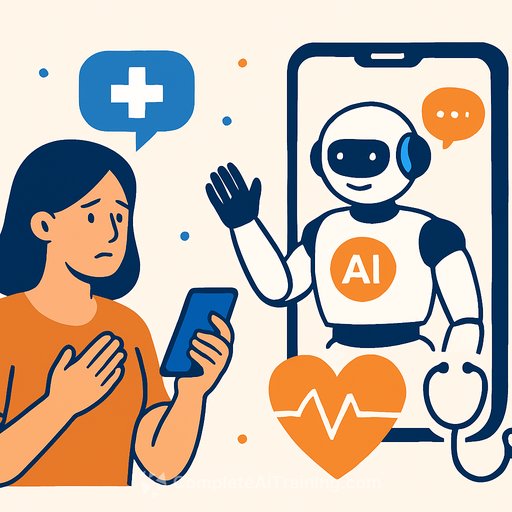
Healthcare is stretched. Clinicians feel it, patients feel it, and systems show it. In a recent conversation, Dr. Essam Hamza, CEO of Rocket Doctor AI, laid out a practical path for using AI as a dependable partner in clinical work, education, and operations-without losing the clinical judgment that matters most.
Rocket Doctor AI is built with clinical governance at the core. The goal is simple: deliver accurate, reliable information that supports care teams, improves patient outcomes, and reduces waste in the system.
Why a clinically governed AI matters
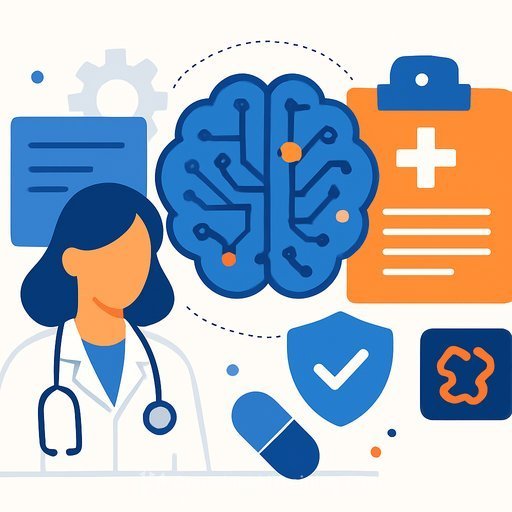
AI is useful only if it's safe, transparent, and accountable. A clinically governed model is reviewed against medical standards, monitored for performance, and deployed with human oversight.
- Reduce variation by surfacing current guidelines at the point of care.
- Limit preventable errors through consistency checks and clear reasoning steps.
- Create an auditable trail for quality review and learning.
For context on the scope of diagnostic error and patient safety challenges, see this overview from AHRQ's Patient Safety Network Diagnostic Errors Primer.
Practical uses across the care pathway
- Intake and triage: streamline history capture, summarize key risks, and route to the right level of care.
- Clinical decision support: surface differential considerations and evidence summaries to support clinician judgment.
- Documentation and coding: auto-draft notes, discharge instructions, and suggested codes for review and sign-off.
- Patient communication: generate clear follow-up plans in plain language and match patients to relevant resources.
- Operations: identify bottlenecks, highlight avoidable visits, and optimize scheduling across virtual and in-person care.
Education and upskilling for clinicians
AI can shorten the gap between learning and practice. Think of it as a nonstop study partner that cites sources, explains tradeoffs, and turns guidelines into case-based scenarios.
For teams building AI fluency by role, this curated catalog can help: AI Courses by Job. Product and safety leads can explore AI Design Courses for governance and user-experience approaches, while engineers and integration teams can review AI Coding Courses focused on development and deployment patterns.
Building trust: safety, bias, and privacy
Adoption rises when safety and accountability are clear. A few non-negotiables make a difference.
- Human-in-the-loop: clinicians approve, edit, and own final decisions and documentation.
- Validation and drift checks: test on local data, monitor outputs, and recalibrate as needed.
- Bias review: measure performance across demographics; mitigate where gaps appear.
- Privacy by design: strict access controls, de-identification where possible, and clear data retention rules.
- Auditability: keep reasoned outputs and change logs for QA, training, and compliance.
What Dr. Hamza highlights
Clinicians need AI that works with their workflow, not against it. Rocket Doctor AI emphasizes clinically governed outputs, accuracy, and reliability so teams can move faster with fewer errors and less administrative drag.
The focus is practical: support real patient encounters, reinforce standards, and free up time for the parts of medicine only humans can do-nuance, empathy, and complex decision-making.
Metrics that matter to healthcare leaders
- Time to first clinical decision and time to disposition
- Documentation time per encounter
- Avoidable ED or urgent care visits
- Guideline adherence and variance by condition
- Medication and diagnostic order errors caught pre-sign
- No-show rate and follow-up adherence
- Patient understanding scores and satisfaction (e.g., clarity of instructions)
- Clinician burnout indicators (survey scores, turnover)
Getting started in your organization
- Pick one high-friction use case (e.g., note drafting for a high-volume clinic).
- Define guardrails: scope, approval flow, and what "good" looks like.
- Run a 6-8 week pilot with a champion team and a clear baseline.
- Track outcome and safety metrics weekly; review sample outputs together.
- Expand only after meeting targets and finalizing a governance checklist.
About Dr. Essam Hamza
Dr. Essam Hamza, MD, is a physician, entrepreneur, and CEO of Rocket Doctor AI Inc. He earned his medical degree from the University of Alberta, where he also completed Family Practice training.
He founded HealthVue Ventures Ltd. in 2005, building advanced clinics that served over 100,000 patients. In 2018, he founded CloudMD and served as CEO and Director until 2022, guiding the company from under $4 million to over $100 million in revenue on the TSX Venture Exchange.
Dr. Hamza has held leadership and advisory roles across healthcare and biotechnology, including independent director positions with publicly traded companies. He brings deep capital markets and scaling experience at the intersection of medicine and technology.
Your membership also unlocks: