Rackspace's Playbook for Operational AI: Practical Moves Ops Leaders Can Use
Rackspace's recent posts surface the same blockers most operations teams face: messy data, unclear ownership, governance gaps, and the ongoing cost of models once they hit production. They frame the work across service delivery, security operations, and cloud modernisation - a good tell for where they're investing.
Security, at Production Scale
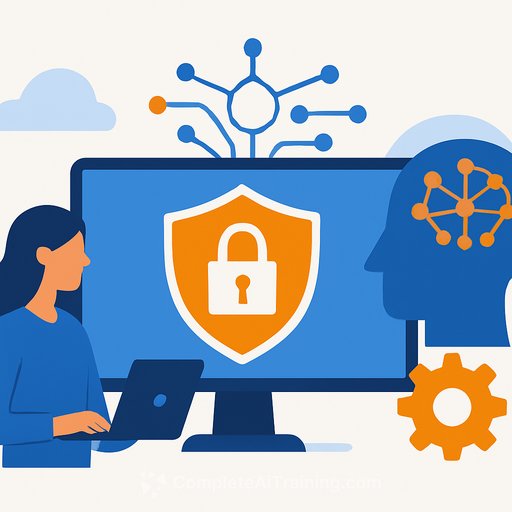
The clearest operational AI example inside Rackspace is in security. In January, the company described RAIDER, a custom back-end platform for its cyber defense centre. It unifies threat intelligence with detection engineering workflows and uses its AI Security Engine (RAISE) and LLMs to automate rule creation, producing "platform-ready" detection criteria aligned with frameworks like MITRE ATT&CK.
Rackspace says it has cut detection development time by more than half and reduced mean time to detect and respond. That's the kind of internal cycle-time compression that Ops teams actually feel - fewer manual rules, faster detection engineering, and more consistent coverage.
Agentic AI Without Sidelining Your Best Engineers
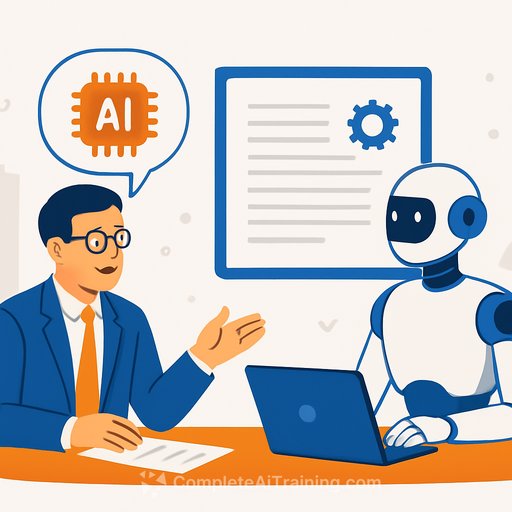
Rackspace positions agentic AI as the glue for complex modernisation programs. In its VMware-on-AWS work, AI agents handle data-heavy analysis and repetitive tasks, while architectural judgement, governance, and business decisions stay with humans.
The goal: keep day-two operations in scope so migrations don't stall after cutover. It also stops senior engineers from getting stuck in long-running move-and-shift projects.
AIOps, Tied to Managed Services Economics
Rackspace paints a picture of AI-supported operations where monitoring shifts from reactive to predictive, bots and scripts clear routine incidents, and telemetry plus historical data surface patterns and recommended fixes. Familiar AIOps language - but here it's explicitly tied to managed services delivery.
Translation for Ops: AI isn't just for the customer-facing experience. It's also a lever to take cost and toil out of the operational pipeline - see AI Productivity Courses for practical workflows and training.
Design: Build the Machine, Then Scale It
On AI-enabled operations, Rackspace emphasises focus, governance, and operating models. The practical bit: choose infrastructure based on the job - training, fine-tuning, or inference - because many tasks are light enough to run inference locally on existing hardware.
They also call out four recurring barriers, led by fragmented, inconsistent data. The advice is predictable yet accurate: invest in integration and data management so your models sit on solid ground.
Microsoft's Orchestration Layer, With a Caveat
At larger scale, Microsoft is coordinating agents across systems; Copilot has become an orchestration layer with multi-step task execution and broader model choice. The catch is the same one Ops leaders know well: you only see productivity when identity, data access, and oversight are wired into daily operations.
If you're exploring that path, start with the basics - role design, least privilege, and auditable approvals - before expanding automation. For context, see Microsoft Copilot.
Near-Term Moves and the 2026 Outlook
Rackspace's near-term AI plan: AI-assisted security engineering, agent-supported modernisation, and AI-augmented service management. Looking ahead, the company expects inference economics and governance to drive architecture choices into 2026.
Anticipate "bursty" exploration in public clouds, with inference pulled back to private clouds for cost stability and compliance. That's a budgeting and audit-led roadmap, not a novelty play.
What Ops Leaders Can Do This Quarter
- Map repeatable workflows with measurable cycle time (alerts triage, change approval, ticket routing, detection engineering).
- Decide what must stay under strict oversight due to data governance, and what can be automated with guardrails.
- Split workloads by type (training, fine-tuning, inference) and right-size infrastructure. Push lightweight inference closer to where data lives.
- Fix data fragmentation early. Define owners, schemas, and integrations so models draw from consistent sources.
- Instrument MTTD/MTTR, rule creation lead time, and incident auto-resolution rate. Track savings from day-one and day-two operations.
- Pilot agentic workflows on migrations or repetitive analysis, but keep architectural decisions with senior engineers.
- Review identity and access. If approvals, logs, and escalations aren't clean, AI won't deliver real productivity.
- Run an inference cost review. If spend is spiky, evaluate moving portions in-house or to private cloud.
Bottom Line
Rackspace treats AI as an operational discipline. The wins they highlight come from compressing cycle time in repeatable work, not flashy demos.
If you want similar impact, start where your team burns time: repeatable workflows, governance-heavy steps, and inference costs. Tighten data foundations, automate with guardrails, and keep day-two operations front and centre.
Want to upskill your team on automation and AI in operations? Explore practical resources at Complete AI Training - Automation.
Your membership also unlocks: