Can AI Outwrite and Outanimate a Sitcom Pro? A Working Animator Put It to the Test
Can an AI write and animate a funnier sitcom than someone who does it for a living? That's what Hayk Manukyan, an animator at Warner Bros. Animation, set out to test.
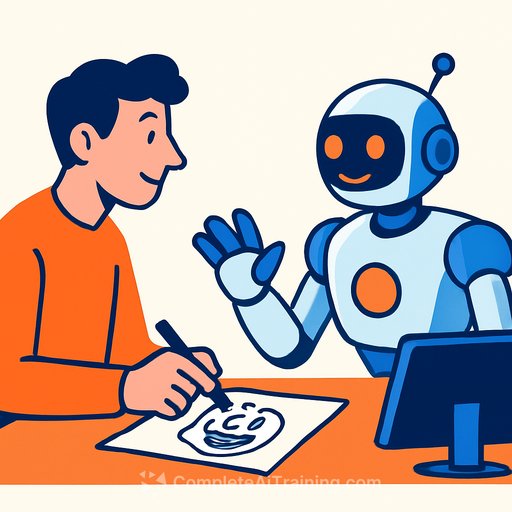
He used his hand-drawn characters, Harut and Sophik, and fed an AI the same setup from his latest short: a husband accusing his wife of hiding his computer after "cleaning." He even uploaded his own illustration of the moment and asked OpenAI's Sora to turn it into a classic husband-versus-wife sitcom gag.
The AI returned seven clips with its own timing, staging, and punchlines. After that, he dropped his hand-drawn version, animated frame by frame, and let viewers pick the winner. He also ran a separate AI vs. animator face-off around a K-pop dance.
What Writers Can Learn From This
This wasn't just about animation. It was a clean A/B test of joke mechanics, character voice, and timing. If you write comedy (or anything with pacing), there's signal here.
- Timing isn't a template. AI can mimic beats, but it often misses subtext, micro-pauses, and the breath before a punchline.
- Beats > prompts. Clear setup, escalation, reveal, and reversal will beat fancy wording every time.
- Staging carries jokes. Visual writing matters: blocking, props, eyelines, and where the camera "sits." Spell it out.
- Character voice is the engine. The same gag lands differently if the character has a defined worldview and contradiction.
- Ship variants. Seven AI takes vs. one hand-drawn cut is a reminder: draft more, test faster.
Where AI Surprised-and Where It Didn't
- Good: Generates multiple angles fast. Useful for alt lines, alt reactions, and quick boards.
- Good: Surface-level sitcom structure is easy for it-setups and obvious callbacks appear on cue.
- Weak: Emotional precision. It struggles with the tiny human tells that sell a joke or a marriage dynamic.
- Weak: Visual logic. Continuity, prop logic, and spatial beats can get fuzzy, which kills laughs.
- Weak: Rhythm. The extra half-beat before a reveal? Often off by just enough to feel flat.
A Fast Exercise to Sharpen Your Comedy Beats
- Write the scene in three beats: accusation, denial, reveal. One sentence per beat.
- Draft three character intentions for each person (what they want vs. what they say).
- Story-map the physical space: where's the computer, who moves first, what changes hands.
- Generate five alternate reveals (truths and misdirects). Pick the one that flips status the hardest.
- Now use an AI to produce five alt lines and five alt stagings. Keep only what sharpens timing.
- Read it out loud. Add or remove a half-beat before the reveal. That half-beat is usually the laugh.
How to Blend Human Instinct with AI Speed
- Use AI for volume, not verdicts. It's a drafting partner, not the head writer.
- Lock character rules. Feed your system: values, contradictions, forbidden moves, recurring bits.
- Board the scene in text. Write shot-by-shot beats so visuals and jokes don't fight each other.
- Test with small audiences. Two versions, five readers, pick the clip with the earliest laugh and cleanest end beat.
Tools and Next Steps
If you want to see how text-to-video tools interpret beats and staging, start with Sora's overview and examples. OpenAI Sora
For sharpening prompts and building a repeatable writing system, these resources can help: Prompt Engineering and Text-To-Video.
The Takeaway for Writers
AI can churn out options. It can't fake lived-in timing, character friction, or the tiny choices that make a marriage argument feel real. Use AI to draft wide-but rely on your taste, your ear, and your sense of space to finish tight.
That's the edge: you control the rhythm. Let the machine explore; you decide what lands.
Your membership also unlocks: