What Managers Need to Say When AI Cuts Jobs
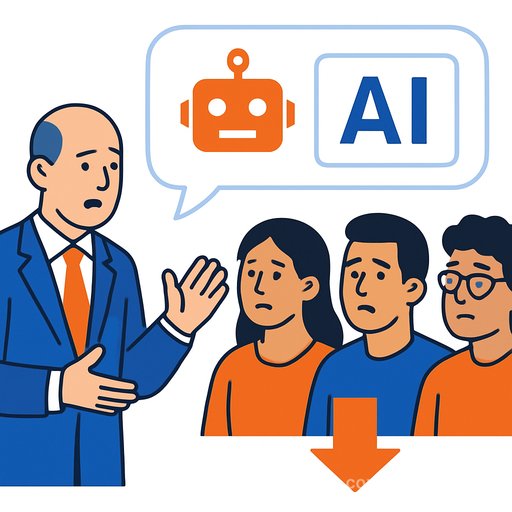
Block announced workforce reductions tied to AI agent deployment this week. The move sparked the usual commentary. But the real challenge sits in conference rooms across the country, where managers face teams that are watching, worried, and waiting to hear what comes next.
Your team is already scared. They've watched colleagues lose jobs. They've heard the language: "efficiency," "optimization," "doing more with less." They're reading the same headlines you are. What they're experiencing has a name: survivor's guilt mixed with a sharper fear-Am I next?
The Silence Fills Itself
Managers don't need all the answers. You do need to be intentional about what you signal.
If you talk excitedly about new AI tools in front of a team that just watched three colleagues get laid off, you're not leading-you're alarming them. If you avoid the conversation entirely, your team fills that silence with side conversations and their own assumptions. Both approaches fail.
The most important thing you can do right now isn't adopting the right tools. It's having the right conversations.
Call Them What They Are
Start with language. AI agents aren't teammates. They don't have bad weeks. They don't need feedback, recognition, or one-on-ones.
They're tools. Sophisticated, powerful, often incredibly useful tools-but tools nonetheless.
When you talk about AI to your team, use that word. It changes how people hear what you're saying. It separates the thing that might replace a process from the person sitting across from you.
Your team needs to hear from you directly, not through rumors. They need to know what's actually changing and what isn't. And they need to hear it while you're still in the room.
For managers navigating AI for management and organizational change, understanding AI agents and automation starts with clarity about what these systems do and don't do.
Your membership also unlocks: