
AI news ·
MARA Holdings expands from Bitcoin mining into AI infrastructure and energy management
MARA Holdings has repositioned from Bitcoin mining into energy infrastructure, using stranded electricity to power AI data centers and grid stabilization services. Its 2026 acquisition of EDF's Exaion subsidiary marks the clearest sign of that shift.
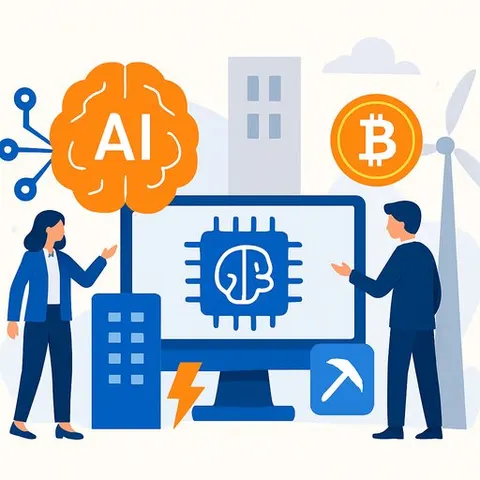
MARA Holdings Shifts From Bitcoin Mining to Energy Infrastructure Play
Marathon Digital Holdings has repositioned itself as an energy-to-compute operator, moving beyond cryptocurrency mining into artificial intelligence infrastructure and grid stabilization services. The company now treats Bitcoin production as a tool for managing underutilized electricity rather than as its primary business objective.
This shift reflects a broader market reality: companies with massive computing power and energy access are capturing value across multiple revenue streams. For executives evaluating infrastructure investments, MARA's model demonstrates how to monetize energy inefficiencies that traditional utilities leave untapped.
The Energy-First Operating Model
MARA's core strategy centers on sourcing stranded energy-electricity from renewable volatility or isolated natural gas reserves-and converting it into computing output. The company operates behind-the-meter power generation facilities that produce their own electricity rather than purchasing from the grid.
A concrete example: MARA's Delaware Basin operations run in partnership with MPLX LP. Natural gas from processing plants fuels onsite electricity generation, which powers dedicated data centers. Energy producers get a reliable customer for excess gas. MARA gets low-cost, sustainable power. Both parties reduce exposure to volatile energy markets.
This arrangement insulates MARA's margins from global energy price swings-a structural advantage that institutional investors monitor closely.
AI Infrastructure as Revenue Diversification
In early 2026, MARA acquired a majority stake in Exaion, a data center subsidiary of French energy company EDF. The move signals a deliberate pivot away from Bitcoin's four-year halving cycles, which compress margins periodically.
Exaion brings established relationships with NVIDIA and Deloitte, along with engineering expertise in managing complex AI workloads. MARA is now deploying cooling and power management techniques refined through Bitcoin mining toward high-performance computing and generative AI training.
The company established its European headquarters in Paris, positioning itself within continental energy markets characterized by high renewable penetration and carbon regulations. This geographic expansion opens revenue from cloud services and AI infrastructure-sectors growing faster than Bitcoin mining.
Capital Structure and Balance Sheet Strategy
MARA treats Bitcoin holdings as a productive asset rather than speculative inventory. The company maintains one of the largest corporate Bitcoin treasuries globally and uses it strategically in capital markets.
In Q1 2026, MARA issued zero-coupon convertible senior notes due 2032. The proceeds funded three priorities: Bitcoin accumulation as a hedge against currency devaluation, refinancing of existing debt, and expansion of data center capacity and computing hardware.
This financing approach allows MARA to fund growth without immediate equity dilution. The convertible structure effectively bets on long-term appreciation of digital assets while providing capital today.
Operational Infrastructure and Grid Services
MARA operates mining facilities across Texas, Nebraska, and Ohio using a mix of owned and leased infrastructure. The company's software systems allow it to participate in demand-response programs-throttling operations during peak grid demand to prevent blackouts.
This transforms data centers from passive power consumers into active grid participants. During periods of extreme demand, MARA can reduce its computing workload and return power to the local grid. Utilities increasingly value this flexibility as renewable energy sources create unpredictable supply patterns.
Investors analyzing MARA's valuation increasingly factor in this grid-stabilization value, not just Bitcoin production.
Governance and Risk Management
As a NASDAQ-listed company, MARA operates under SEC reporting requirements and standard corporate governance. The company has engaged shareholders on executive compensation and equity incentive plans to attract talent in competitive AI and blockchain sectors.
MARA consistently discloses material risks in its 10-K filings: regulatory uncertainty around digital assets, volatility in cryptocurrency prices, and the inherent challenges of operating at the intersection of energy and computing infrastructure.
The company faces legitimate operational complexity. Energy markets, computing demand, and regulatory frameworks all shift independently, requiring constant operational adjustment.
What This Means for Strategy Leaders
MARA's evolution illustrates how infrastructure businesses can capture value across multiple markets simultaneously. By controlling both energy supply and computing demand, the company reduces dependence on any single revenue source or market cycle.
For executives evaluating infrastructure investments or considering how to position computing assets, MARA's model shows concrete methods for monetizing stranded energy and participating in grid services-opportunities that exist globally wherever renewable energy creates supply volatility.
Learn more about AI for Executives & Strategy and AI for Finance to understand how these infrastructure trends affect broader business strategy.