
AI news ·
Mardan researcher uses AI to animate photos of forgotten Pashto music legends
A Pakistani translator has made 300-plus AI videos pairing archival photos of classical Pashto singers with their original recordings. The project restores faces to musicians whose voices survived but whose images had largely vanished.
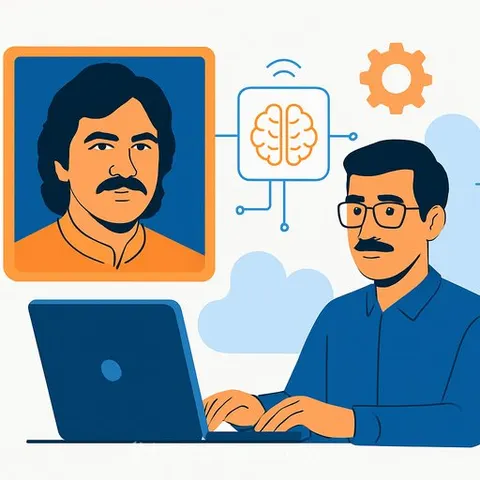
Translator uses AI video tools to restore faces to Pashto music legends
Aurangzeb Qasmi, a translator and poet from Mardan district in Pakistan, has created over 300 videos of classical Pashto singers using artificial intelligence to animate archival photographs and sync them with original recordings.
The project emerged from frustration. Qasmi found faded photographs of musicians like Zar Khan, Muzaffar Khan, and Mehrunnissa - artists whose voices shaped Pakhtun culture but whose faces had faded from public memory. The recordings survived; the visual record did not.
"These were not mere singers," Qasmi said. "They were the very breath of our cultural soul."
Qasmi taught himself AI tools to solve the problem. He digitized fragile gramophone records, preserving the original audio quality. Then he used generative video technology to animate the photographs - adding subtle facial movements and lip-sync to match the recordings.
The result places vintage performers back in period-appropriate settings, their expressions and gestures restored to match their voices.
Community response shaped the work
The reception surprised Qasmi. Pakhtun communities responded with emotion. People reported weeping while hearing their grandparents' favorite songs paired with the singer's face for the first time.
"It feels as though we have returned something sacred that was taken by time," Qasmi said.
For writers and translators, the project demonstrates how technical skills can extend traditional work. Qasmi's background in translation and poetry informed his approach - he saw the videos as translating entire worlds across time, not just words.
"Our duty is to carry the fire from one generation to the next," he said. "These voices were fading embers. Now, through AI, we have fanned them back into flame, true to their original spirit."
The work sits at the intersection of cultural preservation and technical skill - a model for how writers might apply emerging tools to their own archival and storytelling work.