Mark Cuban Urges Graduates: Learn AI Where It Actually Runs - Inside Operations
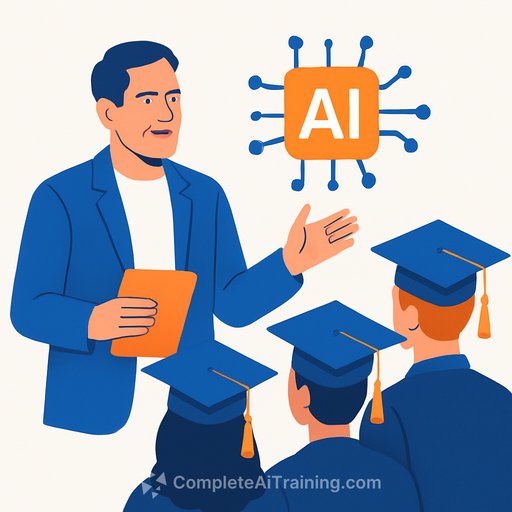
Mark Cuban's advice to young graduates is blunt: learn how to plug AI into real business operations. Tools are everywhere; people who can make them work on the floor, in the workflow, and in the P&L are rare.
This isn't about shiny demos. It's about lower costs, faster cycles, and better decisions. That's where careers are built.
The AI Shift: More Than Just Tools
AI isn't a trend you watch. It's infrastructure that reshapes how work gets done. Cuban has seen this movie before with PCs in the 90s-leaders knew they mattered, few knew how to make them pay off.
Executives say AI is critical, yet execution still lags. That gap is the opportunity for operators who can translate business needs into working systems that move numbers.
McKinsey's latest AI survey echoes this: adoption interest is high, measurable value often stalls without clear use cases, data access, and integration.
Why New Graduates Are Well Placed
Gen Z grew up with AI-native tools. There's less hesitation, more curiosity. That helps-but Cuban's point goes further.
The advantage goes to those who can adapt models, connect data sources, and wire AI into everyday processes. Big enterprises have teams for this. Most SMBs don't. They still need results. That's a lane for hungry operators and new grads.
AI Integration: The Skill Businesses Need Most
1. Know the Business Needs First
AI work starts with the work. Map the process, define the choke points, and pick a metric that matters. If you can't name the KPI, you're not ready for the model.
Example: a regional retailer struggles with stockouts and overstocks. Build a demand forecast from historical sales, promos, and seasonality. Then tie it into ordering rules. Less waste, better availability, cleaner cash flow.
2. Adapt Models, Don't Just Use Tools
Generic tools help, but real gains come from fit: your data, your systems, your handoffs. That could mean retrieval-augmented generation for policy answers, lightweight fine-tunes for intent classification, or rules on top of predictions to reflect business constraints.
Companies without a data science team still need this. If you can configure, connect, and ship usable workflows, you're immediately valuable.
3. Communicate Value to Stakeholders
Executives don't buy models. They buy outcomes. Explain the change in cycle time, error rate, cost per ticket, or forecast accuracy. Show how it lands in gross margin or working capital.
Keep the demo simple. Show the before/after workflow, the guardrails, and the rollback plan. Confidence comes from clarity.
Starter Projects for Operations
- Service triage: route tickets by intent and urgency; auto-draft replies for common issues; escalate exceptions with context.
- Inventory and demand: weekly SKU-level forecasts; automated reorder suggestions; supplier lead-time risk flags.
- Procurement: vendor email parsing to structured data; contract clause extraction; anomaly and duplicate invoice detection.
- Workforce planning: schedule suggestions based on demand, skills, and compliance rules.
- Knowledge access: policy Q&A over SOPs, contracts, and product docs with retrieval and citations.
A Simple Stack That Works
- Data: pull from ERP/CRM/Helpdesk/Sheets; define minimal features; handle permissions.
- Model: start with an API LLM or a small open model; add retrieval or light fine-tune if needed.
- Orchestration: use a workflow tool or simple scripts to call models, apply rules, and post results.
- Integration: deliver inside the tools people use (email, Slack/Teams, ticketing, ERP).
- Controls: human-in-the-loop on high-risk steps; logging, versioning, and PII handling.
- Metrics: pick one primary KPI; ship, measure, iterate.
How Operators Can Pitch and Win
- Start with a pilot under 4 weeks, under 40 hours, with a clear owner and one KPI.
- Use real data. No sandboxes if you want real results.
- Show a screenshot-level demo of the new workflow. No jargon.
- Quantify ROI: baseline vs. 30-day result. If it pays, expand; if not, cut it.
Where Graduates Add Immediate Value (Especially in SMBs)
- Build connectors: pull the right data from messy systems and emails.
- Tune prompts and rules to match policy and tone.
- Document SOPs and exceptions so the system reflects how work actually happens.
- Train teammates, gather feedback, and tighten the loop each week.
Takeaway
Cuban's message is simple: careers will compound for people who can make AI useful in real operations. Not presentations-processes.
Whether you're in support, supply chain, or procurement, the play is the same: pick a painful workflow, wire in AI, measure the lift, and scale what works. Do that a few times and you won't be "the AI person." You'll be the person who makes numbers move.
Want structured training to build these skills?
- AI courses by job function for practical, role-based learning.
- AI Automation certification to systematize workflow builds and measurement.
- AI Learning Path for Administrative Assistants for role-specific, hands-on guidance to apply AI in day-to-day operations.
Your membership also unlocks: