Marketing Now Means Reaching Both Humans and AI Agents
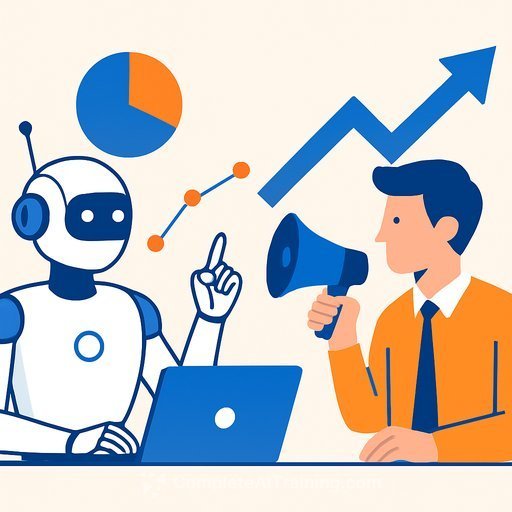
Brands face a fundamental shift in how they market. As AI agents increasingly act on behalf of customers, marketing departments must learn to engage two distinct audiences at once: people and machines. The brands that adapt fastest will compete on experience orchestration-the ability to deliver relevant content across channels, formats, and audience types simultaneously.
This isn't a distant concern. Agents are already assessing product information, delivering aggregated answers to customers, and influencing purchasing decisions. Marketing to them requires a different approach than marketing to humans.
The Human Audience: Five Seconds to Impress
Customers give brands roughly five seconds to capture attention in an email, ad, or social post. That window is shrinking, not expanding.
Data shows 69% of customers expect brands to grab their attention within five seconds or less. But speed isn't the only constraint. Nearly 45% of customers stop engaging with a brand after receiving too many promotions, even relevant ones. Half disengage when personalized experiences feel poorly timed or intrusive. Another 40% tune out when promotions don't match their stage in the buying journey or budget.
The balancing act is precise: promotions must be relevant without overwhelming. Content must be personal without being intrusive.
Successful brands are moving beyond traditional campaigns toward participatory experiences. The NFL's Live Content Correspondent program lets fans create their own content while capturing real-time moments. English Premier League and MLB have adopted similar models. These examples collapse distance between marketing, storytelling, and experience-turning passive audiences into active participants.
The Agent Audience: A Different Kind of Customer
Marketing to agents operates on different rules. Agents process data in milliseconds and can evaluate far larger datasets than humans. They don't need to be sold on brand emotion or trust. They need accurate, structured information.
Early evidence shows customers are most comfortable letting their personal agent handle routine, low-risk tasks. About half of customers would accept their agent working with a brand's human representative. Far fewer would permit agent-to-agent interactions, travel bookings, personal information sharing, or final purchase decisions. Comfort levels are highest for live customer service, personalized promotions, and automated routine processes.
The opportunity isn't in convincing agents to buy. It's in supporting the intent of the humans they assist.
Experience Orchestration: The Real Competitive Advantage
A single campaign today might require hundreds of assets, dozens of formats, multiple languages, and constant optimization across channels and regions. Most organizations have the ingredients-customer data, content, channels-but lack the operational structure to scale.
Customer experience orchestration connects insights, decisioning, and action into one continuous system instead of isolated campaigns. It shifts focus from managing disconnected moments to designing end-to-end journeys with relevant content.
AI becomes genuinely valuable when it scales data, engagement, and content. It lets brands take a core idea and operationalize it across markets, formats, and audiences. AI can translate and deploy content, build audience segments, and optimize performance based on real-time signals-freeing marketers to focus on customer insight, message clarity, and experience design.
When this works together, brands are more efficient and more authentic. They evolve consistently across every audience segment, human and agent alike.
What Winning Looks Like
The brands that win in this era won't chase every new AI capability. They'll keep humans at the center of creativity, use AI to scale execution, orchestrate experiences in one workflow rather than optimizing within silos, and protect trust through governance.
They'll know exactly where and how to show up for each audience type. For marketers, that means understanding which customers benefit from human interaction, which can work with agents, and how to deliver consistent brand experience across both.
Learn more about AI for Marketing or explore the AI Learning Path for CMOs.
Your membership also unlocks: