
AI news ·
Marketers must optimize emails for human and AI readers
AI filters sort 300 billion daily emails, deciding which marketing messages humans see. Marketers must write for both algorithms and readers to maintain inbox visibility.
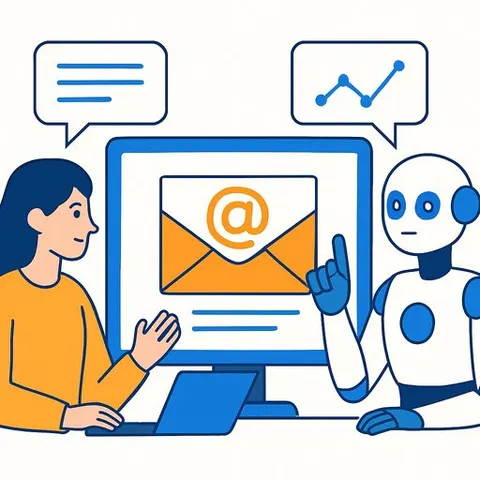
AI-powered inbox features are now acting as gatekeepers between email marketers and their audiences, determining which messages get seen, summarised, or ignored, according to Musa Kalenga, entrepreneur and technologist, speaking at Everlytic's The Inbox Effect event. With over 300 billion emails sent daily worldwide, Kalenga argued that marketers must now write for two readers: the human recipient and the AI system that filters and prioritises their inbox.
There are around 4.6 billion email users globally, many managing multiple inboxes. At that scale, Kalenga said, no single message feels personal, and machine intelligence increasingly decides which messages receive attention.
Two readers for every email
Kalenga's central proposition was that every email now has two readers. The human responds to tone and relevance; the machine evaluates structure and intent before a human ever sees the message. "Deliverability is now desirability," he said. AI assistants in email platforms summarise, prioritise, and filter messages, so marketers need to optimise for both.
Personalisation and segmentation drive results
Benchmarks shared at the event showed that segmented campaigns generate significantly more revenue than untargeted sends, while personalised emails consistently outperform generic messaging. Kalenga advised marketers to start with empathy-audience understanding first, creative persuasion second, and technology last as an amplifier. He cautioned against treating automation as an end in itself, telling the audience to "systemise the relationship rather than automate the blast."
A framework for the AI inbox
Kalenga introduced a five-part framework called nbox. It covers intent-based segmentation, always-on nurture journeys, protecting brand voice in an AI-driven environment, consent and data governance aligned with South Africa's POPIA, and writing content understandable to both people and AI systems. He argued that strong data governance should be a competitive advantage, not just a compliance requirement.
Why this matters for marketers
The shift means email marketing success depends on understanding how AI systems read and rank messages. Marketers who ignore machine readers risk lower visibility, regardless of how compelling their copy is for humans. Adapting to this dual-audience reality requires new skills in structuring content, managing data, and building segmented nurture journeys. For those looking to build these skills, resources on AI for Marketing can provide practical guidance.