
AI news ·
Marketers value AI for routine tasks but worry about long-term skill development
A study of 24 marketers shows AI automates routine tasks, but professionals fear it stunts skill development. Companies also lack the expertise to manage this transition.
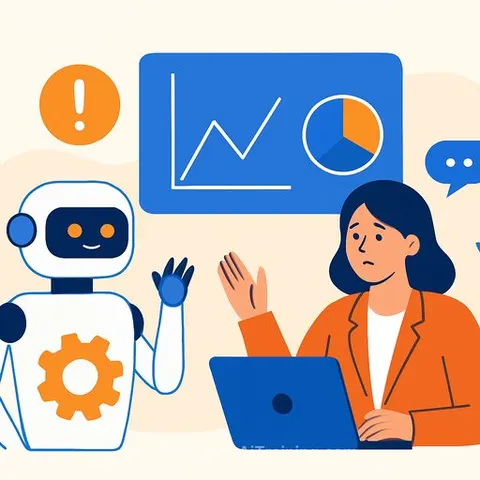
Marketers increasingly rely on AI to handle routine work, but a new study reveals they are worried about organizational readiness and the technology's long-term impact on the profession. The research, "The AI Paradox in Marketing: Fascination, Resistance, and Reinvention," published in the Journal of Open Innovation: Technology, Market, and Complexity, is based on interviews with 24 marketing professionals worldwide.
Participants said AI's handling of repetitive tasks is giving them more time for strategic thinking. "Even if you spend a few hundred dollars a month on AI, it feels like you've gained an entire team," one participant said. "It's honestly mind-blowing." Another described the technology as a psychological support, noting it reduces stress from work overload by automating certain tasks, freeing up time for more strategic work.
The hidden cost of AI's efficiency
Marketers appreciate AI's immediate benefits, but their unease centers on how the profession will develop talent in the long term. Work like writing copy, testing campaigns, refining messaging, and analyzing results isn't just production. It's where marketers learn what resonates, develop instincts, recover from mistakes, and build the judgment that prepares them for strategic roles. As AI takes over these tasks, the traditional path to expertise is narrowing.
Organizational readiness falls short
The interviews exposed significant organizational gaps. Participants pointed to shortages of AI expertise, rapid skill obsolescence, and resistance to changing established workflows. One participant cited "a real lack of essential skills" needed to carry out AI projects. The researchers argue that companies often treat AI as just another software deployment, rather than a workforce transformation that demands trust, experimentation, and continuous learning.
Closing the training gap
Businesses need targeted training that combines technical capabilities-prompt engineering, tool selection, data analysis-with nontechnical skills like creative judgment, ethical reasoning, and change management. For marketing leaders, an AI Learning Path for Marketing Managers can provide the structured training needed to build both the technical and nontechnical capabilities required for effective AI adoption. As participants noted, the role of the marketer is shifting from producing every first draft to evaluating AI's output, which puts judgment at the center of the profession.
Someone still needs to recognize when AI misses customer context, draws the wrong conclusion, or produces an answer that sounds convincing but isn't right. The skills participants identified as least likely to be replaced by AI include creativity, ethical judgment, cultural understanding, and relationship building. These are the capabilities that organizations will need to cultivate as routine work is automated.
Why this matters for marketers
The challenge for marketing organizations goes beyond adoption. AI is handling the work that once taught marketers their craft, creating an urgent need for new ways to develop judgment, creativity, and experience. Companies that invest in training that builds both technical fluency and the soft skills AI cannot replicate will be better positioned to sustain expertise as the profession evolves.