Why marketing needs a decision infrastructure for AI
AI thrives where structure already exists. Code has syntax, tests, and shared conventions. Marketing runs on partial docs, shifting context, and strong opinions.
If you want AI that's reliable in marketing, you need a decision infrastructure. That's what context graphs give you: a way to capture the logic behind choices so humans and machines can use it, repeat it, and improve it.
The gap: engineering is formal, marketing is fluid
Engineering breaks work into modules with clear interfaces. Marketing blends taste, timing, risk, and lived experience. The reasons behind a pivot often live in Slack threads, hallway chats, or a leader's gut.
That's not a flaw. It's how brand building works. But it means AI has nothing structured to reference. So it guesses. Then humans add manual guardrails, and scale stalls.
Context graphs: the missing decision layer
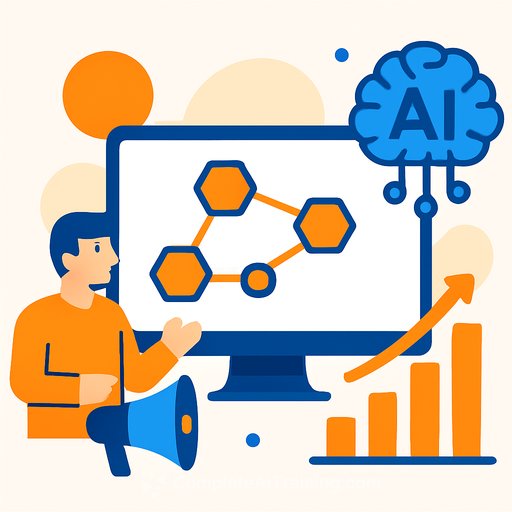
A context graph connects your entities (customers, campaigns, products, markets) with your rules, policies, constraints, approvals, and the actual reasoning that shaped a decision. It doesn't just store outcomes. It preserves how and why you got there.
- Which inputs were considered at the moment of decision
- Policies and guardrails in force (and how they were interpreted)
- Exceptions, who approved them, and on what grounds
- Precedents that influenced the choice
- Observed results and follow-on actions
- When two sources clashed, which source of truth won-and why
Think of it as a new system of record. Not just "what happened," but "what conditions and logic led to it." The goal isn't turning marketing into code. It's giving marketing a decision backbone strong enough for AI to use without guesswork.
Why marketing exposes AI's limits first
Plug AI into content, targeting, or offers and the human guardrails come back immediately. Brand nuance, regulatory reading, cultural context, and internal risk tolerance live in people's heads and scattered docs-not in a format machines can reference.
Marketing also sits on massive upside and variability. McKinsey estimates marketing and sales contribute the largest share of gen AI's enterprise value-roughly $400-$660B annually across industries. Source. High opportunity, high volatility. If AI can't see your real decision logic, it will drift.
The expanding network of why
Every message, incentive, and image interacts with countless inputs: history, channel, device, competitors, culture, timing, brand perception. Even mature CRM teams face combinatorial complexity.
Experiments help, but wins often hide the real driver. Was it the phrase, the narrative arc, credibility cues, or a moment in the market? Leaders settle these questions through hypotheses, trade-offs, and context. Without capturing that, your learning doesn't compound-it resets.
A context graph turns scattered learning into a living network of why: assumptions, tests, conflicts, overrides, and outcomes connected over time. Now AI can reference precedence and nuance, not just the loudest metric.
This isn't about replacing judgment
Best practice is a strong hypothesis that holds until better evidence appears. That's healthy. Context graphs capture the conditions, assumptions, and trade-offs behind each decision so the record can evolve with new data.
The intent isn't to bottle a brain. It's to make sure hard-won insight from debate and collaboration doesn't vanish. When thinking changes, the trace changes-and everyone, human or machine, gets smarter.
What changes in your martech stack
Context graphs don't replace your CRM, CDP, DAM, or automation platform. They connect actions to the reasoning behind them. The stack stores both the "what" and the "why."
- Treat decisions as structured data (with fields you can query)
- Capture context at the moment of choice, not weeks later
- Link approvals, policies, exceptions, and outcomes across tools
- Make reasoning accessible to people and AI agents by default
Governance moves from static PDFs to living references inside workflows. Scale becomes safer because decisions are traceable. The stack doesn't get heavier-it gets clearer.
How to start: a 90-day plan
- Define a shared decision vocabulary. Pick 10-15 decision types you make weekly (offer eligibility, promo timing, send suppression, creative claims).
- Model the minimum context to capture. For each type: inputs considered, policies applied, exceptions allowed, approver, and expected outcome window.
- Instrument capture at the source. Add lightweight forms or fields to the tools where decisions actually happen (briefs, ticketing, experimentation, approvals).
- Connect to policies. Move brand, legal, and risk guidelines from docs into referenced objects with versions and links back to decisions.
- Codify exception paths. Who can override what, under which conditions, and how it's logged.
- Start with one high-volume workflow. Example: CRM offer eligibility or claim language approval. Capture 100-200 decisions to seed the graph.
- Close the loop. Tie each decision to performance windows and narrative learnings (what you think drove the outcome).
- Make it machine-usable. Expose the graph via an API. If you're exploring agent integrations, learn about standards like MCP (Model Context Protocol).
What "good" looks like
- One place to see the decision, the context behind it, and who approved it
- Policies referenced as objects, not pasted text
- Conflicts resolved with a clear hierarchy of signals (and why)
- Reusable precedents for future campaigns and AI prompts
- Faster reviews because reasoning is visible, not implied
Where to upskill your team
If your team is building AI-ready marketing workflows and wants practical training, start here: AI for Marketing.
Bottom line
AI doesn't fail in marketing because models "aren't good enough." It fails because our reasoning isn't captured. Context graphs fix that.
Make decisions queryable. Preserve the why. Then let AI move faster with you-instead of guessing without you.
Your membership also unlocks: