World Summit AI Qatar 2025: MCIT launches ALIF to build AI capabilities across government
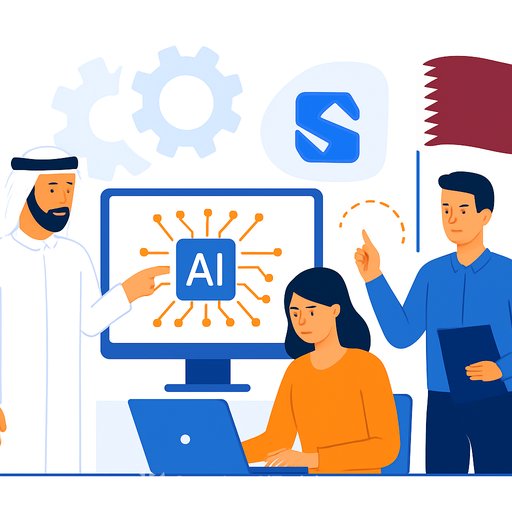
Doha - December 10, 2025. The Ministry of Communications and Information Technology (MCIT) announced the ALIF Program in collaboration with Scale AI during World Summit AI - Qatar 2025. The goal is straightforward: give government employees practical, accredited training to use generative AI responsibly and effectively in daily work. This move supports the Digital Agenda 2030 and speeds up digital transformation across public services.
What the ALIF Program delivers
Delivered through the Qatar Digital Academy, ALIF focuses on hands-on learning, not theory. The curriculum is built for both technical and non-technical staff, so AI becomes useful at every desk-from front-line service teams to engineering units. The emphasis is on responsible adoption, measurable outcomes, and skills you can apply the same week.
Two tracks that fit different roles
- ALIF Core (1 day): For administrative and executive staff. Covers how generative AI works, where it helps most, and how to improve service delivery with safe, smart use.
- ALIF Tech (2 days): For technical professionals. Goes deeper into modern generative models and guides teams to build real use cases that support AI solutions inside government entities.
Both tracks are workshop-driven. Participants leave with immediate next steps, not just slides.
Why it matters for government teams
- Better services with faster turnaround, clearer communication, and fewer manual steps.
- Confident adoption of AI based on guardrails and clear use cases, not guesswork.
- Shared language between policy, operations, and technical teams to move projects forward.
- Direct support for the sixth pillar of the Digital Agenda 2030-developing human competencies and sustaining digital transformation-alongside the Third National Development Strategy (2024-2030).
What happened at the summit
MCIT and Scale AI hosted an ALIF introductory session for representatives from multiple government entities. The session walked through the training structure, the two tracks, and how modern language models operate. Teams learned how to spot high-value use cases inside their own organizations and start shaping them into projects.
Duha Al Buhendi, Director of the Digital Society and Digital Competencies Department at MCIT, said: "The ALIF Program is a practical step toward strengthening government capabilities and enabling employees to understand and adopt generative AI in a structured and responsible way. Through this program, we aim to enhance AI skills across government entities to support the development of more efficient and high-quality services in line with the Digital Agenda 2030."
Dr. Noura Abu Khdeir, Head of AI Skills Development and Enablement at Scale AI, added: "Our collaboration with MCIT represents an important step in knowledge transfer and in providing specialized training that enables government employees to understand and effectively apply modern generative AI technologies. We believe that national capacity-building is essential to accelerating AI adoption and strengthening government readiness for the future."
How to engage
Government entities can coordinate with MCIT and the Qatar Digital Academy to nominate participants for upcoming cohorts. Start by mapping 2-3 priority use cases per department, then place the right people into ALIF Core or ALIF Tech based on their roles. This ensures quick wins and visible impact inside your workflows.
For program updates and broader digital initiatives, visit the MCIT website: mcit.gov.qa. If you need additional role-based AI upskilling paths, you can also explore curated learning options here: Complete AI Training - Courses by Job.
Bottom line
The ALIF Program is a strategic step to build a future-ready public workforce. It gives teams the skills, structure, and confidence to apply generative AI where it counts-improving services for the people of Qatar while strengthening delivery across government.
Your membership also unlocks: