Beyond the Algorithm: Why Medical Communications Still Need a Human Touch
Artificial intelligence (AI) can scan thousands of clinical studies in minutes, format citations instantly, and produce drafts that appear professional at first glance. This raises an important question: Are medical communicators becoming obsolete? While technology has transformed how we work, it hasn’t replaced the core purpose of medical communications.
The shift from paper-based literature reviews to AI-assisted content creation has been swift. Tools now auto-generate patient narratives, identify trends in large datasets, and help draft manuscripts in days instead of weeks. Formatting errors and consistency issues have dropped, and many compliance checks are semi-automated. For new medical writers, these tools are standard expectations, not novelties.
But despite these advances, AI cannot replace critical human skills like storytelling, judgment, or ethical decision-making.
Where Technology Misses the Mark
AI summarizes data by listing risks, confidence intervals, and outcomes with perfect formatting. However, it often misses clinical nuances. For example, a meta-analysis might include a real-world registry study that shifts how clinicians interpret results. This kind of insight isn’t always obvious in abstracts or discussions, but it’s crucial for accurate communication.
AI replicates what’s written but struggles with what’s meant. It can’t detect subtle shifts in treatment paradigms or real-world applicability. It doesn’t discern when new data challenges established care standards or instinctively flag concerns. Tone and responsibility also escape its grasp; AI might overemphasize positive results or downplay risks. Maintaining balance and integrity in scientific communication requires a human voice grounded in ethics and experience.
The Essential Human Element
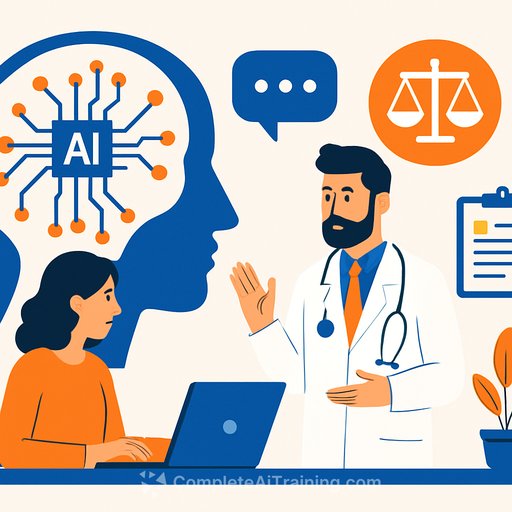
Medical communications isn’t just about sharing information—it’s about making sure it’s understood correctly. A medical writer might recognize that a statistically insignificant side effect could be serious for elderly patients. An editor might rewrite an AI-generated patient leaflet to avoid confusion. These choices demand empathy, clinical insight, and ethical judgment—qualities no algorithm possesses.
The best communicators combine scientific fluency, audience awareness, and moral responsibility. They know not just what to say, but why, how, and to whom. As medical communications expands into patient materials, social media, and multimedia, this human insight becomes even more critical.
The Skill Gap Between Humans and Tech
Experienced medical writers often have strong backgrounds in life sciences but limited training in machine learning or API integration. They may appreciate AI’s benefits but struggle to critically evaluate its outputs or use tools to their full potential. On the flip side, tech developers may not fully grasp medical writing workflows, regulatory needs, or ethical concerns. This disconnect can lead to underused or misapplied tools and resistance to adoption.
Medical Communications in Asia: Different Stages, Different Challenges
Globally, digital transformation in medical communications is advancing, but progress varies by region. Markets like Japan, the US, and the UK have mature ecosystems with medical writing academies, freelancers, and clients who value strategic scientific communication. Technology adoption here goes beyond efficiency; it’s embedded deeply in agency operations.
In contrast, Singapore and neighboring countries face foundational questions: How to develop local expertise? How to balance global compliance with cultural relevance? How to ensure digital tools educate and elevate instead of just automate? While many Singaporean agencies use reference managers and plagiarism checkers, fully integrated platforms combining content planning, compliance, and real-time collaboration are still uncommon.
Finding Balance: Human-Led, Tech-Enabled
The future lies in blending human judgment with technological efficiency. Let machines handle repetitive tasks like citation formatting and terminology checks. Keep interpretation, narrative building, and ethical oversight in human hands.
Achieving this requires collaboration. Writers should clearly communicate challenges. Developers need to design with user needs in mind. Regulatory experts should embed compliance throughout. Leaders must foster cultures valuing both speed and integrity.
Leading agencies customize AI tools based on real workflows, train algorithms on specific content, and bring writers and developers together. They invest in upskilling writers to critically assess AI outputs and maintain therapeutic expertise. Clear policies define when human oversight overrides automation.
Why the Human Pulse Matters
As AI capabilities grow, the temptation to rely on it fully will increase. But medical communications is about delivering responsible, contextual, and humane messages. Behind every trial is a patient; behind every drug monograph is a clinician making tough decisions. Behind every well-crafted document, there must be a human pulse.
Trust in this field depends on ethical communication. No algorithm can bear that responsibility. That duty remains—and should remain—with us.
Your membership also unlocks: