AI in St. Louis Classrooms: What's Working, What's Next, and How to Get Started
Students walked in, scanned a QR code, and entered an "AI space." No textbooks. No wait time. A teacher-built chatbot guided seventh graders through rational numbers while their teacher watched progress live from a tablet.
That scene at Lindbergh's Sperreng Middle School is becoming common across the St. Louis area. The goal isn't novelty. It's early, structured exposure so students learn to use AI responsibly - with adults setting the rules. "It's our responsibility to teach them how to use this ethically and responsibly," said Colin Davitt, Lindbergh's director of artificial intelligence and blended learning.
Why districts are moving now
Chatbots are now mainstream. ChatGPT launched in late 2022 and quickly became one of the most visited sites on the internet. Schools tried blocking access to curb cheating and off-topic content, but few want a permanent ban. The shift is toward guided use with guardrails.
Kirkwood is running micro pilots so teachers can try tools before scaling. A committee of librarians, counselors, and administrators spent 18 months vetting options and building ethical-use guidance, with staff training set for January. Rockwood approved several tools, created a high school course on effective AI use and citation, and still blocks ChatGPT on school devices (even at home).
Hancock Place set a target for at least 75% of high school teachers to use AI tools this year, providing Snorkl, Brisk, and SchoolAI across grade levels. "We're trying at every age level to show teachers… not to replace their job, but to enhance what they're already doing and help with creativity," said Michelle Dirksen, the district's director of technology.
Guardrails, policies, and training
A national survey from the Center for Democracy and Technology found most teachers and students used AI last school year, but also flagged risks like students turning to bots for mental health support or escapism. The message: Train staff, set clear rules, and vet tools before use.
Local boards are adopting the Missouri School Boards Association model policy that appoints an AI coordinator and requires an AI Use Plan focused on student safety and security. The state's guidance emphasizes ongoing professional development and a human-centered approach.
"We've always had technology in the classroom," said Eric Curts, a longtime educator and tech coach. "We just have never had technology this powerful. I get it - that can be a little scary."
Inside the classroom: practical wins
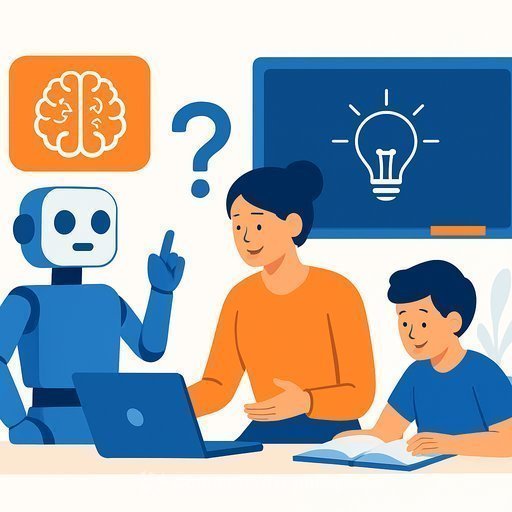
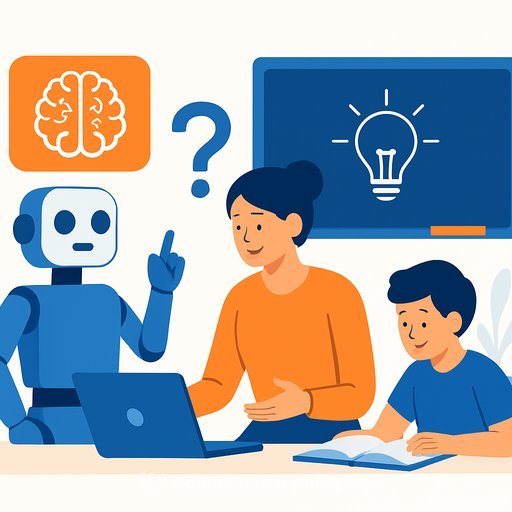
At Sperreng Middle School, teacher Matt Carmody created a chatbot to tutor students on rational numbers. It opened with, "What do you know about rational numbers?" He uploaded proficiency scales, tests, and quizzes so the bot aligned to targets. From the back of the room, he saw who was ahead, who needed help, and where to intervene.
The format engages every student, not just the vocal few. If someone drifts to celebrity gossip, the bot redirects. "If there's something you don't know, you can ask it," Carmody told students. "If you struggled with last night's worksheet, see if it could help you out."
Lindbergh students also have Securly's AI Chat at home, which limits conversation to academic topics and is monitored by teachers. "It will just help you step-by-step, like how Mr. Carmody would help us," said Sophie Crecelius, a student in Carmody's class.
Across districts, teachers are using AI for lesson ideas, parent emails, and student-facing experiences. Some create chatbots that speak as historical figures or literary characters. In Kirkwood, the MagicSchool platform acted like a writing coach, nudging a student on rhyme, word choice, and titles. "It prompts the student to think creatively about what they're doing," said Liz Grana, assistant superintendent of curriculum and instruction.
Partnerships and credentials
Lindbergh is partnering with Scale AI to build teacher training on AI literacy, aiming for at least 20% of teachers to earn credentials in AI fundamentals by 2026-27. Scale also signed the White House "Pledge to American Youth," offering grants and mentorship around AI. "It's important to teach our kids how to incorporate AI into what they do every single day," said AJ Segal, who leads Scale's St. Louis office.
Higher ed is moving too
St. Louis Community College piloted MathGPT for intermediate algebra. Webster University launched an AI-Assisted Learning and Instruction certificate for teachers. Maryville University invested heavily in "social learning companions" embedded in online courses. "It's kind of like a graduate assistant who never sleeps," said Michael Palmer, professor of informational systems and software development.
Maryville also built Mya, a recruitment assistant for its online speech pathology program. At UMSL, students built and tested an AI-powered robot dog named Triton to scan rooms with a laser and build 3D models - and, yes, it walks like a dog and rights itself if it tumbles.
Implementation playbook for school leaders
- Pick one high-impact use case per grade band (e.g., writing feedback, math tutoring, reading fluency) and pilot for 6-9 weeks.
- Start with "walled garden" tools that log activity, allow custom guardrails, and restrict off-topic chat.
- Publish student-facing norms: acceptable uses, citation rules, and off-limits topics (mental health, personal data, explicit content).
- Appoint an AI coordinator and create an AI Use Plan covering data privacy, security, and incident response.
- Train staff on prompt strategy, verification, bias checks, and how to cite AI-assisted work.
- Redesign assessments to reduce copy-paste answers: oral checks, process portfolios, and in-class performance tasks.
- Vet tools for privacy (data retention, model training, access controls) and ensure vendor contracts reflect district policy.
- Communicate with families: what students will use, how it's monitored, and opt-out options if needed.
- Set a review cadence: collect teacher and student feedback, usage data, and learning evidence before scaling.
Tools local educators are testing
- SchoolAI: Teacher-controlled "AI spaces" with progress monitoring and content-aligned prompts.
- Securly AI Chat: Academic-only assistant for homework support at home, with teacher oversight.
- Snorkl and Brisk: Planning, feedback, and productivity support for teachers.
- MagicSchool: Writing and thinking prompts that push students to iterate.
- Use cases: Draft emails, differentiate practice, build formative checks, create role-play chats with historical or literary figures.
Quick wins for the next 30 days
- Run a 15-minute staff huddle on citation norms and acceptable use. Share 3 prompt templates teachers can adopt tomorrow.
- Pilot one classroom chatbot aligned to a current unit. Track student engagement and misconceptions.
- Add an AI note to your syllabus/handbook: what's allowed, how to cite, and where to get help.
- Collect 5 anonymized student questions from homework each week and have an AI tool generate tiered supports.
Professional learning for your team
If you need structured courses, certifications, or tool roundups built for working educators, explore:
The balance to keep
Excitement is real. So is the need for restraint. As one tech coach said, this is the most powerful classroom technology we've seen. Use it to expand access, keep the human connection, and teach students how to think - with AI as a tool, not a crutch.
"We want to keep our students creative, we want to keep them up to date with what's going on," Dirksen said. "We really just want to prepare them for what's ahead."
Your membership also unlocks: