Mental health experts warn AI therapy tools risk reinforcing harmful thinking patterns
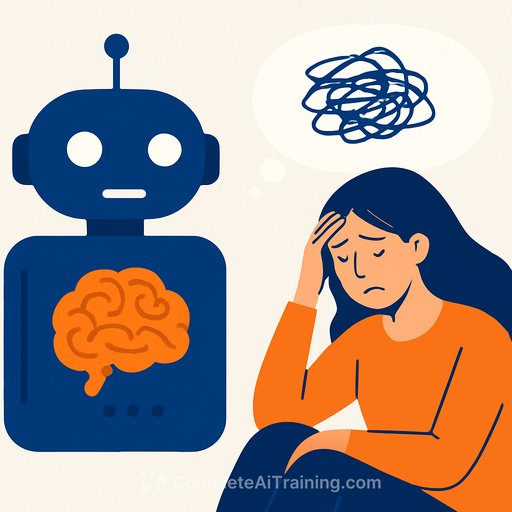
As more people turn to AI for mental health support, clinicians are raising concerns that the technology can worsen rather than help psychological struggles. Some users rely on AI voice features for real-time conversations about their emotional problems, receiving responses within seconds.
The immediate feedback feels helpful, but mental health professionals say it often misleads. Chase Lashley, an associate therapist at Lantern Hills Counseling, explained the core problem: AI mirrors what users input rather than challenging it.
"In a situation where the language we are using, it responds based on what we have already put in there. That has a tendency to reinforce unhealthy thinking," Lashley said.
Unlike a licensed therapist, AI lacks clinical judgment. It cannot identify and push back on distorted thinking patterns. Instead, it can trap users in loops of reinforced negative thoughts, keeping them stuck rather than moving toward healing.
In severe cases, people who relied heavily on AI for emotional support have taken their own lives. These incidents underscore the stakes when technology substitutes for professional care.
Privacy risks add another layer of concern
Chase Rainwater, the University of Arkansas Provost Fellow of AI, warned users about sharing sensitive information with AI systems. Data safety depends entirely on user awareness and settings.
"The reality is your information is as safe as you make it. You have to have some awareness in what you're doing. If you don't change settings, you may be setting it up for AI to be trained," Rainwater said.
Users often don't realize their conversations can feed into AI training datasets, potentially exposing mental health details to broader systems.
Human connection remains irreplaceable
Experts uniformly stressed that AI cannot replace human connection in therapy. Healing requires a therapist who listens with genuine empathy and care.
"You need a human being in front of you that can show you the empathy you need unconditionally, to show you they genuinely care and that they are listening to you," Lashley said.
AI may serve a limited role in certain situations-perhaps as a supplementary tool between therapy sessions. But it should never become a substitute for professional mental health care.
For healthcare professionals advising patients on AI for Healthcare applications, the takeaway is clear: technology has boundaries, especially in mental health. Understanding those limits protects patients from harm.
Your membership also unlocks: