
AI news ·
Meta faces AI copyright lawsuit while Pentagon contract boosts Scale AI stake value
Major publishers sued Meta for using copyrighted content to train its AI without permission. The company also faces UK Online Safety Act fees and holds a 49% stake in Scale AI, which just expanded its Pentagon contract to $500M.
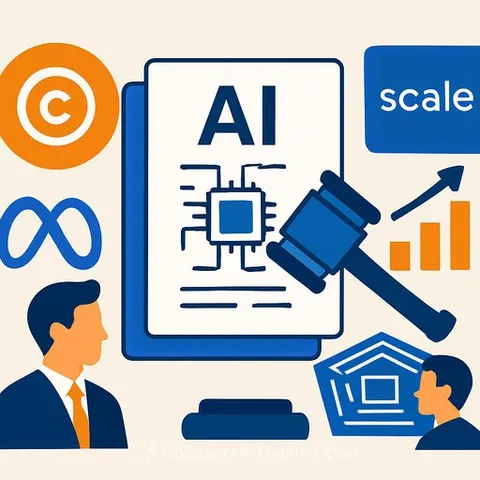
Meta Faces Copyright Lawsuits, UK Fees Challenge, and Pentagon Contract Exposure
Major publishers have filed a federal lawsuit accusing Meta Platforms of using copyrighted content to train its AI models without permission. The company is simultaneously challenging fees tied to the UK's Online Safety Act and holds a nearly 50% stake in Scale AI, which recently expanded its Pentagon contract for AI services to $500 million.
Meta's stock trades at $616.81 with a value score of 4. Over three years, the stock returned 163.6%. Over five years, 103.6%. The one-year return sits at 3.5%-modest gains that suggest much of the company's AI upside is already priced in.
Three Legal and Regulatory Pressures
Copyright claims. The AI copyright lawsuit centers on whether Meta can train large language models on published content without licensing agreements. An adverse ruling could impose financial penalties, force product changes, or tighten how Meta deploys its models globally.
Regulatory fragmentation. Meta is challenging UK Online Safety Act fees and faces encryption and stablecoin disputes in Canada and the EU. These regional conflicts increase compliance costs and could force different product versions across markets-a problem competitors like Alphabet and Amazon may avoid more easily.
Youth safety litigation. Ongoing cases alleging social media addiction could result in mandated product redesigns or financial settlements that constrain margins and product flexibility.
The Pentagon Contract Angle
Meta's stake in Scale AI connects the company to government AI workloads without requiring a full defense contracting operation. The $500 million Pentagon contract shows that Meta's AI infrastructure and expertise have value outside advertising-the company's core business.
This exposure sits partially outside current investor narratives about Meta's AI spending and future returns.
What Legal Professionals Should Track
Court filings and appeals in the copyright case will signal whether licensing requirements become mandatory. Regulatory decisions in the UK, EU, and Canada will determine whether Meta faces fragmented compliance rules or can maintain consistent global policies.
Watch for any disclosures about potential fines, product changes, or settlement terms. Meta's commentary on how Scale AI fits into its broader AI monetization strategy will clarify whether government contracts represent a meaningful revenue stream or a minor investment.
For legal professionals working on AI issues, these cases raise recurring questions: How do courts define training data rights? What licensing models will regulators require? How do safety obligations shape product design? The answers will affect not just Meta but the broader legal framework for AI across industries.
The copyright lawsuit, regulatory disputes, and Scale AI contract all pull in different directions. Legal headwinds could add compliance costs and constrain product design. Government AI contracts could open new revenue streams. The outcome depends less on quarterly earnings than on where courts and regulators draw the line on data use, content licensing, and platform safety.