Meta's 1-GW Data Center in Lebanon, Indiana: What Real Estate and Construction Teams Should Prepare For
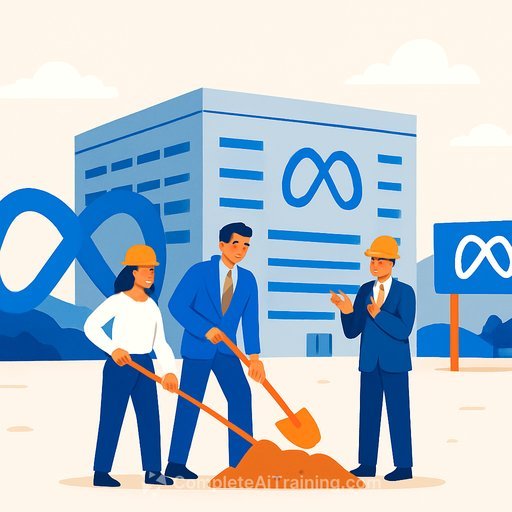
Meta has started work on a more than $10 billion, 1-gigawatt data center campus in Lebanon, Indiana, and told local officials it plans to pay for the facility's energy use. That single sentence says a lot. A 1-GW campus is rare, power-hungry, and signals multi-year demand for land, labor, materials, and grid upgrades.
Why this matters
- Scale like this reshapes local construction pipelines: earthwork, site utilities, substations, and hyperscale shells running in parallel.
- It can anchor an entire industrial submarket, pulling in suppliers, logistics, and permanent operations jobs.
- Expect long-lead items (transformers, switchgear, generators, chillers) to define schedule more than labor alone.
Site and land use signals
- Large, contiguous acreage with room for multiple buildings, on-site substations, stormwater, and future expansion.
- Clear paths for heavy haul access, crane pads, laydown areas, and 24/7 construction operations.
- Buffering and setbacks to manage noise, heat rejection, and traffic during peak build phases.
Power and grid coordination
A 1-GW campus is effectively a utility customer and an infrastructure project at the same time. Expect dedicated substations, transmission upgrades, and phased energization.
- Lock in interconnection milestones early; queue delays can push delivery more than any onsite activity.
- Sequence MV/HV yard construction alongside building shells to avoid idle time after topping out.
- Plan for concurrent commissioning teams across electrical, mechanical, and controls packages.
For context on interconnection processes, see regional guidance from MISO.
Cooling, water, and sustainability constraints
Cooling strategy (air-cooled, evaporative, or hybrid) drives water rights, wastewater design, and community engagement. Don't guess-align early with the owner's Design standards and local utility capacity.
- Rightsizing make-up water and discharge permits avoids rework during commissioning.
- Envelope orientation, heat rejection placement, and acoustic treatments can de-risk neighbor concerns.
- Expect energy efficiency and renewable procurement requirements to influence equipment selection.
General references on data center efficiency practices can help teams align on baselines.
Phasing and delivery model
- Think campus-first: roads, utilities, and backbone electrical before building-by-building fit-outs.
- Standardize bays, racks, UPS rooms, and MEP skids to cut learning curves across phases.
- Use rolling GMPs or target value delivery to keep procurement ahead of price volatility.
Workforce and supply chain
- Secure craft labor pipelines with multi-year agreements; peak manpower can be significant.
- Prequalify multiple parallel fabricators for steel, duct, pipe, and electrical skids.
- Reserve critical gear (transformers, switchgear, generators) months earlier than a typical industrial job.
Permitting, incentives, and local coordination
- Fast-track site packages: grading, erosion control, foundations, and utility permits.
- Coordinate with local jurisdictions on traffic plans, heavy haul routes, and night work windows.
- Expect discussions around taxes, abatements, or infrastructure cost-sharing typical of hyperscale campuses-structure schedules to align approvals with mobilization.
Risk controls that pay off
- Long-lead dashboard: real-time status on fabrication slots, factory tests, and ship dates.
- Commissioning-first mindset: build punchlist and QA/QC gates into each phase, not just at turnover.
- Contingency staging: spare parts, backup vendors, and alternative spec pathways pre-approved.
Local market impacts to watch
- Industrial land pricing and absorption may accelerate within a 20-40 minute drive time.
- Competition for power capacity can tighten for other large users; developers should verify utility headroom early.
- Hospitality, housing, and services demand typically lift during peak construction years.
Open questions (watch for updates)
- Specific phasing, building count, and delivery timeline.
- Cooling technology and water strategy.
- Renewable energy procurement and any grid upgrade commitments.
Bottom line for real estate and construction teams
Treat this as a multi-year, campus-scale program with utility-grade coordination. Get ahead on interconnection, long-leads, and labor. Standardize details and replicate. That's how you keep schedule integrity on a build that big.
If you're upskilling teams to meet hyperscale demand and AI-driven project workflows, explore practical training paths by role.
Your membership also unlocks: