Meta Rejects EU AI Code Citing Legal Uncertainty
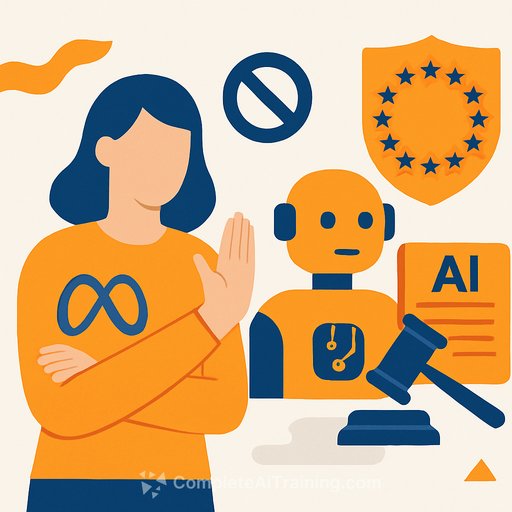
Meta Platforms (NASDAQ:META) has announced it will not endorse the European Commission's new voluntary Code of Practice for general purpose AI. Joel Kaplan, Meta's head of global affairs, expressed concerns that the proposals introduce greater legal uncertainty rather than offering clear guidance.
The Code requires AI developers to publish transparency reports, maintain comprehensive documentation on model features, and uphold broad copyright guarantees. Kaplan warned that these obligations exceed the original scope of the AI Act and could deter investment in advanced AI research.
Industry Pushback Against the AI Act
Earlier this month, approximately 45 industry groups appealed to Ursula von der Leyen, President of the European Commission, requesting a two-year delay in the AI Act's implementation. Their primary concern is that stringent regulations might drive talent and capital away from Europe toward jurisdictions with more relaxed rules.
Unveiled just last week by independent experts, the voluntary Code acts as a preparatory guide for companies ahead of the EU's mandatory AI regulations set to take effect next month. Under the AI Act’s risk assessment framework, AI systems classified as high risk will be subject to the strictest controls.
Balancing Regulation and Innovation
Meta's refusal to sign the Code underscores a widening divide between regulators prioritizing public safety and companies wary of regulations that could hinder innovation. With enforcement on the horizon, debates over AI governance in Europe are intensifying.
Legal professionals monitoring AI compliance should note the evolving landscape and the potential challenges posed by broad transparency and copyright requirements. Staying informed on regulatory developments and voluntary frameworks will be critical for advising clients or managing AI deployments within the EU.
- Transparency reporting obligations may increase legal exposure.
- Detailed documentation demands could complicate compliance processes.
- Broad copyright guarantees might affect intellectual property strategies.
For those in legal roles seeking to deepen their understanding of AI regulations and compliance, exploring targeted training can be beneficial. Relevant courses on AI governance and risk management are available at Complete AI Training.
Your membership also unlocks: