Meta releases brain-activity prediction model for neuroscience research
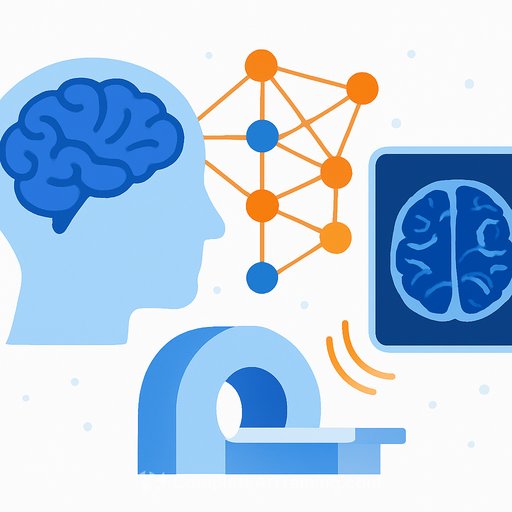
Meta has introduced TRIBE v2, an AI model designed to predict how the human brain responds to images, sounds and language. The system works as a "digital twin" of neural activity, allowing researchers to test theories without requiring human subjects in every experiment.
The model was trained on functional MRI (fMRI) data from more than 700 volunteers exposed to videos, podcasts and text. It achieves a 70x resolution increase compared to similar models and can make predictions with high speed and accuracy.
Zero-shot predictions across new subjects and languages
TRIBE v2 performs "zero-shot" predictions, meaning it can generalize results to new users, languages and tasks without additional training. Researchers can use the model to test hypotheses about brain function rapidly, rather than running repeated experiments with human participants.
The model reliably predicts high-resolution fMRI brain activity and consistently outperforms standard modeling approaches, Meta said.
Open release to accelerate research
Meta released the model's code, research paper and an interactive demo under a non-commercial license. The company said it hopes the open release will accelerate neuroscience research that leads to scientific and clinical breakthroughs.
Scientists working in AI for Science & Research can access the tools to apply the model to their own investigations.
Your membership also unlocks: