Meta signs AI data deals with major news publishers
Meta has reached commercial AI data agreements with USA Today, People Inc., CNN, Fox News, The Daily Caller, Washington Examiner, and Le Monde. The goal: feed its AI assistant with fresh reporting and link back to those outlets in response to news questions.
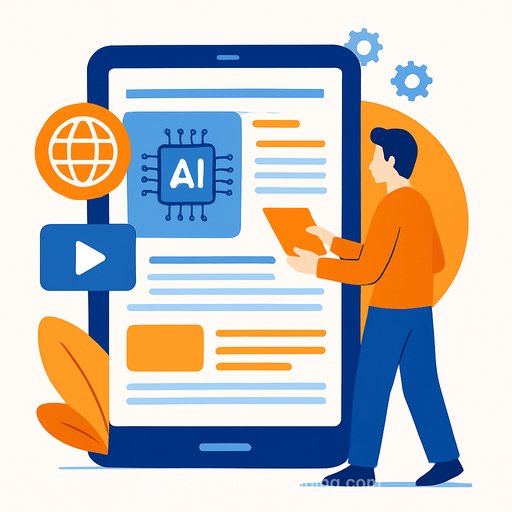
The company says users will see a wider mix of sources and live updates inside chat. In plain terms, more of your news discovery could start inside an assistant rather than a search box or a social feed.
What this means for readers and writers
Readers get quick answers and direct links without hunting across multiple tabs. Writers and editors get a new distribution channel-one where clear facts, clean structure, and fast updates win placement.
- Expect more referral traffic from assistant answers if headlines and metadata are clear.
- Front-load the facts: tight ledes, crisp subheads, and a one-paragraph summary near the top.
- Use schema, publish/update timestamps, and clean URLs to help assistants cite accurately.
Why Meta is doing this
Competition in AI is intense, and content licensing helps assistants feel useful on day one. Meta is investing heavily after criticism of its Llama 4 model and has reportedly shifted budget away from metaverse projects.
More partnerships mean more credible sources and reasons for people to open Meta's assistant daily. The company says it plans to keep adding partners and testing new features.
What's actually in these deals
Financial terms were not disclosed. People Inc. and USA Today confirmed the arrangements separately.
The core is access: Meta's assistant can surface near real-time updates and link directly to publisher articles when users ask news-related questions.
Practical checklist for newsrooms and freelancers
- Optimize for freshness: clear timestamps, visible update notes, fast sitemaps/feeds.
- Answer the query early: what happened, who's involved, why it matters.
- Write link-friendly headlines that state the news plainly and avoid ambiguity.
- Add strong provenance signals (byline, outlet, location) to support trustworthy citations.
- Track new referral sources labeled as "assistant" or "chatbot" where analytics allow.
- Document licensing contacts and FAQs for potential AI partnerships.
Risks and open questions
- Traffic concentration: assistants may prefer a small set of outlets.
- Attribution quality: will links be prominent enough to drive clicks back to publishers?
- Correction speed: how quickly do fixes and updates flow through the assistant?
- Monetization: with no public terms, revenue impact is still unclear.
Bottom line: assistants are becoming a front door for news. If you write for a living, structure your reporting so an AI can quote it cleanly-and so a reader wants to click through for the full story.
Learn more: Explore Meta's assistant here: Meta AI. For writers leveling up their AI workflow, see these curated tools: AI tools for copywriting.
Your membership also unlocks: