Meta buys Limitless to accelerate AI wearables: what it means for builders
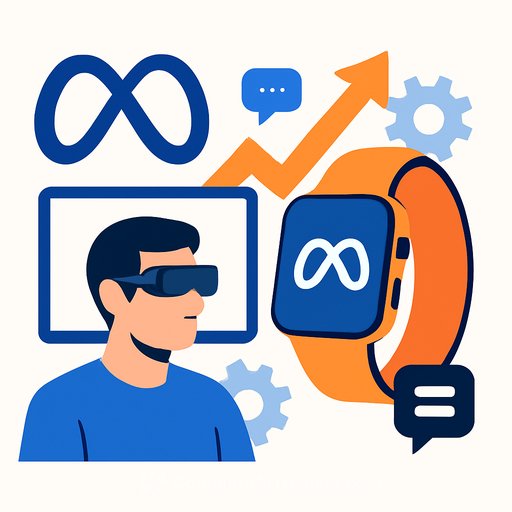
Meta has acquired Limitless, the startup behind a pendant-style recorder that captures conversations and turns them into searchable transcripts and summaries. The deal signals a push to ship AI-first hardware that blends passive capture with recall and assistance.
"Meta recently announced a new vision to bring personal superintelligence to everyone and a key part of that vision is building incredible AI-enabled wearables. We share this vision and we'll be joining Meta to help bring our shared vision to life," said Limitless co-founder and CEO Dan Siroker.
What Meta is getting
Limitless (formerly Rewind) builds a small wearable that clips to clothing or a lanyard. It records real-world conversations, produces transcripts, and generates summaries in a companion app. It targets everyday productivity and memory support rather than fitness or notifications.
Meta already partners with EssilorLuxottica's Ray-Ban and Oakley on AI-powered smart glasses and is investing in next-gen devices. The company also recently hired longtime Apple design leader Alan Dye, signaling deeper attention to hardware and human interface.
"We're excited that Limitless will be joining Meta to help accelerate our work to build AI-enabled wearables," a Meta spokesperson said.
Financial terms were not disclosed. Limitless has raised more than $33 million from investors including Sam Altman and A16z.
Status for users
Current Limitless users will continue to be supported. Sales to new customers will pause, and existing users will be asked to accept revised privacy terms to keep service active.
Why this matters for IT, engineering, and product teams
- Always-on capture becomes normal: Expect microphones and on-device ASR to show up across wearables. Plan for consent prompts, meeting disclaimers, and org-wide policies for recording and storage.
- Data governance moves to the front: Voice logs, transcripts, and summaries create sensitive datasets. Define retention limits, redaction, encryption, and access controls. Map requirements to GDPR/CCPA and internal compliance.
- On-device vs cloud trade-offs: Latency, battery, and privacy will drive where inference runs. Evaluate edge pipelines for wake-word, diarization, and summarization, with cloud for heavier retrieval and analytics.
- Retrieval-first UX: The job to be done is recall: who said what, when, and why it matters. Build fast search, time-stamped highlights, action item extraction, and shareable summaries that respect permissions.
- Integration surface area: Watch for SDKs that tie into calendars, calls, messaging, and docs. If Meta exposes APIs, plan pilots that connect transcripts to ticketing, CRM, and knowledge bases.
- Procurement reality: With sales paused, avoid committing to large device rollouts until the roadmap is clear. Keep alternatives in evaluation and prioritize software workflows that are hardware-agnostic.
What to watch next
- SDK and developer story: Will Meta offer APIs for capture, transcript storage, and summarization? Timeline and access model will set the pace for pilots.
- Privacy defaults: Clear consent flows, recording indicators, and enterprise controls will determine adoption inside regulated teams.
- Integration into smart glasses: How quickly Limitless features show up in Ray-Ban Meta smart glasses will hint at Meta's go-to-market path for everyday use.
- Enterprise features: SSO, audit logs, data residency, fine-grained permissions, and admin tooling are must-haves for larger deployments.
- Design direction: With Alan Dye on board, expect stronger coherence across hardware, voice UI, and companion apps.
Quick background
Limitless started as Rewind, focused on personal memory and searchable recall. It grew into a wearable-plus-app system and attracted backers such as Sam Altman and A16z, raising more than $33 million.
Related links
For teams building AI products
If you're planning roadmaps around voice, summarization, or retrieval, align your pilots with clear policies, consent, and measurable outcomes (time saved per meeting, search latency, action-item accuracy). Start with a narrow workflow, then expand once privacy and reliability hold up under real usage.
Your membership also unlocks: