
AI news ·
Meta's CEO AI agent prototype exposes governance gaps CIOs must address now
Meta is building an AI agent to help run the company, exposing governance gaps most enterprises haven't addressed. CIOs who wait will inherit someone else's framework-or an incident.
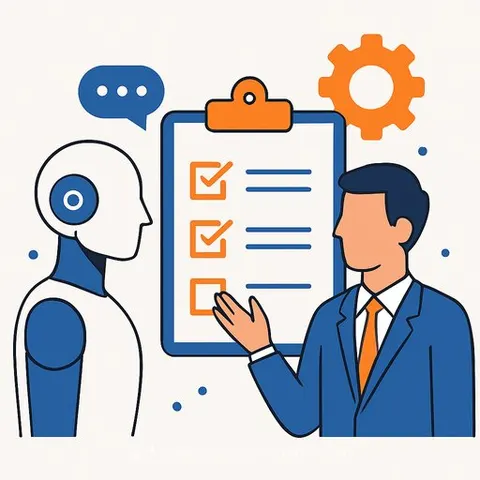
Meta's CEO AI Agent Exposes Governance Gaps CIOs Must Address Now
Meta is building an AI agent to help run the company, according to reporting from the Wall Street Journal in March 2026. The agent retrieves internal signals and compresses information that would normally require multiple human intermediaries. CEO Mark Zuckerberg has confirmed the direction publicly.
For enterprise IT leaders, the specific prototype matters less than what it signals: executive-level AI agents expose governance gaps that most organizations have not addressed. CIOs who dismiss this as a vendor announcement will be behind when their own business units demand similar tools.
The difference between this and prior AI hype
Every AI tool most CIOs deployed in the past three years - copilots, chat interfaces, code generators - executes tasks within human-set boundaries. A human reviews the output and decides what to do with it.
A CEO-level agent points toward something different. It's designed to act on consequential choices at the highest level of organizational authority, potentially without a human in the loop. That is not a copilot. It's a different class of technology.
"Handing over executive authority without human involvement is not where responsible organizations are headed in the near term," said Orla Daly, CIO at Skillsoft.
Four enterprise risks CIOs can't ignore
Accountability gaps. When an AI agent acts on behalf of a senior executive, the chain of human accountability breaks down. Executive decisions involve trade-offs between ethics, law, and business strategy.
"If an AI agent makes a bad call, such as an autonomous hiring decision that reflects training bias or a strategic pivot that violates a contract, a person still needs to be accountable," said Jack Nelson, CISO and deputy legal counsel at Ivanti. "You cannot sue an algorithm, and blaming AI is not a valid legal defense in a courtroom."
The accountability question extends to the board. Companies are responsible for the actions of their agents, just as they are for their employees. If there is no CEO to take responsibility, the board of directors implementing AI at that level should be prepared to have their names on any complaint if something goes wrong.
Data access sprawl. A CEO-level agent requires CEO-level data access. A CEO's inbox may contain information covered by attorney-client privilege, NDAs, securities regulations, and other privacy concerns. The location and access of data at that level needs to be crystal clear before implementation.
Shadow deployment. Business units will not wait for IT governance to catch up. Teams experiment with tools outside formal processes, often with good intent but without shared guardrails. This introduces exposure around data use, compliance, and security.
Vendor lock-in. Meta moved from open-source to closed-source AI development when it launched Muse Spark in April 2026. Other organizations might not want to be locked into a closed-source agentic AI scenario.
The infrastructure reality check
CEO agents are not coming anytime soon. Most enterprises are not ready for agentic AI at any level, let alone at the executive level. McKinsey's 2026 AI Trust Maturity Survey found that only about one-third of enterprises report maturity levels of three or higher across strategy, governance, and agentic AI governance.
Executive-level agentic AI requires four capabilities most organizations lack:
- Clean data pipelines. AI agents operating with executive authority would require exceptional confidence in data quality, lineage, and traceability. Every decision would need to be explainable and defensible after the fact.
- Identity and access management. A least-privilege, privacy-by-design approach is the minimum viable floor. Most enterprises have not applied this to the level required for executive-level agents.
- Audit logging. Effective governance requires real-time monitoring of agent activity, deterministic guardrails on permitted actions, and clear audit trails for every action taken. Most enterprises have not built this capability to the level required.
- AI-ready integration layers. Executive-level agents would need read access - and potentially write access - to ERP, CRM, and decision-support systems that were not designed for AI agents. The APIs, middleware, and data pipelines required are still maturing at most organizations.
What CIOs should do in the next 6 to 18 months
Establish agentic AI governance policy now. A governance policy written after a business unit has deployed is remediation, not governance. Create a cross-functional AI Governance Council that distinguishes between acceptable and prohibited AI use cases and requires a sanctioned pathway for submitting new tools.
Audit which decisions are AI-delegable. Not every decision is safe to delegate to an agent. Map which choices can be handled autonomously and which must stay with a human before deployment begins. This means clear governance, explicit boundaries, auditability, and defined escalation paths.
Engage legal and compliance on liability frameworks early. Map two distinct risks: untraceable bias in AI decision-making and direct legal accountability for AI-driven outcomes. Both need remediation before agents operate at scale.
Build AI literacy at the board level. If a CEO AI agent generates board questions the CIO cannot answer, that is a governance gap that will widen as the tools mature. Board members need to understand that agentic AI works best as an intelligence layer, not a replacement for leadership.
Run a controlled pilot on a lower-stakes use case first. Companies that win in the next 18 months will not be those that deployed AI agents the fastest. They will be those that can stand behind them when things go wrong.
The strategic upside
Governance built ahead of deployment is not a defensive posture. It separates organizations that can scale agentic AI from those that get caught flat-footed when business units move without IT.
CIOs who move now will define the governance standards their organizations operate under. Those who wait will inherit someone else's framework or an incident.
"When those pieces come together, agentic AI becomes a real competitive advantage, not because it removes humans from the loop, but because it sharpens how decisions are made," Daly said. "When they don't, it simply accelerates exposing existing gaps."
For executives and strategy leaders, understanding these governance frameworks now positions your organization to move faster when executive-level AI agents become viable. AI for Executives & Strategy covers the decision-making frameworks and organizational considerations essential to this transition.