Meta's TRIBE Model Predicts Brain Activity With 70-Fold Resolution Boost
Meta's Fundamental AI Research team has released TRIBE, a foundation model that predicts how the human brain processes visual and auditory information. The system was trained on functional magnetic resonance imaging (fMRI) scans from volunteers watching movies and listening to podcasts, achieving a resolution 70 times higher than previous neural decoding systems.
The model enables what researchers call "in-silico neuroscience"-running thousands of virtual experiments to simulate neural responses without requiring expensive brain scans. This approach could accelerate development of brain-computer interfaces and treatments for neurological disorders.
How TRIBE Differs From Previous Systems
Earlier AI models in neuroscience were narrow, trained on small datasets to decode single tasks for specific individuals. TRIBE is a foundation model trained on diverse, real-world stimuli across multiple sensory modes.
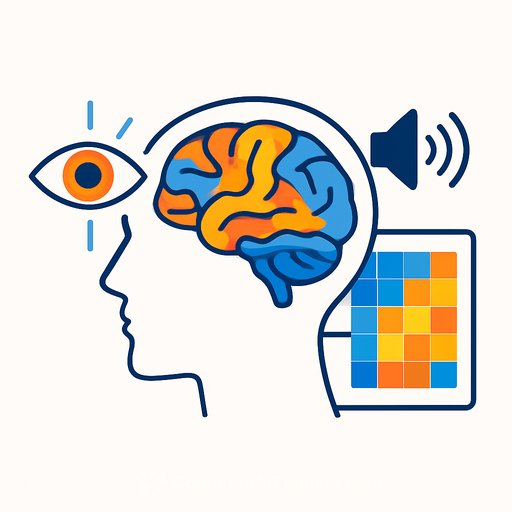
The model maps how the brain's "ventral stream" (responsible for visual recognition) and auditory stream process information simultaneously. It uses the Transformer architecture-the same technology powering large language models-to understand how different sensory inputs converge in the cortex.
TRIBE also demonstrates "zero-shot" capabilities. It can accurately predict brain activity for new individuals and languages it was never specifically trained on, without requiring retraining.
The Technical Achievement
The 70-fold resolution increase allows researchers to distinguish fine-grained differences in how the brain processes stimuli. The model can differentiate between a whispered word and a loud noise, or a moving object and a static scene, at a much finer level than previous systems.
The system runs significantly faster than predecessors while maintaining accuracy. Meta released TRIBE v2, its codebase, and a demo to the scientific community to ensure transparent development.
What In-Silico Neuroscience Means for Research
In-silico neuroscience operates like digital wind tunnels in aerospace engineering. Instead of testing designs on physical prototypes, researchers use TRIBE as a digital test subject.
Scientists can now test hypotheses about how the brain responds to specific stimuli, identify where neural signaling breaks down, and explore treatments for conditions like aphasia-all without scheduling expensive fMRI sessions. This reduces both cost and time for preliminary research phases.
What TRIBE Is Not
The model predicts how brains respond to input-a process called encoding. It does not read private thoughts or internal monologues, which would require decoding internal mental states. The high resolution maps the architecture of sensory processing, not the content of consciousness.
While the technical leap is significant, TRIBE remains a tool for understanding how the brain organizes information, not for accessing what people are thinking.
Next Steps
Researchers can now use TRIBE to accelerate brain-computer interface development and investigate neurological disorders at scale. The open release to the scientific community should enable validation across different research groups and potential applications beyond those Meta has explored.
For professionals working in neuroscience research, understanding foundation models like TRIBE matters as AI increasingly shapes how experiments are designed and hypotheses are tested. Learn more about AI applications in science and research to stay current with these developments.
Your membership also unlocks: