
AI news ·
Miami University faculty union seeks contract protections against AI replacement
Nearly 800 Miami University faculty and librarians are negotiating contracts to ban AI replacement. The administration refuses this while mandating AI use in 13 departments.
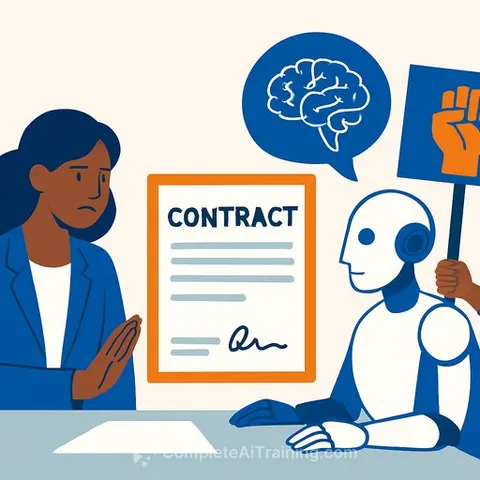
Faculty and librarians at Miami University are currently negotiating contracts with the administration over a central sticking point: protections against being replaced by artificial intelligence. The dispute highlights a growing tension in higher education as universities push to integrate untested AI tools into curricula while educators warn that such automation threatens core learning outcomes.
Contract negotiations over AI protections
The Faculty Alliance of Miami, a union representing nearly 800 full-time continuing faculty and librarians, is demanding basic protections. This includes a specific stipulation that faculty cannot be replaced by artificial intelligence. The university administration has refused to agree to these terms.
This standoff occurs as the university requires all departments to integrate AI into their curricula, starting with 13 departments this fall. This mandate proceeds despite ongoing debates about the practical application of AI for Education. Faculty note that students already use these tools to complete assignments even when explicitly forbidden.
The limits of automated instruction
Educators argue that learning and teaching remain fundamentally human endeavors. They point out that AI substitutes product for process, bypassing the critical thinking required to build cognitive skills. Furthermore, large language models frequently invent facts, names, citations and quotes.
These models also train on data reflecting existing historical power differences. The result is that local, Indigenous and non-Western knowledge producers tend to be excluded from the training data. Meanwhile, the sources AI draws from remain obscured, making it difficult to determine who is left out.
As American Association of University Professors President Todd Wolfson said, "Higher education exists to advance human understanding, critical inquiry, and the public good-not to become subordinate to an extractive AI economy that deepens inequality and erodes democratic life."
Growing labor pushback across sectors
As AI tools become embedded in platforms like Canvas, educators must evaluate these systems carefully. Access to structured training, such as an AI Learning Path for Teachers, can help faculty understand the mechanics of these tools while maintaining human oversight in the classroom.
Labor unions are actively fighting to protect the public interest from AI dangers. According to a new AFL-CIO poll, more than nine out of 10 US workers support pro-worker policies on AI and view labor unions as the primary source of protection.
Similar victories are emerging in other fields. The New York Times News Guild recently won contract language preventing AI-related layoffs and requiring AI tools to meet strict editorial standards. Last month, POLITICO journalists shut down two AI tools that generated low-quality content following an arbitration win.
Why this matters for education professionals
Educators face increasing pressure to adopt automated tools without institutional safeguards. The Miami University dispute demonstrates that faculty must actively negotiate contract terms to prevent AI from displacing human instruction. Professionals in education should monitor these labor developments and advocate for clear policies that prioritize human expertise over automated content generation.