
AI news ·
Michael Kassan on what separates substance from theater at Cannes Lions
Michael Kassan launched 3C Ventures after 26 years at Cannes Lions to advise on AI strategy. The firm focuses on practical execution over tech promises.
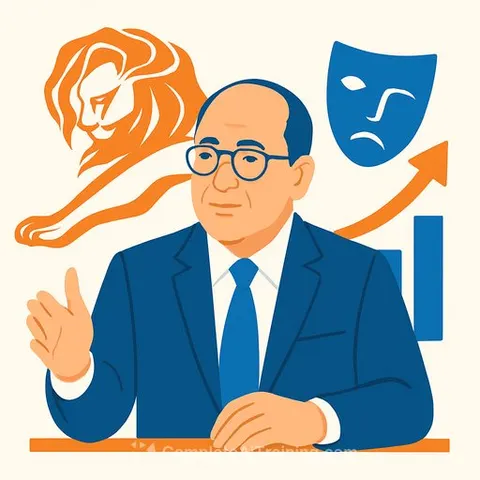
Michael Kassan has attended Cannes Lions for 26 years. The founder and CEO of 3C Ventures, often called the "King of Cannes," has watched the event grow from a small awards ceremony with a few agency parties into a global gathering of marketers, tech giants, and celebrities. That transformation mirrors the changes Kassan now helps clients navigate through his strategic advisory firm, which he launched in 2024 after decades advising the industry's biggest companies.
In a wide-ranging interview, Kassan laid out how leadership teams are grappling with a pace of change accelerated by AI, why the modern CMO role has become one of the toughest jobs in the C-suite, and what separates successful media deals from those that collapse after the press release.
The gap 3C Ventures fills
Kassan said the firm was built around an operator's lens - a team of executives who have run businesses, managed growth, and delivered results through transformation. "We don't view strategy as the finish line," he said. "We spend as much time focused on implementation, partnerships, and execution as we do on the recommendation itself."
The most common question clients ask is deceptively simple: "What should we do now?" That can mean rethinking an agency model, building an AI plan that connects to the business, or figuring out where a brand should show up in culture. Kassan said companies are being sold a platform, a dashboard, or a promise of efficiency, and his role is helping them "separate substance from theater."
Where the market is moving
3C Ventures looks for opportunities where the need is clear, leadership is strong, and the business has a reason to matter. Kassan is especially interested in companies at the intersection of technology and human behavior. "Technology can get you into the conversation. Trust and execution keep you there," he said.
He pointed to commerce media as one of the most interesting sectors because the distance between discovery and purchase keeps shrinking. Sports also have enormous momentum, delivering live attention, community, and scale in a fragmented media world. Creator-led businesses, modern measurement, identity infrastructure, and AI-enabled workflows round out the areas he watches closely. "The common thread is usefulness. The market needs a clear set of tools, partners, and ideas that solve real problems."
AI's real impact on advertising
Kassan acknowledged that AI will make many tasks faster and cheaper - production, reporting, versioning, analysis, and optimization. But the larger shift concerns value. "For decades, a lot of the industry was built around producing things: plans, reports, assets, decks, content, recommendations. AI increases the supply of all of that," he said. When supply increases, value moves toward what is harder to automate.
Judgment, taste, originality, and the ability to ask the right question all become more valuable. "AI will change the mechanics of creativity and media. It will also make great human judgment easier to spot." Still, he cautioned that the technology conversation is ahead of the operating model conversation. Many companies still have decision-making structures built for a slower market.
For CMOs adapting to this shift, the AI Learning Path for CMOs addresses the exact range of skills Kassan described - from connecting marketing to the broader business model to building teams that can keep learning as the job changes.
The modern CMO and consolidation realities
Kassan described the CMO role as one of the most complicated jobs in the C-suite. The best are "translators" who can sit with the CEO and talk about growth, with the CFO about returns, and with the CTO about systems - all while maintaining a connection to creative teams and consumers. "That requires range. It also requires curiosity, because the job keeps changing."
On media consolidation, Kassan said most acquisitions make sense on announcement day. "The hard part starts after the press release." A deal needs a clear view of how the combined company will create more value for clients, customers, and talent. Cost savings can support a deal, but long-term value usually comes from better products, stronger talent, better distribution, or a more compelling market position. "Deals are financial transactions, but companies are human systems."
Cannes Lions 2025: what's on the agenda
This year, 3C Ventures has an expanded presence anchored by PLAGE 3CV, a seaside destination designed for hospitality, thought leadership, and business development. Programming covers culture, commerce, creators, fandom, sports, and AI. The firm also co-hosted the annual 3CONVENE Executive Dinner with Disney at Hotel du Cap, followed by the iHeartMedia After Dark Celebration with Condé Nast and Capital One, featuring a DJ set by Questlove.
Kassan predicted AI will dominate the week's conversations, along with commerce and retail media, sports, creators, measurement, and the evolving agency model. But he said the more interesting question is how companies must change in response. "AI can make organizations faster, but speed only helps if the organization knows where it's going." Marketers are also thinking hard about trust as consumers move through more channels and platforms than ever.
Why this matters for executives and strategy leaders
Kassan's view of the market strips away the noise that surrounds AI adoption and media transformation. The takeaway for strategy leaders is not to chase technology for its own sake but to close the gap between insight and execution. The firms that win will be those that build operating models, talent structures, and decision-making processes that match the speed of the tools they are deploying. As Kassan put it, "The more successful brands will use technology to become more relevant and more useful, while still feeling human." For executives building those capabilities, resources like AI for Executives & Strategy offer a practical starting point.