Michigan's largest investment: a multi-billion data center planned for Saline Township
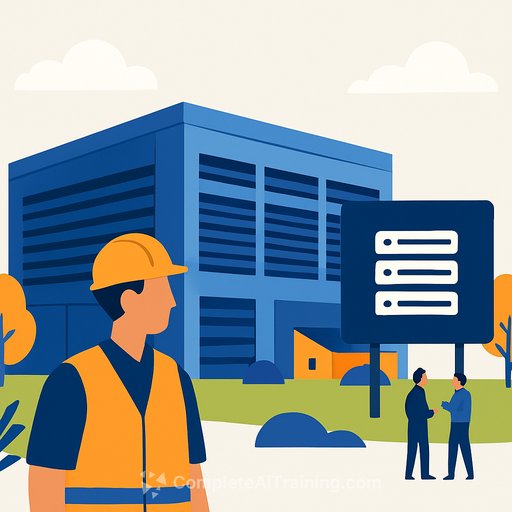
Michigan Gov. Gretchen Whitmer has framed a proposed data center in Saline Township as the largest investment in state history. For IT and development teams across the region, that signals serious capacity coming online and a long runway of technical work, hiring, and vendor opportunities.
The developer hasn't been publicly detailed in this summary, but the scope is clear: multi-billion dollars, a sizable footprint, and a long buildout. Below is what matters for engineers, builders, and tech leaders who want to plug in early.
What's on the table
- Location: Saline Township, with state-level backing and attention.
- Scale: Multi-billion dollar campus, likely built in phases.
- Workloads: Could serve hyperscale cloud, AI/ML training and inference, or mixed enterprise use. Final mix will drive everything from network design to cooling strategy.
- Economic stake: Construction and operations jobs, plus a pull-through effect for local suppliers and services.
Skills and roles this will demand
- Site reliability and DevOps for automation, capacity planning, and incident response.
- Network engineering for 100/400G fabrics, routing diversity, and low-latency paths.
- Security and compliance (SOC 2, ISO 27001, and any regulated workloads).
- Facilities and MEP teams for electrical systems, cooling, and monitoring (DCIM/BMS).
- Data platform, AI/ML ops, and storage engineering for high-throughput pipelines.
Technical considerations teams should prep for
- Energy and grid: Interconnection timelines can be lengthy. Expect a mix of utility upgrades, backup generation, and battery systems. Renewable procurement often includes PPAs and RECs.
- Cooling: Traditional chilled water and CRAH/CRAC remain common, but expect targeted liquid cooling for dense AI racks. Water usage policies will shape design choices.
- Resilience: Tier goals dictate redundancy. Think fault domains, isolation per building, diverse fiber routes, and rigorous failover testing.
- Efficiency: PUE/WUE targets, hot/cold containment, and real-time telemetry feed continuous tuning. See guidance on efficiency from ENERGY STAR for Data Centers.
- Observability: Unified metrics across IT and facilities-logs, traces, thermal maps, and electrical telemetry-so SRE and MEP see the same truth.
Policy, incentives, and permitting (what to expect)
Projects at this scale tend to include state or local incentives, tax arrangements, and a stack of permits. Early engagement with utilities, township boards, and environmental regulators keeps timelines from slipping. If you sell into this stack, understand procurement rules and bonding requirements upfront.
Community concerns you should be ready to address
- Water use: Evaporative systems raise questions; closed-loop or liquid approaches may lower draw but change cost profiles.
- Energy load and noise: Utility upgrades, transformer yards, and backup generators require clear mitigation plans.
- Traffic and land use: Construction phases strain roads; logistics and staging plans matter.
- Transparency: Share design choices, sustainability targets, and monitoring data to build trust.
Timeline and typical next steps
- Site planning, zoning approvals, and environmental reviews.
- Utility interconnect studies, substation work, and fiber route planning.
- Phased construction: core and shell, MEP, white space fit-out, then progressive commissioning.
- Ramp in stages: start with lower density, then roll high-density AI blocks as cooling and electrical capacity come online.
Where local vendors and teams can plug in
- MEP engineering, low-voltage cabling, fiber, and EPC services.
- Security (physical and cyber), SOC buildout, and compliance readiness.
- Staffing for SRE, network, facilities ops, and 24/7 monitoring.
- Managed services for backup, DR, observability, and cost governance.
Action checklist for IT and dev leaders
- Map workloads that could benefit from local latency or expanded capacity.
- Get infra as code and automation in place now; it shortens migration windows later.
- Design for redundancy: multi-AZ thinking, diverse fiber, and clear failover runbooks.
- Tighten observability so facilities and SRE share dashboards and alerts.
- Prep compliance packets (asset inventory, data flows, encryption, vendor risk).
- Engage with the developer early for onboarding requirements and pilot timelines.
Level up your team for data center and AI workloads
If you're building capability ahead of the curve, upskill in automation, AI ops, and cloud architecture. These resources can help:
Deeper context
- Uptime Institute for tier, resilience, and efficiency best practices.
- ENERGY STAR: Data centers for practical guidance on efficiency and benchmarking.
Bottom line: a build of this size can reshape regional capacity and vendor ecosystems. If you prepare your architecture, teams, and processes now, you'll be first in line when doors open.
Your membership also unlocks: