Microsoft and Nvidia tackle nuclear power's delivery bottleneck with AI
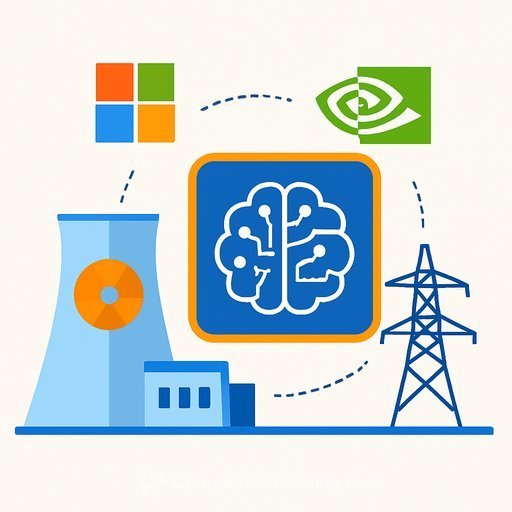
Nuclear power plants take years longer to build than the grid needs them to. Microsoft and Nvidia are deploying AI tools to compress those timelines by automating the engineering and regulatory work that currently bogs down projects.
The collaboration targets a specific problem: engineers spend thousands of hours drafting, cross-referencing, and reviewing tens of thousands of pages of documentation during permitting and design phases. Customized engineering, fragmented data, and labor-intensive regulatory reviews stretch schedules before construction even begins.
How AI compresses the timeline
Digital twins and simulations let engineers validate designs virtually and catch inconsistencies early. This eliminates rework that would otherwise surface during construction or regulatory review.
Generative AI automates documentation workflows, creating audit-ready applications for regulators. The technology handles gap analysis and drafting, freeing experts to focus on safety evaluation rather than text reconciliation.
Southern Nuclear and Idaho National Laboratory have already applied these tools to streamline engineering and safety analysis reports, improving consistency and supporting faster decisions.
Operations and ongoing monitoring
Once plants operate, AI-powered sensors and digital twins monitor performance and detect anomalies. This enables predictive maintenance while human operators retain control of critical decisions.
AI links design assumptions to operational performance, giving operators, regulators, and stakeholders continuous visibility into plant behavior. The result is a more predictable environment that reduces risk without compromising safety.
Who's involved
Nvidia Inception startups Everstar and Atomic Canyon are contributing specialized capabilities. Everstar applies domain-specific AI for nuclear power to manage Azure workflows and govern data pipelines. Atomic Canyon provides developers access to these tools through its Neutron platform.
Yasir Arafat, Chief Technology Officer at Aalo Atomics, said the approach matters because "there's no room for anything less than proven reliability" in nuclear operations.
The remaining challenge
AI can optimize engineering, permitting, and operations, but the industry still faces regulatory complexity and the need for disciplined execution. Better tools don't eliminate the need for careful oversight.
For operations professionals: Understanding how AI for Operations and Generative AI and LLM technologies work will matter as these tools spread across critical infrastructure sectors.
Your membership also unlocks: