Microsoft AI Lawsuit: What Product Teams Need To Know Right Now
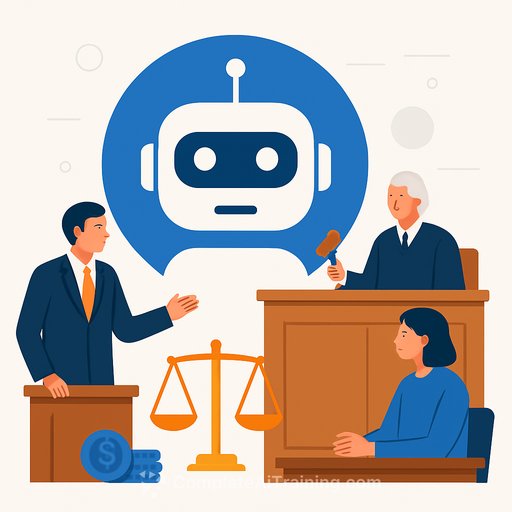
A new lawsuit targets Microsoft (NasdaqGS:MSFT) and OpenAI over alleged mental health harms tied to interactions with the GPT-4o version of ChatGPT. The plaintiff claims a severe psychotic episode followed usage, arguing safety testing was cut short and safeguards were removed. The suit seeks damages and structural remedies: mandatory safety layers, independent oversight, and clearer mental health risk disclosures.
Why this matters to product development: advanced models are moving deeper into everyday workflows through Azure, Copilot, and embedded GPT features. Court-ordered controls, regulator-driven audits, or required disclosures could slow launches, raise operating costs, and force changes to product design and rollout strategy.
What This Means For Your Roadmap
- Safety architecture becomes a feature, not an afterthought. Expect pressure for multilayer defenses: prompt-level policies, system message hardening, content filtering, retrieval and tool gating, plus crisis escalation pathways for sensitive topics.
- Compliance is productized. Independent audits, safety reports, model cards, change logs, and documented sign-offs may shift from "nice to have" to "ship blocker." Build this into your delivery cadence.
- Rollouts slow and costs rise. Cohort gating, kill switches, human-in-the-loop review, and expanded moderation can add latency and compute spend. Budget for it; measure it.
- Enterprise buyers will demand proof. Clear disclosures, acceptable-use constraints, and liability language will become part of the UX-onboarding flows, in-product notices, and admin controls.
A Lean Safety Stack You Can Implement This Quarter
- Policy and prompts: Codify disallowed topics and high-risk behaviors. Lock policies in the system prompt and test for jailbreak resilience.
- Filters and routing: Use multi-pass content filters (input and output) for self-harm, medical, legal, and finance claims. Route high-risk content to safer modes or hand-off flows.
- Tool and data gating: Enforce least-privilege per tool. Add rate limits, session timeouts, and friction on repeated risky intents.
- Escalation patterns: Provide supportive, neutral responses on sensitive content and steer users to professional resources and local hotlines where appropriate.
- Observability: Centralize red flags, moderation hits, and model deltas. Create a weekly safety review with engineering, legal, and support.
- Kill switch + rollback: One-click disable for features, plus versioned prompts and configs to revert within minutes.
Design Controls That Stand Up In Court And In Prod
- Documentable testing: Red-teaming focused on hallucinations, unsafe instructions, and harmful guidance. Keep test suites versioned and repeatable.
- Guardrail telemetry: Track filter precision/recall, false negatives, and escalation rates. Tie patches to measurable risk reduction.
- Change management: Approval workflow for model upgrades, prompt changes, tool access, and policy edits. Log who changed what and why.
- User-facing signals: Contextual disclosures for limitations, data use, and hand-off boundaries. Admin controls for enterprise risk posture.
Cost Model: Price The Safety Debt
- Unit economics: Compute per request (model + guardrails), moderation ops, and human review. Surface "safety cost per 1K requests."
- Latency budget: Allocate ms for filters, retrieval checks, and policy layers. If you can't see it, you can't optimize it.
- Audit readiness: Time and tooling for evidence collection (logs, evals, decisions). This is recurring, not one-off.
What To Watch Next
Three signals matter: the legal track of this case, whether regulators open broader inquiries into mental health risks from AI tools, and any updates Microsoft discloses to AI safety practices across GPT-4o and Copilot. Also watch enterprise sentiment in healthcare, finance, and government-are buyers slowing deployment or asking for new controls?
- Regulation frameworks to align to: The NIST AI Risk Management Framework and the emerging EU AI Act will likely inform expectations for audits, documentation, and gatekeeping.
- Microsoft signals: Updates to model cards, product docs, and Responsible AI commitments; tighter defaults in enterprise tenants; new disclosures in release notes.
Readiness Checklist For Product Teams
- Safety PRD with clear non-goals and hand-off boundaries
- Risk-tiered feature gating and rollout plan (alpha → beta → GA)
- Independent red-team report and reproducible evals
- Content and tool guardrails with real-time telemetry
- Incident response playbook and on-call rotation
- Contractual disclosures and admin controls for enterprise buyers
- Quarterly audit pack: logs, test evidence, decision history, and mitigations
Questions To Press Your Vendors On
- What safety layers run pre-, in-, and post-generation? Where are they enforced?
- Do you provide third-party audit reports and recent red-team results? How often?
- What's the incident SLA for harmful outputs? Who has authority to pull the kill switch?
- How are prompts, tools, and policies versioned and approved?
- What indemnities, use restrictions, and disclosure templates are included for high-risk domains?
Bottom Line
The ROI of AI is capped by your safety debt. Lawsuits like this push safety from "best practice" to "shipping requirement." Build with layered controls, observable risk, and documented decisions now, so legal outcomes don't blow up your roadmap later.
If you're standing up or refactoring your AI product stack, these resources can help:
Your membership also unlocks: