Minitap Raises $4.1M to Make Mobile Development 10× Faster with AI
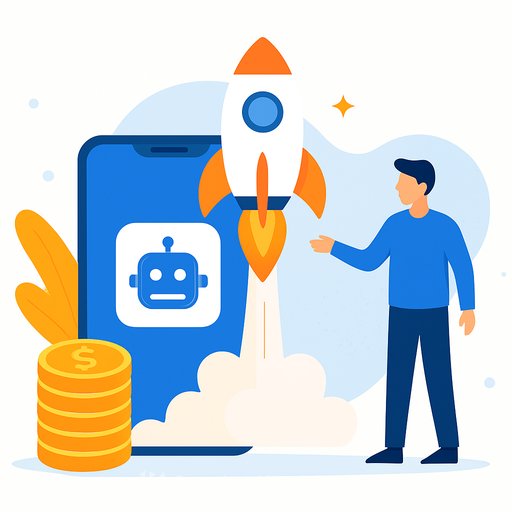
Minitap, an AI-driven mobile development platform, closed a $4.1M seed round co-led by Moxxie Ventures and Mercuri, with participation from EWOR, Tekton Ventures, Amigos Venture Capital, and six unicorn founders. The funding follows a strong technical milestone: the team hit #1 on the AndroidWorld benchmark for AI-controlled mobile devices, ahead of groups from DeepMind, ByteDance, Microsoft Research, and Alibaba.
The pitch is simple: mobile development is still slow, and AI can compress timelines from weeks to hours without sacrificing quality. For product teams, that unlocks faster iteration, more experiments, and tighter feedback loops.
From Burgundy to benchmark leader
Founders Nicolas Dehandschoewercker and Luc Mahoux-Nakamura grew up in Cosne-Cours-sur-Loire, a small village in Burgundy, France. One spent time in military school, the other was a young prodigy; both shared a deep focus on building. At 18, they shipped a mobile app with 10,000 users, then split paths: Nico studied Biomedical Engineering at Imperial College London and pursued AI research inspired by work from DeepMind, while Luc built delivery drone infrastructure.
They later combined strengths across AI, mobile, and scalable systems - a mix that helped them top AndroidWorld. After the win, they open-sourced their stack and quickly reached ~1,900 GitHub stars, signaling active community interest.
The bottleneck they're attacking
Web teams ship features in days. Mobile teams still slog through six-week cycles. Tooling, device fragmentation, testing, and release discipline slow everything down.
Minitap's claim: close the gap so mobile development moves at web speed. If they're right, product teams get more shots on goal, faster learning, and less overhead between idea and impact.
How Minitap works (in practice)
Minitap combines an open-source framework with a device-cloud infrastructure that lets AI agents control real phones like a developer would. The system writes mobile code, runs tests, diagnoses issues, fixes bugs, and ships working releases. Human oversight stays in the loop, but a lot of repetitive engineering and QA heavy lifting is automated.
Teams are using it to build features up to 10× faster. Growth teams can hand the system a short spec and a Figma design, then get a production-ready A/B test in hours - not weeks. That speed changes what you test, how often you test, and who on the team can safely run experiments.
What the funding means
The round gives Minitap room to harden the platform, expand device coverage, and grow adoption. Expect better test coverage on edge cases, more integrations, and stronger reliability under production load. The long-term vision is bold: apps that evolve themselves by running experiments, analyzing behavior, generating hypotheses, shipping variants, and iterating - end to end.
For product leaders, the question isn't whether AI will touch the mobile stack. It's how soon you can convert it into cycle-time savings and learning speed without creating shipping risk.
Why product teams should care
- Shorter cycles: Move from quarterly bets to weekly learning loops. More shots, less sunk cost.
- Experiment volume: Run dozens of mobile experiments per month instead of a handful.
- Bandwidth reallocation: Shift engineers to core product logic while agents handle boilerplate and test passes.
- Access: PMs and designers trigger safe, scoped builds for A/B tests with clear guardrails.
Pilot plan (30-60 days)
- Pick 1-2 narrow, user-facing features with low coupling and clear metrics (e.g., onboarding step, paywall variant).
- Provide a crisp spec and a Figma design. Define acceptance criteria and rollback rules upfront.
- Target one platform first (Android or iOS) to simplify validation and observability.
- Instrument aggressively: event taxonomy, experiment IDs, and experiment-safe analytics.
- Run a side-by-side: Minitap-driven build vs. a small control build to compare engineering hours and defect rates.
Due diligence questions
- Code stewardship: Who owns generated code? How readable and maintainable is it for your team?
- Coverage: What devices, OS versions, and form factors are supported? How are flaky tests handled?
- Security & privacy: How is source, credentials, and test data isolated? What redaction or sandboxing exists?
- Integrations: CI/CD, feature flags, crash reporting, and store submissions (Google Play/App Store) - what's supported today?
- Debug loop: When an agent gets stuck, what's the escalation path and average time to resolution?
- Compliance: SOC 2/ISO pipeline, data residency options, and audit trails for experiment history.
Team workflow implications
- Role shifts: Engineers review and guide more than they hand-code every step. QA moves from manual suites to agent oversight and exploratory testing.
- Process: Smaller PRs, higher release cadence, tighter acceptance criteria. Feature flags become standard.
- Metrics: Track cycle time, lead time to production, escaped defect rate, experiment throughput, and impact per engineer.
- Governance: Define where AI can auto-merge vs. where human review is mandatory. Log all agent actions.
Risks and how to blunt them
- Silent regressions: Require contract tests for critical user flows. Gateroll releases with staged rollouts and crash thresholds.
- Design drift: Lock UI tokens and components. Validate against Figma before merging.
- Vendor lock-in: Keep code in your repo, not a black box. Prefer open formats and standard project structures.
- Experiment sprawl: Set weekly caps, prioritize by expected value, and archive variants quickly.
What this could change for your roadmap
If mobile work stops being the bottleneck, you can revisit your portfolio. That might mean more pricing tests, onboarding variants, and paywall iterations - areas where small UX changes compound revenue. It also opens the door for more personalization experiments without ballooning headcount.
The bigger shift is cultural: fewer debates, more tests. Fewer big bets, more steady compounding. That's how the best web teams already operate.
Bottom line
Minitap's funding and benchmark results point to a near-term upgrade in how mobile work gets done. If you lead product, the move is to run a controlled pilot, measure the hours saved and defect deltas, and decide where AI agents slot into your build-test-release loop.
If the results hold, you'll ship faster, learn faster, and free your team to work on what actually differentiates your product.
Related: If you're equipping PMs and engineers to work with AI-native workflows, see curated learning paths by role at Complete AI Training. For broader AI course updates, check Latest AI Courses.
Your membership also unlocks: