
AI news ·
Misleading AI images could cost Australian businesses up to $100 million in fines
Australian businesses using AI in ads risk fines up to $100M. The legal boundary between enhancement and deception is poorly defined, with no AI disclosure rules.
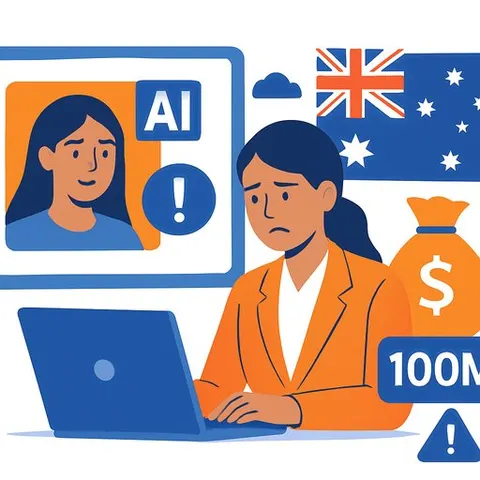
Australian businesses that use artificial intelligence to create or enhance advertising images risk fines of up to $100 million under the Australian Consumer Law, as the boundary between legitimate enhancement and illegal deception remains poorly defined. Individuals involved in misleading conduct could face penalties of up to $2.5 million, depending on the severity of the breach.
Where the legal line sits
Avinash Singh, principal lawyer at Astor Legal, said the core problem is not the technology itself but the gap between what consumers see and what they get. "AI photo editing is not illegal in itself. The legal issue arises when edited images misrepresent a product or service and mislead consumers," Singh said.
Section 18 of the Australian Consumer Law prohibits misleading or deceptive conduct in trade or commerce. Section 29 makes it an offence for businesses to make false or misleading representations about a product's characteristics, quality or benefits. Whether an AI-altered image triggers these provisions depends entirely on context. "If an AI-generated image presents a product as having features, quality or benefits that it does not actually have, or if the final image is materially different from the product a consumer receives, there is a real risk the advertising will breach Australian Consumer Law," Singh said.
Criminal liability for deliberate deception
Singh warned that the most flagrant misuse of misleading AI images could escalate beyond regulatory fines and into the criminal courts. "If prosecutors can prove beyond a reasonable doubt that a person knowingly used AI to misrepresent a product, intended to deceive consumers and obtain a financial advantage, the conduct could potentially be treated as fraud," he said.
This risk sits alongside the existing civil penalties under consumer law, which were last raised to a maximum of $100 million for companies. The law does not currently require businesses to disclose when AI has been used to create or alter marketing images, meaning consumers often have no way of knowing whether a product photograph reflects reality.
Recommendations for compliance
Singh advises businesses to use AI only to enhance images, not to fundamentally change what they represent. Companies should be able to show that any AI-generated or AI-enhanced marketing accurately reflects the product being sold and does not create false expectations. "Australia's consumer laws were developed before generative AI became widespread, and they do not specifically address the unique risks AI-generated advertising now presents," Singh said.
That gap means the Australian Competition and Consumer Commission will continue to assess cases on the existing unfair practices framework, treating materially misleading AI images the same way it treats any other deceptive ad.
Why this matters for legal professionals
As regulators sharpen their focus on AI in marketing, the volume of advisory work on this front will likely grow. Legal practitioners guiding clients on advertising risk need to stay current with how consumer law applies to machine-generated content. Resources such as AI for Legal provide context on how artificial intelligence intersects with existing legal frameworks. The absence of specific AI disclosure rules means risk assessments must turn on the same material difference test that governs all misleading conduct claims - but the facts will increasingly involve algorithmic outputs rather than traditional Photoshop edits.