AI Becomes A Strategic Requirement For MMEA - A Clear Signal To Operations Leaders
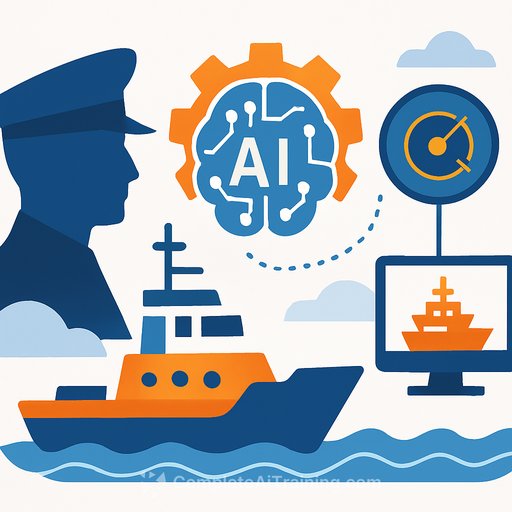
Putrajaya, March 5, 2026 - The Malaysian Maritime Enforcement Agency (MMEA) has made its position clear: AI is no longer a nice-to-have. It's a strategic requirement for planning operations, streamlining maintenance and logistics, and staying ahead of threats at sea.
MMEA director-general Admiral Datuk Mohd Rosli Abdullah set the tone bluntly. The agency can't operate reactively anymore. "Thinking ahead to get ahead" needs to be standard practice, from operations to human capital development.
Echoing that push, Home Minister Datuk Seri Saifuddin Nasution Ismail urged all agencies under the Home Ministry (KDN) to accelerate AI adoption to boost productivity, raise efficiency, and improve service delivery. The goal is simple: think ahead, act sooner, and run smarter.
Why this matters for managers
The message isn't limited to maritime security. It's a blueprint for any leader running complex operations with tight resources and real-time risk. If you're still acting after the fact, you're already behind.
What AI enables at MMEA
- Clear view of asset readiness and real strength at sea
- Detection of requirement gaps before they become bottlenecks
- More systematic assignment planning and tasking
- Streamlined maintenance and logistics, driven by data
- Risk-based decision-making grounded in analysis, not aftermath
- Human capital planning aligned to emerging mission needs
From reactive to proactive: the operating shift
- From incident response to prediction and prevention
- From intuition-only to decisions backed by real-time and historical data
- From fixed schedules to dynamic tasking based on risk signals
- From fragmented logistics to integrated, forecast-driven supply and maintenance
Practical next steps for management
- Define 3-5 priority decisions where earlier insight changes outcomes (e.g., patrol routing, asset allocation, maintenance windows).
- Map the minimum data needed for those decisions. Fix gaps at the source, not downstream.
- Pilot small. Prove value with one use case in 90 days, then scale.
- Embed AI outputs into daily workflows (tasking boards, shift briefs, maintenance plans), not side dashboards no one checks.
- Assign clear ownership for model performance, data quality, and change management.
- Train teams to question outputs and escalate anomalies. Tools matter, but culture carries.
- Adopt a risk framework for AI usage and monitoring. See the NIST AI Risk Management Framework for a practical starting point.
For public-sector leaders moving now
Want structured guidance on policy, governance, and delivery? Explore AI for Government for implementation approaches that fit public missions.
Focusing on planning, assignments, maintenance, and logistics? See playbooks under AI for Operations to translate strategy into daily execution.
The takeaway is straightforward. MMEA is raising the bar: act before the incident, allocate before the shortage, maintain before the failure. That's an operating model shift every manager can borrow-sea or shore.
Your membership also unlocks: