MoHESR continues to drive AI integration in higher education
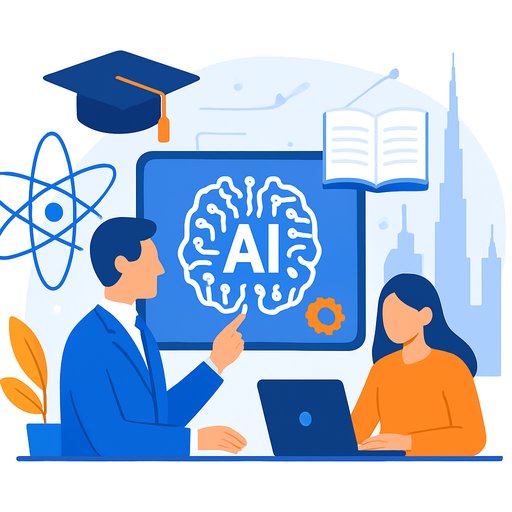
The Ministry of Higher Education and Scientific Research (MoHESR) hosted an interactive workshop on AI in Higher Education, bringing together more than 120 leaders from universities, government, and industry across the UAE. The goal: share practical expertise and co-design initiatives that embed artificial intelligence across teaching, research, and university operations.
His Excellency Dr. Abdulrahman Al Awar, Minister of Human Resources and Emiratisation and Acting Minister of Higher Education and Scientific Research, underscored that AI is central to improving educational quality, resilience, and workforce readiness. He emphasized policy alignment with innovation and deeper partnerships between academia and key economic sectors to strengthen the UAE's global standing in tech-enabled education.
What was showcased
- Khalifa University, Hamdan Bin Mohammed Smart University (HBMSU), and Mohamed bin Zayed University of Artificial Intelligence (MBZUAI) demonstrated program-level models of AI integration and research-driven applications. Learn more about MBZUAI's focus on AI research at MBZUAI.
- Microsoft, SAP, and Google presented AI solutions that support course delivery, student services, analytics, and institutional efficiency.
The workshop forms part of a broader series led by the AI in Higher Education working group under the Advisory Committee for Higher Education and Future Skills. The initiative guides higher education institutions (HEIs) and industry partners in adopting advanced AI models with measurable impact on learning outcomes and research productivity.
This effort supports a future-ready education system and prepares national talent for a knowledge-based economy, consistent with national priorities for AI and skills development.
Why it matters for academic leaders
- AI-readiness is becoming a baseline capability for HEIs-from curriculum and assessment to student support and institutional research.
- Employers expect graduates who can work alongside AI systems; degree programs need clear outcomes tied to data, automation, and responsible use.
- Cross-sector partnerships (industry + academia) will accelerate applied research, internships, and job-aligned learning pathways.
Practical steps you can take this quarter
- Set institutional AI governance: policy for responsible use, data security, academic integrity, and model transparency. See the AI Learning Path for CIOs for governance and IT leadership guidance.
- Refresh curricula: embed AI literacy, prompt fluency, and data ethics across general education and majors.
- Equip faculty: targeted workshops, playbooks for assessment redesign, and role-based training such as the AI Learning Path for Teaching Assistants to operationalize classroom support.
- Prioritize pilots: 2-3 use cases with clear metrics (e.g., feedback turnaround, advising load, research throughput).
- Build partnerships: co-develop capstones and micro-internships with employers; connect research labs to real-world problem statements.
- Measure outcomes: track student performance, progression, and employability; iterate based on evidence.
Opportunities to watch
- AI-supported tutoring and advising that scales personalized support without overloading staff.
- Assessment methods that reward higher-order thinking and authentic work products.
- Research acceleration with AI for literature mapping, data analysis, and experiment design-paired with strong ethics review.
- Operational gains in enrollment management, finance, and facilities through predictive analytics.
For teams planning faculty upskilling and program refreshes, explore role-based AI learning paths such as the AI Learning Path for Teachers.
The signal is clear: AI is no longer a side project. With coordinated governance, targeted pilots, and industry collaboration, HEIs can improve learning quality, boost research impact, and prepare graduates for high-value work.
Your membership also unlocks: