An AI giant agreed to pay $1.5 billion for training its chatbot on pirated books, and a surprising number of those titles were written under Montana skies. The payout averages $3,000 per book, split with publishers, and could put money in the hands of poets, novelists, and estates from Livingston to Missoula. Beyond checks, the settlement jolts a literary community worried that synthetic voices are learning cadences-and selling a copy of Montana back to itself.
What happened
Anthropic settled a class-action lawsuit after downloading books from pirate libraries to train the models behind its Claude chatbot. The average payout is about $3,000 per title, split evenly between authors (or estates) and publishers.
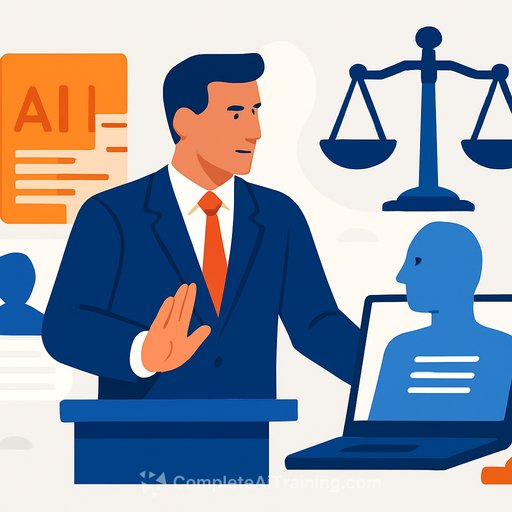
A federal judge in California, William Alsup, approved the deal and ordered Anthropic to destroy any pirated copies it obtained. One lead plaintiff emphasized the settlement is compensation for past misuse, not a license to use books going forward. "It's not a licensing deal."
Alsup also ruled that training on lawfully acquired books can qualify as fair use because the use is considered transformative. That means AI firms may keep training on books if they obtain them legitimately, while the law continues to develop in ongoing cases.
Who in Montana is affected
The settlement list includes work by many Montana-based or Montana-identified writers. Among them: Stephanie Land, Tom McGuane, David Quammen, Kevin Canty, Deirdre McNamer, David James Duncan, Malcolm Brooks, Doug Peacock, Douglas Chadwick, and Michael Punke.
Estates and publishers of A.B. Guthrie Jr., William Kittredge, Richard Hugo, and James Welch are also eligible. The database isn't searchable by location, and not every writer appears to have received notice, so it's worth checking if your titles are included.
Why this matters beyond the money
Several Montana authors say the check is welcome but the larger risk is cultural. Jamie Harrison likened AI-filtered voices to "damming a river," choking the flow between writers and readers.
Stephanie Land worries about "voices that are not human" replacing lived experience. Annick Smith warns AI is a shortcut that lets people skip thinking for themselves. Doug Peacock says his wilderness prose comes from a "nuanced place" you can't fake with a mechanical rendering.
How Anthropic used books
Books make strong training data because they're edited and structured. In this case, the company drew from pirate sites like Library Genesis and Pirate Library, which triggered the lawsuit and the resulting settlement.
Claude learned from a vast corpus that included 23 books by Jim Harrison, according to case materials. That training helped it imitate stylistic markers-poorly, in the view of his daughter-even as it bypassed permission from his estate.
What Montana writers should do now
- Confirm eligibility: Search the settlement database for your titles. If you didn't get a notice, check anyway.
- File by the deadline: Claims are due by March 23. Don't wait for follow-up letters.
- Coordinate with your publisher: Payouts are split 50/50 per title. Align on who files and where the check goes.
- Gather documentation: Contracts, ISBNs, and reversion letters (if any) will speed up verification.
- Consider professional support: The Authors Guild and a copyright attorney can help with edge cases and future licensing questions.
- Watch the next phase: This settlement covers past pirate-site training. Lawful-data training and new licensing deals are the next battleground.
Key dates and amounts
- Claim deadline: March 23
- Approximate payout: $3,000 per title (split author/estate and publisher)
- Court order: Destroy any pirated copies; no license granted for future use
Legal backdrop in brief
The court rejected training on pirated copies and approved monetary relief plus destruction of the infringing data. It also found that training on legally obtained books can qualify as fair use under current law. In short: you're owed for the pirate copies, but AI companies may continue training on books they've licensed or otherwise obtained lawfully.
For background on fair use basics, the U.S. Copyright Office offers a helpful overview: copyright.gov/fair-use.
The bigger picture for Montana's literary identity
Montana's writers built their reputations on voice: place, weather, work, and stubborn detail. The concern isn't just that AI borrowed those voices without asking; it's that it could flatten them into tropes and feed them back to readers as if they're the same thing.
The settlement sends a clear signal: you can't scrape books from pirate sites and call it innovation. What comes next-real licensing, real consent, and real credit-will decide whether writers get a fair shake.
Resources
- Authors Guild (advocacy, updates, legal resources)
- Practical AI training focused on Claude (for writers who want hands-on skills and ethical workflows)
Your membership also unlocks: