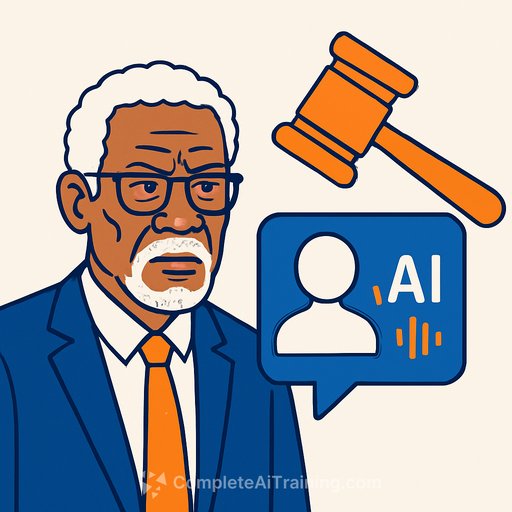
Morgan Freeman moves against AI voice copycats - what legal teams should prepare for
Morgan Freeman says he's taking legal action against people cloning his voice without consent. His message is blunt: "Don't mimic me with falseness… if you're gonna do it without me, you're robbing me." He also said his lawyers "have been very, very busy."
For legal teams, this is a preview of the cases your clients will face or file. Voice cloning is cheap. Distribution is instant. The harm is commercial and reputational.
The likely causes of action
Right of publicity (state law): using a recognizable voice without consent to sell or promote content can trigger claims. The Ninth Circuit recognized this with celebrity sound-alikes in Midler v. Ford Motor Co. and Waits v. Frito-Lay. AI voice clones fit the same pattern: commercial use, confusion, and harm.
Lanham Act false endorsement: if a cloned voice implies an actor endorsed or participated, that's fertile ground. Pair this with state unfair competition and deceptive practices claims where available.
Copyright and data issues: recordings are protected; training or reproducing substantial parts can create exposure. Add DMCA/Copyright Management Information claims if creators stripped or falsified attribution metadata. Contract and ToS violations are often low-hanging fruit.
Evidence you'll need to win
- Source mapping: where training data came from (clips, audiobooks, films, interviews).
- Similarity analysis: expert testimony and acoustic forensics on timbre, cadence, and distinct markers.
- Commercial nexus: ads, paid content, monetized channels, or fundraising tied to the clone.
- Confusion and endorsement signals: comments, messages, surveys, or press that suggest people believed it was Freeman.
- Damages: lost deals, reduced licensing value, reputational harm, and unjust enrichment. Willfulness for enhanced remedies.
Risk for studios, creators, and platforms
- Studios: vet vendors for provenance of voices and training data. Demand auditable consent logs and deletion protocols.
- Creators and agencies: no "sound-alike" work without written consent and scoped licenses. Disclaimers won't save you from endorsement claims.
- Platforms: strengthen AUPs, detection, and repeat-infringer policies for cloned voices. Fast takedown lanes reduce liability optics.
Unions, AI "talent," and market pushback
Freeman criticized the debut of "Tilly Norwood," an AI actor that sparked backlash from performers including Emily Blunt and Natasha Lyonne. His stance is clear: synthetic performers displace real work and will collide with union mandates. That tension will keep rising across casting, background work, ADR, and localization.
James Cameron has explored AI for efficiency but still warns against overreach and the risks it brings. Music is already testing boundaries: an AI act recently entered a Billboard chart, backed by a major deal. Film is next in line for the same conflicts.
Action plan for in-house and outside counsel
- Update talent agreements: explicit voice/likeness clauses, separate compensation for training and synthetic reuse, revocation rights, and clear geographic and media scope.
- Vendor controls: no training on client assets without signed consent and detailed data lineage. Include inspection rights.
- Product guardrails: ship "no-impersonation" defaults, name/voice blocklists, watermarking, and logging for audit and incident response.
- Brand safety: pre-clear any voice models used in advertising. No sound-alikes for living artists or actors absent consent.
- Monitoring and takedowns: track high-risk names and run rapid notice programs. Preserve evidence before removal.
- Insurance: review coverage for IP, right of publicity, and media liability amid AI use cases.
Where this heads
If Freeman's team files in a favorable forum, expect a fresh line of cases that extend Midler/Waits logic to AI. The first injunctions will set practical boundaries: consent, attribution, and clear commercial lines.
Meanwhile, Freeman is on screens in the heist sequel Now You See Me: Now You Don't, joining Jesse Eisenberg, Mark Ruffalo, Woody Harrelson, Isla Fisher, and Dave Franco. He also recently performed "Let's Stay Together" with Al Green for patrons at his Mississippi venue, Ground Zero - a reminder of the unique human voice at the center of this fight.
Your membership also unlocks: