Morocco's 14-Spot Leap in AI Readiness: What Government Leaders Can Do Next
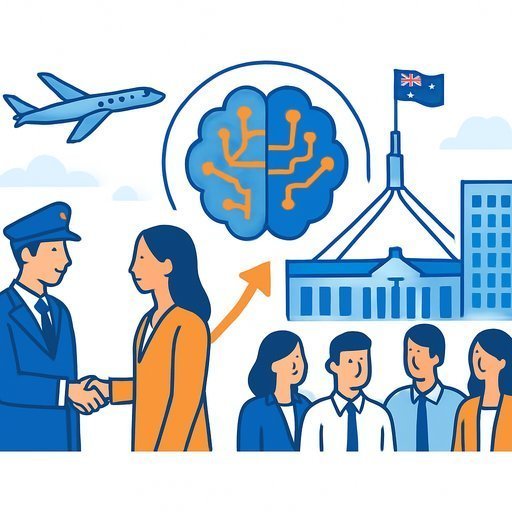
Morocco has moved up 14 positions in the Government AI Readiness Index 2025, landing around 86th globally. Minister Delegate for Digital Transition and Administrative Reform, Amal El Fallah Seghrouchni, highlighted the shift during an international meeting in Kuwait, emphasizing the country's growing capacity to integrate AI into public governance.
The index assesses government strategy, the technology ecosystem, and data and infrastructure capacity. Morocco's climb signals steady groundwork and growing execution-placing the country among the stronger performers in parts of the MENA region. You can review the index methodology and updates via Oxford Insights.
What's Driving the Improvement
- Modernized regulatory and legal frameworks that give clarity to AI use in the public sector.
- Investment in technical skills and talent pipelines across universities and training programs.
- Policies that encourage responsible innovation and ethical use of AI.
- Governance mechanisms to support the development and export of AI services.
- A shift from strategy drafting to actual delivery and measurement.
Flagship Initiatives to Watch
Digital for Sustainable Development Hub (D4SD) - developed with the United Nations Development Programme, this hub is designed to make Morocco a regional center for sustainable digital transformation. It focuses on applying AI and data science to real development challenges and public service needs.
Al Jazari Institutes Network - part of the "AI Made in Morocco" vision, these institutes connect researchers, startups, and public and private institutions. The goal: build AI that is reliable, inclusive, and aligned with national technological sovereignty.
Why This Matters for Public Institutions
AI is no longer just a technical tool; it's a strategic and geopolitical factor. It affects how citizens trust digital services, how institutions make decisions, and what skills the public workforce needs. Because AI risks and opportunities cross borders, international cooperation is essential for safe, inclusive, and sustainable adoption.
Practical Steps for Ministries and Agencies
- Map your use cases to national AI policies and sector laws; publish a short AI action plan with timelines.
- Stand up an AI governance board to review pilots for ethics, privacy, bias, and security before scaling.
- Upgrade data foundations: inventories, quality standards, interoperability, and access controls.
- Modernize procurement to include AI-specific clauses (performance, transparency, model updates, exit options).
- Run small pilots with clear KPIs in high-impact areas (service delivery, fraud detection, inspections).
- Build skills pathways for civil servants: data literacy for all and specialized AI roles for key teams-consider role-based learning such as the AI Learning Path for CIOs and the AI Learning Path for Regulatory Affairs Specialists.
- Establish cross-border cooperation channels for standards, incident reporting, and shared learning.
The Opportunity Ahead
Morocco's progress shows that consistent policy, skills development, and execution move the needle. For government leaders, the priority now is disciplined implementation-measurable pilots, trusted data, and safeguards that protect citizens while enabling innovation.
If your team is building AI capacity by role, you can explore curated options here: AI courses by job function.
Your membership also unlocks: