
AI news ·
Most Americans support AI education in college but oppose its use in admissions and tutoring, poll finds
74% of Americans say colleges should teach AI, but majorities oppose using it to screen applicants or tutor students. Nearly half believe students are more likely to use AI to avoid learning than to improve it.
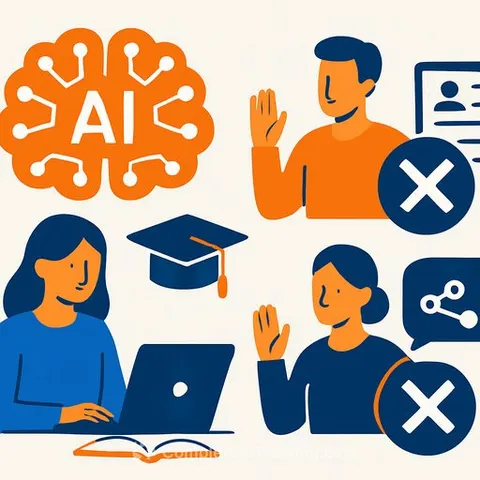
Most Americans want colleges to teach AI, but worry about how it's being used
Three-quarters of Americans believe college students should learn how to use artificial intelligence, yet majorities oppose specific applications of the technology in higher education, according to a Quinnipiac University poll released this week.
The survey found 74% of Americans say AI education is important for colleges, with 42% calling it "very important." But support for the technology drops sharply when it comes to actual campus use.
Skepticism about campus AI applications
Fifty-nine percent of respondents oppose colleges using AI to screen student applications. Fifty-two percent oppose AI tutoring systems.
Concerns about student behavior also emerged. Forty-seven percent of Americans believe students are more likely to use AI to avoid learning rather than to enhance it. That skepticism runs even deeper among younger adults: 58% of those ages 18 to 34 said AI is more likely to be used to dodge learning.
What educators should know
The poll suggests a clear mandate for higher education: teach students to use AI effectively, but be transparent about how the institution deploys it. Colleges teaching Prompt Engineering and other AI for Education skills directly address the public's desire for student competency.
The challenge lies in implementation. Public opinion is divided on whether the technology helps or harms learning outcomes, making institutional communication about AI policy essential.
Broader education trends
The survey also found that 78% of college graduates said their degree was worth the cost, citing job opportunities, earning potential, and educational quality as reasons. Seventy-six percent of Americans support international students studying in the U.S., often pointing to the value of diverse perspectives.
Quinnipiac surveyed 1,210 adults nationwide between April 9 and April 13. The margin of error is plus or minus 3.5 percentage points.