From Siloed Data to Breakthroughs: Multimodal AI in Drug Discovery
Drug development faces persistent challenges like lengthy timelines, high costs, and low probabilities of success (PoS). These are worsened by the increasing complexity of therapies such as biologics and gene therapies. Fragmented datasets and manual processes add friction, delaying patient access to crucial treatments.
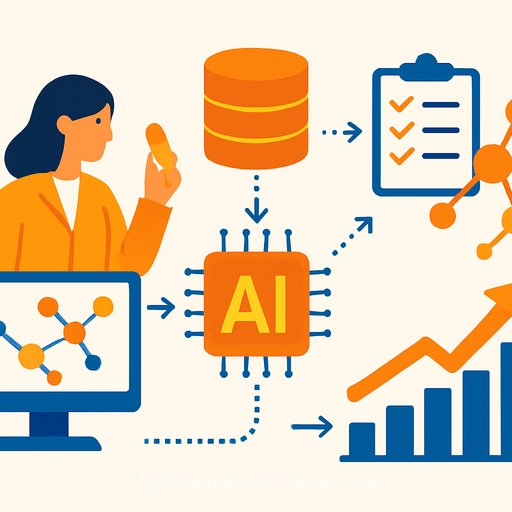
Multimodal AI is changing this by integrating diverse data sources — genomic, clinical, molecular, and more — into unified models that detect hidden patterns. This approach accelerates drug discovery, improves patient stratification, and helps boost success rates.
Challenges in Drug Development
Traditional drug discovery is often slowed by siloed data, where different types of information exist in isolation. Genomic data, clinical records, molecular profiles, and chemical information typically reside in separate systems. This separation limits insights and slows down the identification of promising drug candidates.
The approval rates for advanced therapies have dropped partly due to this fragmentation. However, advances in AI, particularly multimodal language models (MLMs), are bridging these gaps by combining large-scale genomic data with clinical and chemical datasets. This integrated approach is supported by open-access biomedical data and next-generation sequencing (NGS) technologies.
Next-Generation Sequencing and Clinical Genomics
NGS has transformed genomic analysis by enabling detailed identification of disease-related genetic variants. This empowers more precise target validation, smarter patient stratification, and optimized clinical trial designs, all aimed at improving PoS.
By merging genomic data with other biological and clinical information, AI models can generate richer insights, accelerating the development of effective treatments.
Smarter Labs, Faster Results: Automation in Drug Discovery
Automation and AI-driven technologies are reshaping early preclinical research. Lab workflows benefit from improved reproducibility and faster throughput. Techniques like high-throughput screening combined with AI solutions help expedite discovery phases and enhance the reliability of results.
What Are Multimodal Language Models?
Generative AI models, such as AlphaFold, have gained attention for their ability to predict protein structures. MLMs take this further by processing multiple data types simultaneously — text, images, molecular data, clinical records, and more.
Unlike unimodal approaches that analyze one type of data at a time, MLMs connect patterns across diverse modalities. This capability improves interpretability and builds trust among regulators and researchers by providing comprehensive insights.
For example, these models can correlate genetic variants with clinical biomarkers, enhancing patient stratification for trials and increasing the likelihood of therapeutic success.
Why Multimodality Matters
- Traditional drug discovery data is often manual, messy, and isolated.
- Unimodal analysis limits data integration, making interpretation and reproducibility difficult.
- Multimodal AI links different data types — molecular, clinical, imaging, textual — enabling a holistic view.
- This integration helps identify drug candidates that meet multiple criteria such as efficacy, safety, and bioavailability.
Integrating Diverse Data to Unlock New Cures
Multimodal AI allows simultaneous analysis of genomic, chemical, clinical, structural, and imaging data. This unified approach uncovers correlations that traditional methods might miss. Models can refine multiple drug properties at once, speeding up the discovery process.
For instance, combining omics data with chemical and clinical features helps pinpoint therapeutic targets and predict patient responses with higher accuracy, especially for diseases that have been difficult to treat.
Early AI Integration in Multidisciplinary Teams
AI adoption is often delayed until late project stages, which limits its impact. Embedding AI experts from the start ensures better collaboration among biologists, chemists, data scientists, and engineers.
This integrated teamwork reduces model errors, improves explainability, and leads to more reliable outcomes. Encouraging interaction between disciplines is essential for realizing AI’s full potential in drug development.
Maximizing ROI with Multimodal AI
Multimodal AI creates a dynamic, data-driven workflow that outperforms traditional linear processes. However, many organizations struggle with siloed teams that focus on their own data domains without sharing insights effectively.
Bridging this gap accelerates drug discovery, uncovers hidden patterns, and translates research into therapies faster. Multimodal models can analyze millions of molecular structures alongside genomic and clinical data, improving prediction quality and reducing time-to-market.
Further Learning
For IT and development professionals interested in AI applications in life sciences, exploring courses on Complete AI Training can provide practical skills in AI-driven drug discovery and data integration.
Understanding how to work with multimodal data and develop collaborative AI tools is key to advancing pharmaceutical innovation and delivering better patient outcomes.
Your membership also unlocks: