
AI news ·
Mumbai engineer's AI supply chain tools serve more than 10 major US hospital systems
Reuben Mathew Philip's AI tools now run daily across 10+ major U.S. hospital systems, including Yale New Haven and Geisinger. The Mumbai-born engineer helped build Clarium Health, which has raised $43M and holds zero customer churn.
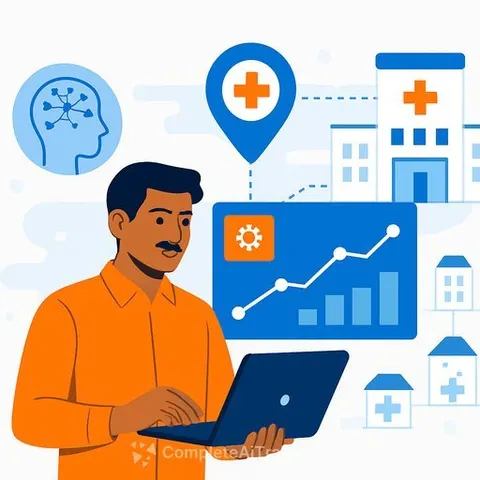
AI Tools Built by Mumbai Graduate Now Protect Supply Chains at Major U.S. Hospitals
Reuben Mathew Philip's software runs daily at more than 10 major American hospital systems. Ochsner Health, Geisinger, Yale New Haven Health, and Texas Medical Centre use his products to manage their supply chains. The company he helped build, Clarium Health in New York, has raised over $43 million in venture funding.
Philip grew up in Mumbai and studied computer engineering at Don Bosco Institute of Technology before moving to the United States for graduate school. A job at Boston Children's Hospital after earning his master's degree at Northeastern University redirected his career toward healthcare.
From Spreadsheets to Automation
"I walked into a world where billion-dollar hospital systems were still tracking supply disruptions on spreadsheets," Philip said. "Nurses were leaving operating rooms to hunt for supplies. Contracts worth millions were being mispaid because nobody had automated the reconciliation process."
At Boston Children's, Philip built automation scripts that eliminated over 53 hours of manual work per week for his team. He created a system that reduced the hospital's billing exception rate by 20 percent. He developed a COVID expense tracking tool that hospital leadership used to claim federal reimbursements. Several of these tools remain in use today.
After working on logistics automation at Amazon, Philip joined Clarium Health as its sixth employee and first data engineer. The company had zero paying customers at the time.
Two Products Addressing Real Problems
Philip now leads product strategy at Clarium. American hospitals spend hundreds of billions of dollars on medical supplies each year, yet most lack basic visibility into their own supply chains. The COVID-19 pandemic exposed how fragile those systems were.
His first product, Disruption Monitor, uses artificial intelligence to aggregate data from hospitals, distributors, and medical device vendors. It detects potential supply shortages before they affect patient care and recommends substitute items based on intelligence shared across Clarium's network.
The second product, Card Optimizer, addresses waste in surgical operations. It analyzes data from hospital electronic medical record systems to identify inconsistencies in the supply lists used for procedures, then generates recommendations for standardization. The result is less waste and lower costs without changing clinical outcomes.
Under Philip's leadership, Clarium has grown from zero customers to serving 10+ major health systems with zero customer churn.
Recognition in the Field
In November 2025, Philip received the Future Famer Award from the Bellwether League Foundation, which recognizes leaders who have made lasting contributions to healthcare supply chain management. The 2025 class included just three recipients. Philip was the only technology company professional recognized.
He chairs the Young Professionals Advisory Council of AHRMM, the Association for Health Care Resource and Materials Management, which operates under the American Hospital Association. He sits on AHRMM's Education Committee and reviews abstracts for the organization's national conference.
Philip speaks regularly at major U.S. healthcare conferences including AHRMM, AHVAP, HIDA, and Health Connect Partners. He has published multiple whitepapers and articles on AI for Healthcare supply chain applications.
What Comes Next
Philip says the American healthcare system is only beginning to understand the role technology can play in supply chain management. "In India, we grow up understanding that resources aren't unlimited," he said. "That perspective is actually very relevant in American healthcare right now. Hospitals can't afford to waste supplies or react to disruptions after the fact. They need systems that are intelligent enough to anticipate problems."
He continues to drive product strategy at Clarium, focused on expanding the platform's capabilities as new hospital clients come on board. AI for Operations remains central to his work.
"Every piece of technology we build is connected to a patient outcome somewhere down the line," Philip said. "That's what keeps me going."