Surgery Scheduling Data Now Six Times More Accurate at MUSC Health
MUSC Health, a large South Carolina health system, implemented real-time operating room tracking technology that automatically captures surgical events and timestamps without manual staff input. The system reduced data entry delays from 45 minutes to under one minute and eliminated the accuracy problems that had made surgeons skeptical of previous performance metrics.
The health system's main OR location was running at consistently high utilization with little room for inefficiency. But visibility into where time was actually being lost came down to manually entered timestamps in the EHR, which staff and physicians questioned as unreliable.
The Problem: Decisions Based on Assumptions
Without trusted performance data, conversations about efficiency improvements relied on assumptions rather than evidence, said Madison Belissary, perioperative operations director at MUSC Health. Leadership needed objective information about how OR time was actually being used before committing resources to solve capacity problems.
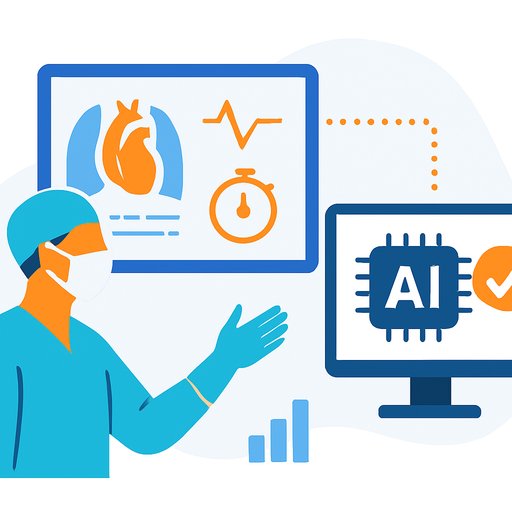
MUSC Health selected Apella's ambient AI platform, which integrates with the EHR to automatically detect OR events and build a timeline of each surgery and turnover. The system provides real-time visibility to staff and generates predictions about future cases - all without requiring staff to manually log timestamps.
Implementation Without Disruption
The health system rolled out the technology first to charge nurses and coordinators closest to daily OR operations. Because the platform fit into existing workflows, staff could implement it outside peak hours without disrupting throughput or adding work.
Charge nurses used the live view to monitor room status in real time. Coordinators used predictive updates to anticipate problems and adjust staffing proactively. A governance committee with surgeon champions shaped how the technology would be used and set guardrails around metrics.
Within weeks, 100% of weekday charge nurses were using the system. Pre-op, post-op, and anesthesia teams requested access and doubled the user base.
What the Data Actually Showed
The most immediate result was data quality improvement. Apella's timestamps proved six times more accurate than manual EHR entry, delivered in under one minute instead of up to 45 minutes - without any manual input.
Within 60 days, the platform revealed where time was actually being lost. One assumption proved wrong: staff believed extended cleaning times caused long turnovers. But when the system segmented each turnover into cleaning, setup, and idle time, it showed that 10 to 15 minutes of idle time between cleaning and setup was the real bottleneck in some service lines.
The data pointed to a coordination gap. Teams now use the platform's real-time schedule views and turnover predictions to identify at-risk turnovers in advance.
Scheduling also had hidden inefficiencies. Roughly 28% of cases were underscheduled by more than 30 minutes, creating delays and staffing strain. At the same time, about 20% of cases were overscheduled by the same margin, leaving OR time unused.
The platform revealed recurring pockets of unused time - "white space" - that could have accommodated additional cases but consistently went unfilled. Staff can now identify upcoming cases that are significantly over- or underscheduled and make adjustments before surgery begins.
For healthcare operations teams, AI for operations offers similar opportunities to replace manual tracking with objective, real-time data. AI for healthcare implementations succeed when they integrate into existing workflows rather than requiring staff to change how they work.
Your membership also unlocks: